









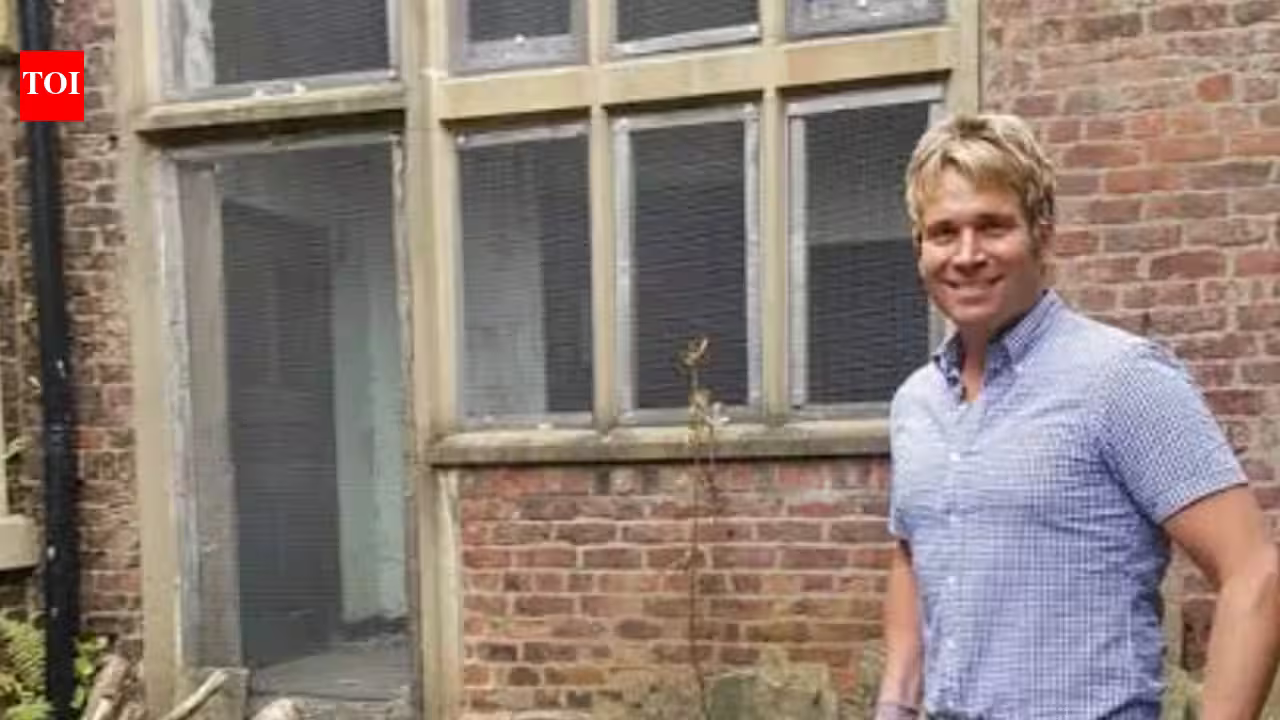
The Hollywood dream usually involves securing a blockbuster deal or walking the red carpet, but for American filmmaker Hopwood DePree, the dream shifted toward the damp, drafty, and historically significant corridors of Middleton, Greater Manchester. For years, the director of The Last Big Attraction traded the glitz of Los Angeles for the grueling labor of architectural preservation. However, the saga of his “Downtown Shabby” project—the affectionate nickname for the 600-year-old Hopwood Hall—has reached a sobering, headline-grabbing conclusion.
In a recent High Court ruling that has sent shockwaves through the preservation community, a judge officially denied DePree the right to purchase the Grade II*-listed mansion for the symbolic sum of £1. This ruling marks a painful defeat in a protracted legal clash with the Rochdale Borough Council, leaving the fate of the 60-room estate hanging in a precarious balance.
The Dream of “Downtown Shabby”
DePree’s connection to Hopwood Hall wasn’t born of a real estate investment scheme, but of familial lore. Growing up in Holland, Michigan, DePree spent his childhood listening to stories about his distant ancestral link to the English estate. Driven by a mix of curiosity and a romantic sense of duty, he eventually traveled to the UK to see the family legacy for himself.
What he found was a far cry from a fairy tale estate. The mansion was in ruins, ravaged by roof collapses, severe water damage, and the relentless creep of dry rot. Rather than walking away, the filmmaker packed up his life in LA and moved to Greater Manchester, dedicating his time to what he famously chronicled in his 2022 memoir, Downton Shabby: One American’s Ultimate DIY Project. He didn’t just want to visit the house; he wanted to save it.
A Deal That Wasn’t Meant to Be
In 2017, the path forward seemed clear. DePree struck a deal with the Rochdale Borough Council, the legal owners of the property. The agreement was structured as a classic “sweat equity” arrangement: if DePree could navigate the bureaucratic maze of securing planning permissions and present a viable, multi-million-pound funding model to address the estimated £30 million to £40 million restoration cost, the deed to the estate would be his for just £1.
It was a gargantuan task that would test the resolve of any seasoned developer, let alone a filmmaker. Yet, for years, DePree remained the face of the restoration. He formed the Hopwood Foundation and poured an estimated £750,000 to £1 million of his own money into the project, alongside a massive effort to mobilize local volunteers to stabilize the structure and prevent further decay.
The Breakdown of the Partnership
As the years wore on, the partnership between the filmmaker and the local government began to sour. The council, frustrated by the lack of tangible progress regarding the massive financial requirements, eventually locked DePree out of the premises. This lockout triggered a lawsuit from DePree, who argued that the council had unilaterally shifted the goalposts.
His legal team contended that it was functionally impossible to secure the necessary private and grant funding for a £40 million project when he didn’t yet hold legal title to the building. From his perspective, he was caught in a “chicken-or-the-egg” scenario: investors wanted security, and the council wanted proof of funds.
The Court’s Final Verdict
The High Court in Manchester, presided over by Judge David Hodge, ultimately sided with the council. The ruling determined that the strict contractual conditions laid out in the 2017 agreement—specifically regarding guaranteed financing and updated planning permissions—had simply not been met. Consequently, the legal path for DePree to acquire the building was closed.
The fallout from the hearing revealed a deep frustration on both sides. A spokesperson for the council expressed regret over the legal battle, noting that the time and money squandered on courtroom proceedings—along with the £1.5 million the council has already spent on maintenance—would have been better utilized in the physical restoration of the hall itself.
What Lies Ahead for Hopwood Hall
Despite the stinging loss, Hopwood DePree shows no signs of conceding his interest in the estate’s future. Following the verdict, he maintained a defiant, forward-looking tone, stating, “Please know that my team and I are already determining our legal options and next steps. We will be watching closely to keep an eye on Rochdale Borough Council’s efforts to save Hopwood Hall for the community and restore it to its former glory.”
For now, the mansion remains in a state of purgatory. The council faces the daunting task of securing the massive capital required to restore a structure that has defied easy solutions for years. For DePree, the transition from the “DIY project of a lifetime” back to the reality of legal appeals is a stark reminder that in the world of heritage restoration, passion is rarely enough. The future of Hopwood Hall is now once again a blank page, and while the filmmaker has been forced to step back from the helm, the story of this 600-year-old mansion remains as complicated and uncertain as ever.
As for DePree, he remains a unique figure in the crossover between Hollywood and historic preservation—a man who arguably did more to raise the profile of a decaying English estate than any developer before him. Whether this is the end of his chapter at Hopwood Hall remains to be seen, but the “Downtown Shabby” saga has cemented itself as one of the most compelling real-life dramas in recent memory.
Disclaimer: This content is auto-generated for informational purposes only.
Source: Read Original News