








A Paradigm Shift in Game Development
The landscape of interactive entertainment is undergoing a seismic transition as Epic Games adopts an “AI-first” development strategy for its high-profile collaboration with The Walt Disney Company. This transition marks a departure from traditional software engineering methodologies, moving toward a framework where artificial intelligence models handle the generation of foundational code and artistic assets. This pivot, revealed through internal documents and recent reports, signals a commitment to integrating generative AI into the core of the game production pipeline.
At the heart of this strategy is the replacement of manual coding with model-driven output. Instead of developers writing lines of code in C++ or scripting languages, human engineers are now tasked with managing, guiding, and refining outputs produced by sophisticated large language models such as Anthropic’s Claude. The directive is explicit: the project aims to minimize, if not entirely eliminate, hand-written code in favor of automated generation. This shift represents a broader industry trend where the role of the developer evolves from a “creator” of individual syntax to an “orchestrator” of AI systems.
Retooling the Epic and Disney Collaboration
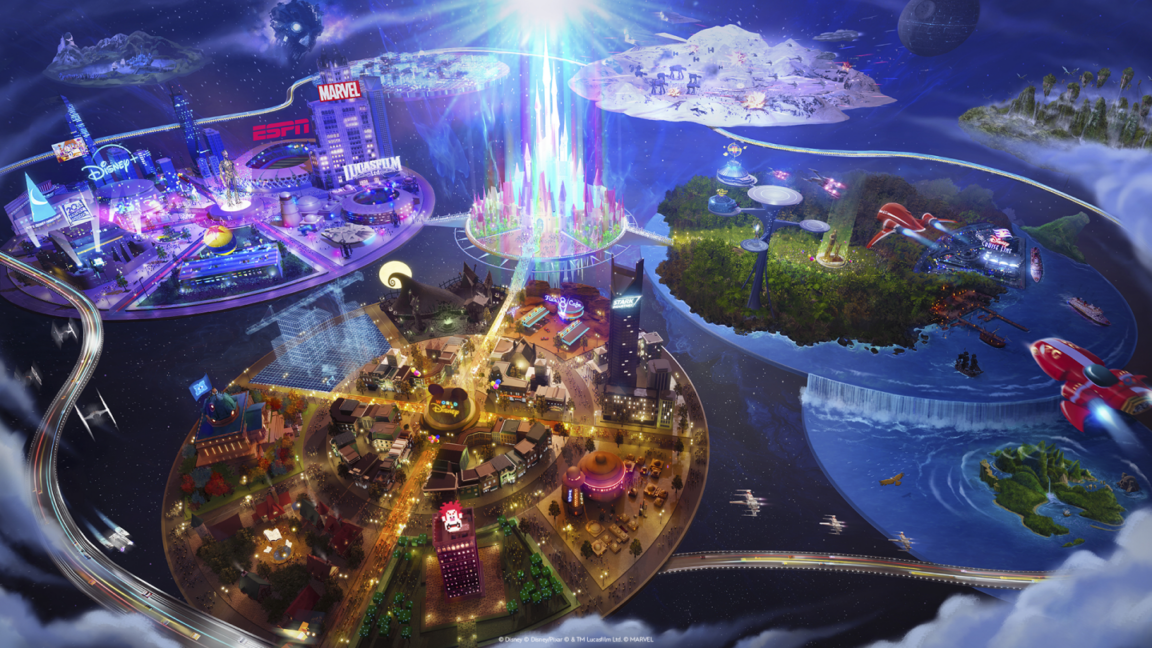
The partnership between Epic Games and Disney, bolstered by a $1.5 billion investment, was initially envisioned as a massive, cross-property gaming universe featuring iconic intellectual properties like Marvel and Star Wars. Originally scheduled for a March 2027 release, this shooter-based project has hit significant developmental roadblocks. Reports indicate that the transition to an AI-heavy workflow has contributed to an indefinite delay as the team struggles to adapt to the new production pipeline.
The internal reorganization involves moving developers into new roles specifically designed to maximize AI acceleration. According to Epic CEO Tim Sweeney, the goal is not merely to reduce headcount, but to empower individual developers to produce larger, more complex environments and systems than previously possible. By offloading the mechanical burden of coding and asset creation to AI, Epic intends to scale its development capacity. However, the current reality of the project shows that the transition is complex, involving steep learning curves and the need to harmonize disparate AI-generated components into a cohesive, high-performance gaming experience.
The Mechanics of AI-Driven Workflows
Transitioning to an AI-first architecture requires a fundamental change in how assets are generated. In the context of Unreal Engine, this means leveraging AI to handle everything from character modeling and texture generation to complex physics scripting and level design. Instead of artists meticulously sculpting every polygon or animators keyframing every movement, developers now provide prompts and constraints to AI models, which then generate the required files.
This methodology relies on the premise that AI can eventually reach a level of precision and quality that matches or exceeds human output when directed properly. In the game engine, this means the AI must understand the context of the game world, adhering to strict performance budgets and technical constraints that are unique to interactive media. The role of the human developer in this workflow is to act as a curator, performing quality control and integrating disparate AI-generated segments into a unified, executable game build. This necessitates a profound understanding of model behavior, including prompt engineering and the mitigation of “hallucinations” or logical errors that might arise in AI-written code.
Impact on Industry Standards and Technical Roles
The shift at Epic Games could have wide-reaching implications for how software is produced across the gaming industry. For years, the industry has relied on established pipelines—often referred to as the “waterfall” or “agile” methods—where specific tasks are assigned to specialists. The AI-first approach challenges these silos, potentially rendering some entry-level technical roles obsolete while elevating the demand for “AI architects” who possess the skills to steer automated systems.
While the promise of increased productivity is significant, the technical hurdles are equally formidable. Game development is notoriously detail-oriented, requiring precise optimization for hardware such as consoles and high-end PCs. AI models currently struggle with the long-range planning required to maintain consistency across a multi-year project, which may explain the recent delays in the Epic-Disney project. If the industry moves in this direction, the success of major titles will depend on the ability of AI models to maintain technical standards for optimization, lighting, and memory management—tasks that are historically difficult to automate without human intervention.
Defining the Vision for Future Interactive Experiences
The ongoing pivot serves as a litmus test for the viability of AI as a primary production tool in triple-A game development. Epic Games is positioning itself at the forefront of this transformation, aiming to export these AI-accelerated benefits to all developers utilizing Unreal Engine. If successful, this could democratize the creation of high-fidelity games, allowing smaller teams to achieve the graphical and systemic complexity previously reserved for large studios.
However, the current disruption illustrates that the path to AI-driven production is fraught with instability. The transition from human-centered creation to AI-augmented development necessitates a complete overhaul of team structures, workflows, and quality assurance processes. Whether this strategic change will result in a more efficient production cycle or a loss of artistic cohesion remains an open question. For now, the gaming industry is observing the Epic and Disney collaboration closely, as it serves as the most prominent experiment to date in replacing traditional software engineering with generative AI. As technology continues to evolve, the distinction between the machine as a tool and the machine as an architect will continue to blur, forever changing the nature of how digital worlds are constructed.
Disclaimer: This content is auto-generated for informational purposes only.
Source: Read Original News