







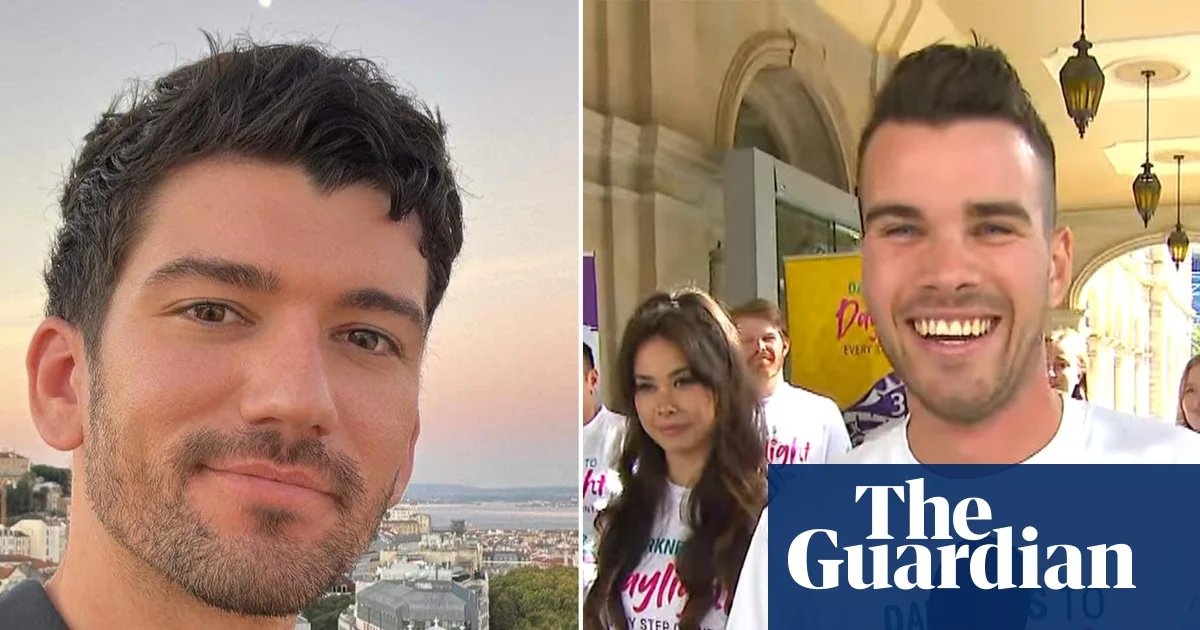
The trial of Beau Lamarre-Condon continued in the New South Wales supreme court this week, with intense scrutiny focused on forensic evidence recovered from the Paddington home where Jesse Baird and Luke Davies were killed on 19 February 2024.
Lamarre-Condon, 31, has pleaded not guilty to two counts of murder and one charge of aggravated break and enter. Prosecutors allege the former police officer entered Baird’s home disguised as an UberEats rider, executing the couple with his police-issued firearm. The defence, however, contends the deaths occurred during two separate incidents in which Lamarre-Condon acted in self-defence, claiming Davies picked up the weapon after it was flung during a struggle and subsequently shot himself.
On Tuesday, defence lawyer John Stratton SC cross-examined crime scene officer Greg Moon, casting doubt on the prosecution’s timeline. Stratton highlighted a DNA swab taken from the barrel of the alleged murder weapon, which contained a partial match to Davies. The defence suggested it was scientifically improbable for biological material from a gunshot wound to travel through a narrow hole in a bedroom door—through which the prosecution alleges Davies was shot—and lodge inside the gun’s barrel.
“The possibility or likelihood of biological material finding its way from a wound of the deceased through a hole in the door less than a centimetre in width and into the barrel of a gun … approaches zero,” Stratton argued. Officer Moon maintained his stance, telling the court, “I believe it can still happen.”
The courtroom also heard testimony from forensic pathologist Dr. Kendall Bailey regarding the nature of the injuries sustained by both men. Diagrams presented to the jury showed a bullet entered Baird’s neck and exited beneath his lip, fracturing his jaw. While Bailey noted the injury was theoretically survivable, she emphasized the severity of the damage.
“I don’t think anyone with that injury would be making any meaningful vocalisations,” Bailey said, adding that any noise produced would likely be incoherent. Regarding the shot to Baird’s temple, which penetrated the brain, Bailey testified that such a wound would cause immediate incapacitation. When asked if a person suffering such a trauma would be capable of throwing a firearm across a room, as the defence suggests, Bailey stated that while involuntary post-mortem muscle movements are possible, the person would not be making any “conscious movements.”
Further evidence provided by forensic radiologist Dr. James Raleigh detailed the catastrophic damage revealed by CT scans of the victims’ skulls. Additionally, Dr. Bailey confirmed that two wounds found on Davies’ thigh were consistent with a single-bladed weapon, though she noted these were likely inflicted at or after the time of death.
The trial, presided over by Justice Natalie Adams, is ongoing as both sides continue to debate the physical evidence surrounding the final moments of the couple’s lives.
Disclaimer: This content is auto-generated for informational purposes only.
Source: Read Original News