







Macroeconomic Resilience: India’s Growth Trajectory
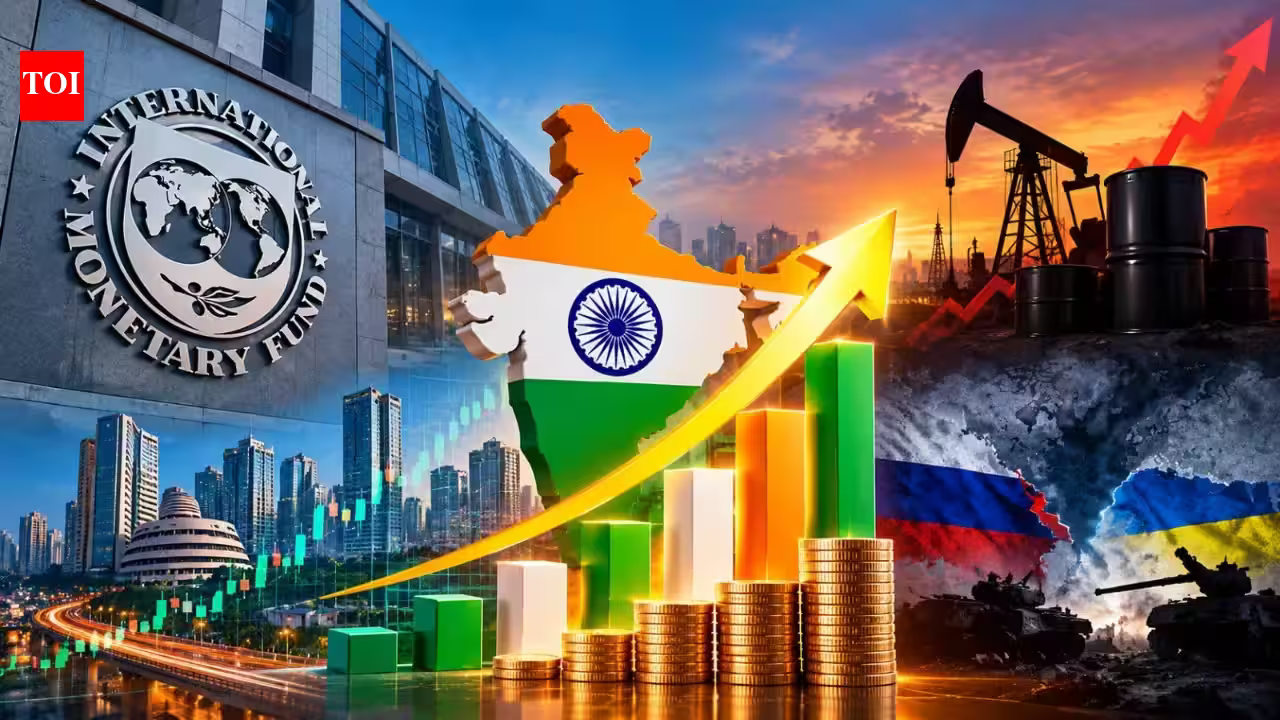
The global economic landscape currently presents a picture of stark contrasts. While many developed nations grapple with stagnant productivity and the lingering effects of inflationary pressures, India continues to maintain a position of significant strength. The latest projections from the International Monetary Fund (IMF) confirm that India is expected to sustain a GDP growth rate of approximately 7% through 2026 and 2027. This consistent performance places the country at the forefront of the world’s major economies, signaling a transition from mere recovery to sustained structural expansion.
This trajectory is not accidental; it is the result of a confluence of internal factors that have shielded the economy from the volatility seen elsewhere. Domestic demand remains the primary engine of this growth, supported by a burgeoning middle class and a systemic shift toward formalization within the economy. When combined with a demographic dividend that offers a young, capable workforce, the macroeconomic foundations appear stable enough to withstand the headwinds of an unpredictable global environment.
The Mechanics of Domestic Consumption and Services
Central to India’s economic success is the resilience of its service sector and the robustness of its domestic consumer market. Historically, the Indian economy relied heavily on agriculture and basic manufacturing, but the current decade has seen a decisive shift toward high-value services, including information technology, financial services, and digital infrastructure. This pivot has allowed the country to maintain momentum even when global trade volumes fluctuate.
Furthermore, the expansion of the domestic market provides a critical buffer against external shocks. As the purchasing power of the urban and semi-urban population increases, the demand for goods and services creates a virtuous cycle of investment and employment. The services sector, in particular, has become a key exporter of talent and digital solutions, ensuring that India remains integrated into global supply chains while simultaneously growing its domestic capabilities. The recent quarterly data, which recorded a GDP growth of 7.8%, underscores that investment in manufacturing and capital expenditure projects is now matching the consumption-led growth patterns seen in previous years.
Institutional Consensus and the Upswing in Forecasts
The IMF’s projections are part of a broader trend of consensus among international financial institutions. Organizations such as the World Bank, the OECD, S&P Global Ratings, and Moody’s have all recently recalibrated their outlooks for India, mostly in an upward direction. This collective optimism is rooted in the country’s ability to remain stable despite regional geopolitical conflicts and fluctuations in energy costs.
The World Bank’s decision to raise its projection for 2026-27 to 7.1% highlights a growing confidence in India’s capacity for structural transformation. Even as global agencies flag risks—such as the potential for supply chain disruptions in the Middle East or energy market volatility—the prevailing sentiment is that India’s growth is fundamentally driven by its own internal reform agenda. These reforms, spanning tax harmonization, infrastructure investment, and digitalization of government services, have reduced the cost of doing business, thereby attracting both domestic capital and foreign direct investment.
Navigating Global Headwinds and Energy Volatility
Despite the positive narrative, India’s economic path is not without significant obstacles. The most immediate concern is the cost of energy. As a major importer of crude oil, India is inherently vulnerable to global price spikes. While the economy has displayed a remarkable ability to absorb these costs without falling into a recession, the impact on household purchasing power and corporate margins cannot be ignored. Persistent high energy prices have the potential to exert inflationary pressure, which may force monetary authorities to maintain higher interest rates for longer, potentially dampening credit growth.
Additionally, the reliance on weather-dependent agricultural cycles remains a structural concern. Below-normal monsoon patterns have historically served as a drag on rural demand, which remains a vital component of the overall consumption story. To mitigate these risks, the current economic strategy emphasizes infrastructure modernization and the diversification of energy sources. By investing in renewable energy and green hydrogen initiatives, India aims to reduce its long-term reliance on imported fossil fuels, thereby insulating its growth trajectory from the geopolitical instability that typically impacts oil-producing regions.
The Fragility of Global Economic Stability
While India’s outlook is favorable, it exists within a global framework that is increasingly characterized by fragility. The IMF has noted that global growth remains uneven, with a projected expansion of only 3.1% in 2026 and 3.4% in 2027. This divergence suggests that India is effectively decoupling its growth from the slower-moving economies of the West and certain parts of East Asia.
However, a truly globalized economy means that India cannot remain entirely immune to external shocks. A slowdown in major export destinations would inevitably impact India’s manufacturing ambitions. Therefore, the strategic focus for Indian policymakers and corporate leaders is to enhance competitiveness. By focusing on quality, technological integration, and the scaling of supply chains, India is positioning itself as a reliable alternative in a world where global manufacturers are increasingly adopting “China Plus One” strategies to derisk their production bases.
Looking Ahead: Sustaining the Growth Momentum
The road to becoming a larger global economic power depends on sustaining these high growth rates through the end of the decade. The key will be maintaining the pace of structural reforms while balancing fiscal responsibility. The emphasis on capital expenditure by the government has already laid the groundwork for better connectivity through roads, ports, and digital networks, which lowers the logistics costs that previously hindered Indian manufacturing.
As India moves toward 2027, the focus must shift toward maximizing human capital. The demographic advantage—a young, working-age population—only yields long-term growth if the workforce is equipped with the skills necessary for a digital and automated economy. Vocational training, private-public partnerships in education, and continued support for the burgeoning startup ecosystem will be essential.
In conclusion, India’s economic narrative is currently one of the most compelling stories in the global market. While risks remain regarding energy prices, monsoon variability, and global trade tensions, the internal mechanisms of growth remain strong. Provided that the current trajectory of investment and policy reform continues, India is well-positioned to serve as a primary stabilizer for the global economy in the years to come. The consensus among global agencies is clear: India has moved from the periphery to the center of global growth discussions, and its performance over the next few years will be a defining factor for the broader emerging market landscape.
Disclaimer: This content is auto-generated for informational purposes only.
Source: Read Original News