









The Strategic Shift in Global Automotive Manufacturing
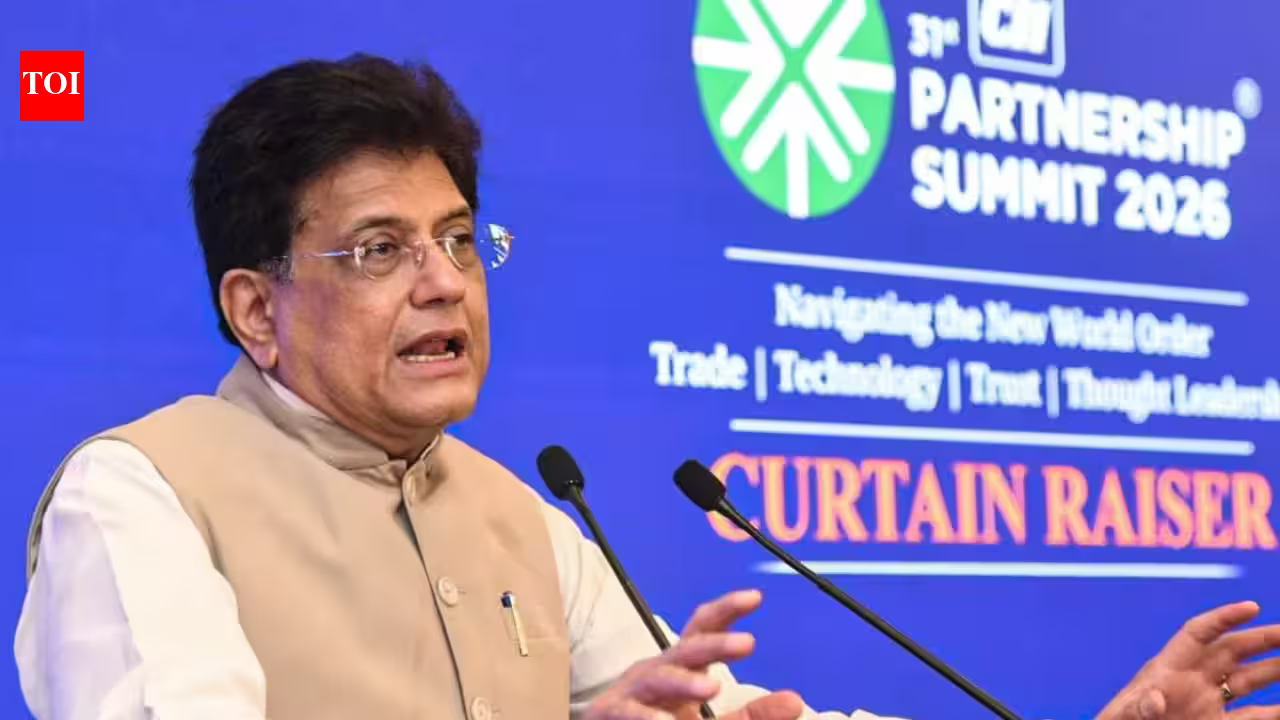
The global automotive industry is undergoing a structural realignment that favors cost-efficient, high-growth, and resource-rich manufacturing jurisdictions. Recent pronouncements by the Indian Commerce and Industry Minister, Piyush Goyal, regarding the migration of European automotive manufacturing to India underscore a deepening synergy between European design expertise and Indian operational efficiency. As the European Union continues to tighten its regulatory framework, particularly concerning environmental standards and labor costs, the comparative advantage of manufacturing within the European bloc is waning. India, by contrast, is positioning itself as a robust alternative—a global hub that offers a scalable ecosystem for production, technical labor, and supply chain integration.
The narrative provided by the government suggests that the future of automotive production is not merely about domestic sales, but about leveraging India as an export base. For European manufacturers, the cost of compliance with stringent regional mandates often outpaces the margins generated from vehicle sales. In the Indian market, companies can achieve economies of scale that are increasingly elusive in Europe. This shift is not merely speculative; it is a calculated response to the necessity of maintaining margins while transitioning toward a zero-emission landscape. India’s strategic trade negotiations with both the UK and the EU are designed to facilitate this migration, lowering duty structures to make the transcontinental manufacturing model commercially viable.
Lessons from Historical Integration and Re-engineering
The transformation of Jaguar Land Rover (JLR) under the ownership of Tata Motors serves as a foundational case study for this evolving trend. When Tata Motors acquired JLR, the British marque was plagued by inefficient cost structures and an inability to adapt to modern global demand. The eventual turnaround of JLR was not just a victory of brand management, but a success story of engineering integration. By shifting certain production models to India and adopting advanced re-engineering practices, Tata Motors managed to stabilize and eventually monetize the operations.
This success provided a blueprint for how Indian manufacturing capabilities can revitalize legacy European brands. The integration allowed for a leaner production cycle and a more competitive price point for the end consumer. As European companies face pressure to modernize their fleets while navigating high overheads, the JLR model highlights that the path to profitability often involves decentralizing manufacturing. By utilizing India’s technical talent pool and mature automotive component manufacturing sector, European firms can replicate the cost-efficiency that saved JLR from the brink of insolvency. This historical precedent is now being viewed as a standard operational strategy for other European entities seeking to survive in a high-cost environment.
Navigating Regulatory Landscapes and Cost Competitiveness
European automotive manufacturers currently operate under some of the most rigorous regulatory regimes in the world. While these regulations serve environmental and safety objectives, they create an environment where cost-competitiveness is sacrificed at the altar of compliance. Energy costs, social security taxes, and rigid employment laws in the EU create a significant barrier to entry for small-to-medium-scale vehicle production. The result is that European vehicles are becoming prohibitively expensive to produce domestically, forcing firms to seek offshore locations that can provide both quality and cost parity.
India offers an ecosystem where production costs are lower due to more flexible labor dynamics and a sprawling, integrated supply chain. Furthermore, India’s push for the “Make in India” initiative has matured over the last decade, resulting in a robust infrastructure of component manufacturers, tier-one suppliers, and specialized engineering firms. When a European manufacturer establishes a plant in India, they are not starting from scratch; they are plugging into a network that is already optimized for global standards. By shifting production to India, European firms can bypass the prohibitive costs of European compliance without sacrificing the quality benchmarks that their customers demand. This shift represents a transition from viewing India as a market for finished goods to recognizing it as a critical pillar of their global manufacturing strategy.
The Role of Trade Agreements in Global Expansion
Trade agreements are the primary conduits through which this industrial shift is being realized. India’s ongoing negotiations with the UK and the EU regarding duty cuts on automobiles represent a pivotal moment in international trade policy. By reducing tariffs, India is incentivizing European manufacturers to move their base of operations without the penalty of high import taxes on components or finished vehicles. This reciprocity is essential; India seeks access to high-end European technology and premium goods, while the EU seeks an affordable manufacturing base for its automotive sector.
The potential for increased trade extends beyond automobiles into sectors like petroleum, electronics, and pharmaceuticals. By broadening the scope of trade, India is signaling that it is open for high-value investment. When European carmakers move their manufacturing to India, they bring with them advanced technology and best practices in sustainability and automation. This cross-pollination of industrial knowledge benefits the Indian workforce and enhances the domestic manufacturing capability, creating a virtuous cycle of growth. The trade deals effectively act as the regulatory framework that makes the transition from a localized European operation to a globalized Indian-centric operation feasible.
Future Outlook for the Indian Automotive Ecosystem
As the automotive industry pivots toward electrification and intelligent vehicle software, the demand for highly skilled labor and scalable manufacturing environments has never been greater. India is uniquely positioned to fulfill this demand. The country has a massive engineering population and a growing reputation for excellence in software and hardware integration. As European manufacturers seek to pivot away from traditional internal combustion engine production toward new energy vehicles, the manufacturing flexibility available in India will become a primary competitive advantage.
Looking ahead, the Indian government’s focus on infrastructure development—such as the creation of industrial corridors and the enhancement of port connectivity—supports the ambition of becoming a global automotive powerhouse. While challenges remain in terms of logistics and local energy reliability, the direction of travel is clear. European automotive firms that fail to adapt their manufacturing footprints to include cost-effective hubs like India risk being undercut by more agile competitors. The long-term success of this vision will depend on the stability of trade policies and the continued modernization of India’s manufacturing infrastructure. However, if the current momentum continues, India will evolve from a peripheral player into a central anchor of the global automotive manufacturing landscape, fundamentally altering the geography of the industry for decades to come.
Disclaimer: This content is auto-generated for informational purposes only.
Source: Read Original News