









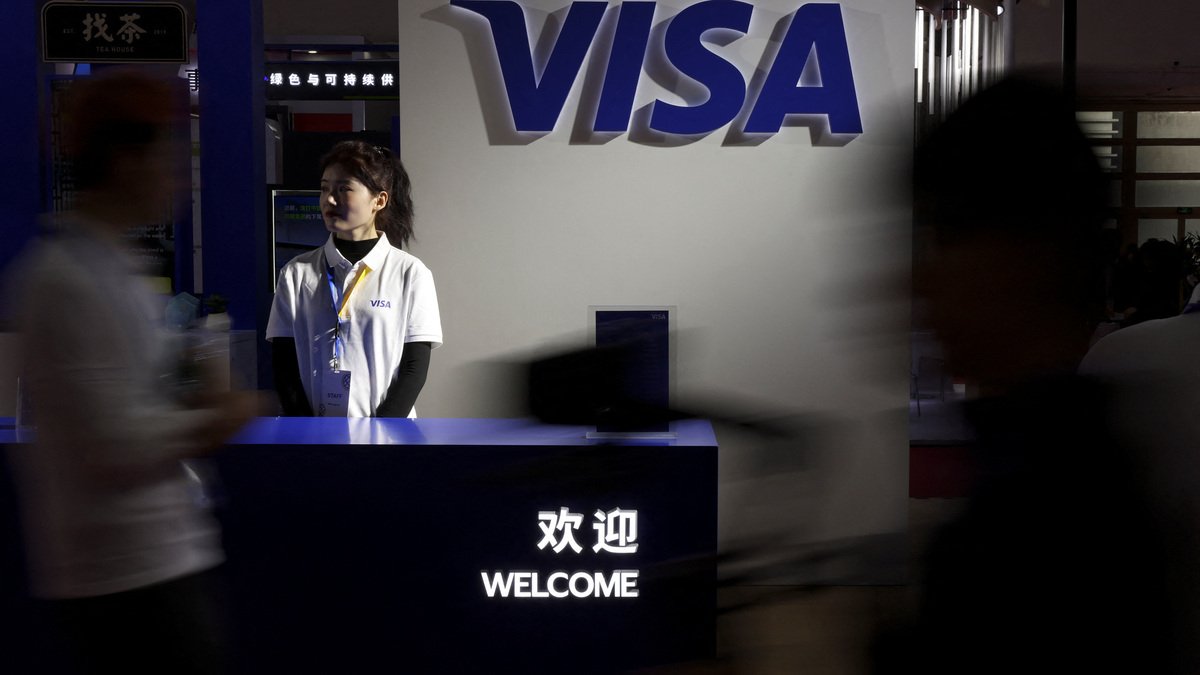
Visa has officially received the green light from China’s central bank to initiate preparations for establishing a domestic bankcard clearing institution. This development marks a significant shift in the global financial landscape, signaling the opening of one of the world’s largest payment markets to international competition. The move, confirmed on Tuesday, places Visa in a prime position to integrate its services directly into the digital-first infrastructure of the Chinese economy.
Breaking Into the Chinese Payment Ecosystem
For decades, the Chinese payment sector has been dominated by local giants like UnionPay, which maintained a near-monopoly on domestic clearing services. Visa’s move to establish a domestic clearing entity represents a major strategic victory for the U.S.-based fintech powerhouse. By securing regulatory approval, the company can now begin the complex process of setting up the necessary infrastructure to process yuan-denominated transactions within mainland China.
The implications for the broader tech and fintech industry are profound. As global finance moves further away from traditional cash-based systems, the ability to operate clearing houses locally is essential. Visa’s entry is expected to foster greater interoperability between international payment systems and the rapidly evolving Chinese digital financial ecosystem, which is currently powered by super-apps that leverage advanced mobile technology.
The Role of AI and Data Analytics in Modern Clearing
As Visa prepares to build its domestic operations, industry experts suggest that the company will heavily rely on its advanced artificial intelligence and machine learning frameworks. Modern payment clearing is no longer just about moving money from one account to another; it is a sophisticated operation of real-time fraud detection, data security, and predictive behavioral analysis.
Visa’s global strategy has increasingly centered on AI-driven security tools that can identify fraudulent patterns in milliseconds. By importing these high-tech systems into the Chinese market, the firm intends to differentiate itself from incumbent players. Furthermore, the integration of AI will be critical for managing the high volume of transactions characteristic of the Chinese retail sector. Data analytics will also play a key role, helping Visa navigate local compliance requirements while optimizing the user experience for domestic merchants and consumers who are accustomed to frictionless, code-based payment systems.
A New Frontier for Tech Interoperability
This regulatory breakthrough aligns with broader trends in the tech industry, where the lines between software providers, social media platforms, and financial institutions are becoming increasingly blurred. With the rise of “embedded finance,” tech companies are embedding payment layers into their products to increase user retention and engagement.
Visa’s expansion into China acts as a bridge for this trend. By providing a stable, high-performance clearing infrastructure, Visa enables tech firms to deploy financial services more easily across borders. Moreover, as the global economy pushes toward digital assets and modernized clearing protocols, having a presence in China—a leader in digital payment adoption—is vital for any company looking to maintain a dominant position in the global tech hierarchy.
As the company proceeds with its setup phase, all eyes will be on how it coordinates with local regulators to ensure full compliance while rolling out its signature payment technologies. This expansion is not merely a business growth opportunity; it is a pivotal moment for global fintech, suggesting that despite geopolitical complexities, the demand for high-speed, secure, and globally connected payment infrastructure remains a top priority for the world’s largest economies. The success of this initiative could set a precedent for other international financial technology firms looking to modernize the way the world moves money.
Disclaimer: This content is auto-generated for informational purposes only.
Source: Read Original News