







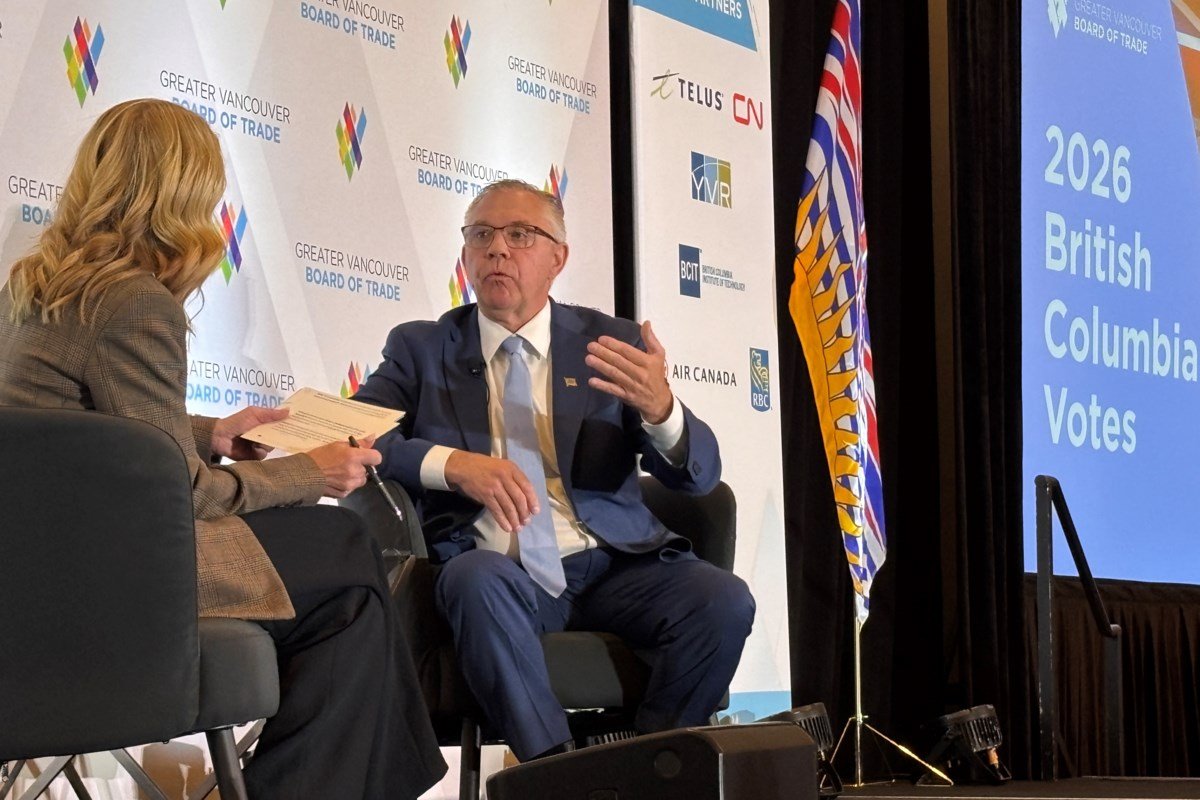
British Columbia’s provincial election candidates took the stage at the Greater Vancouver Board of Trade (GVBOT) this week, but the mood in the room was anything but optimistic. As the October 24 vote approaches, local business leaders are sounding the alarm on a deteriorating economic climate, with internal polling revealing that nearly 80% of members believe the province is on the wrong track.
The event, held at the Hyatt ballroom, saw Premier David Eby, BC Conservative Leader Lorne Doerkson, and BC Green Party Leader Emily Lowan struggle to soothe a crowd deeply concerned about the province’s $13.8-billion deficit and a ballooning debt-to-GDP ratio.
## A Crisis of Confidence in the Local Economy
GVBOT CEO Bridgitte Anderson opened the session by presenting sobering data: 95% of the board’s members are anxious about the province’s financial future. Among their chief complaints are the lack of housing affordability and a regulatory environment that fails to attract necessary capital investment.
While the tech sector continues to seek AI-driven efficiencies and global venture capital, businesses are finding it increasingly difficult to compete. Despite the high-tech aspirations of the region, 72% of surveyed members stated that the government is doing far too little to streamline the bureaucracy that keeps capital from flowing into B.C.
## Clashing Visions for a Debt-Ridden Future
The three leaders offered starkly different prescriptions for the province’s economic ills. Premier Eby cited external global pressures and U.S. tariff threats as the primary culprits for economic stagnation, promising tax cuts for businesses while raising rates on the wealthy. However, skeptics in the room recalled unfulfilled past promises, such as a previous rebate that never materialized.
Lorne Doerkson, representing the surging BC Conservatives, focused on the “get out of the way” approach. He pledged to slash red tape, halt the expansion of provincial sales taxes on professional services, and aggressively expand the province’s LNG production. His vision centers on a classic conservative platform of private sector empowerment, though he admitted he would first need to audit the government’s books to understand the full extent of the debt crisis.
Conversely, Emily Lowan of the BC Green Party criticized both mainstream parties for “leading the province in circles.” She advocated for a significant wealth tax to fund social programs like universal child care and proposed stricter rent controls to stabilize the cost-of-living crisis that is currently driving labor shortages in the metropolitan region.
## The Tech and Investment Disconnect
Missing from much of the debate was a cohesive plan to leverage B.C.’s innovation potential. While the leaders sparred over resource extraction and tax hikes, the business community remains frustrated by the provincial inability to maintain a competitive edge.
Many firms are struggling with the high costs of operations and the difficulty of attracting talent in a city where housing costs are disconnected from wages. As the provincial debt is projected to climb to 37.4% of GDP by 2029, the fear is that without a concrete plan to drive productivity—potentially through digital transformation or improved regulatory pathways for tech-heavy industries—B.C. will continue to fall behind.
With the televised debate scheduled for October 14, voters are looking for more than political posturing. For Vancouver’s business community, the message from the Board of Trade is clear: the current trajectory is unsustainable, and they are waiting for a leader who can move beyond campaign rhetoric to restore economic growth.
Disclaimer: This content is auto-generated for informational purposes only.
Source: Read Original News