








Himalayan Flash Floods: Can a Trilateral Mechanism Bridge the India-China Divide?
The recent devastation along the Budhigandaki river in Nepal, where a landslide-induced flood obliterated three dozen homes and critical infrastructure, serves as a grim warning. With five people confirmed missing and thousands left vulnerable, the catastrophe follows the harrowing events of late August, which resulted in a national emergency of unprecedented scale. As Nepal tallies over 1,400 lives lost and billions in reconstruction costs, the necessity for a regional, coordinated response to Himalayan climate hazards has moved from a theoretical desire to an urgent humanitarian imperative.
A Fragile Landscape Under Siege
The Himalayan range—geologically young and tectonically volatile—is facing an existential crisis. The convergence of rapid glacial retreat, thawing permafrost, and erratic precipitation patterns has created a “perfect storm” of disaster risk. When these environmental stressors collide with haphazard infrastructure development—such as poorly planned road networks and unmonitored hydropower projects—natural hazards inevitably escalate into human tragedies.
Nepal, despite contributing a negligible fraction to global greenhouse gas emissions, finds itself on the front lines of this climate injustice. Because the region’s river systems transcend national borders, the lack of a unified early-warning system means that a tragedy triggered in the high-altitude reaches of one country can rapidly spiral into a disaster for downstream communities in another.
The Case for a Trilateral Resilience Framework
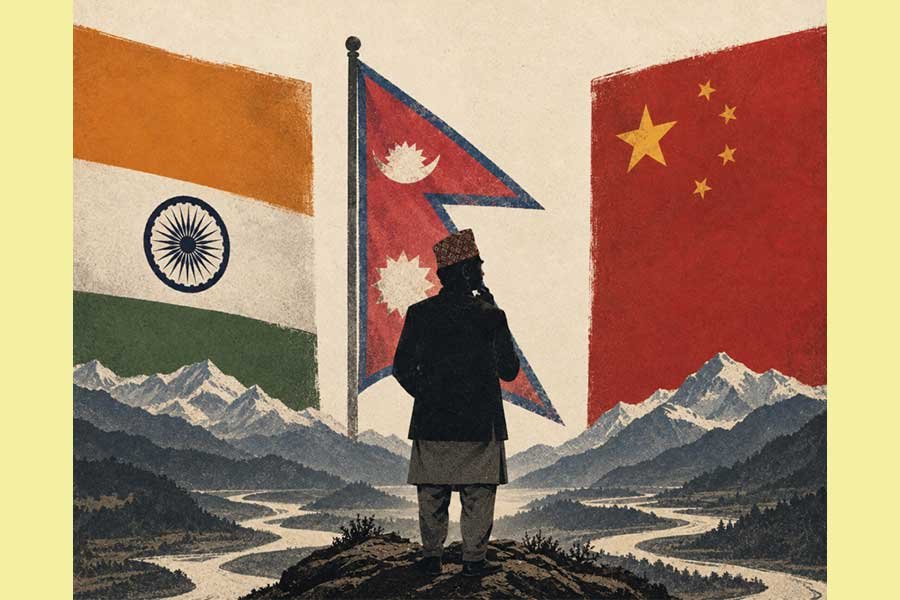
Addressing the 81st United Nations General Assembly, Nepali Prime Minister Balendra Shah proposed a Himalayan Climate Resilience Mechanism involving Nepal, India, and China. The objective is clear: to facilitate the sharing of satellite imagery, technical expertise, and real-time hydrological data to enhance cross-border emergency preparedness.
However, the proposal faces a monumental hurdle: the profound trust deficit between New Delhi and Beijing. Strategic competition and concerns regarding geospatial data security have historically hindered collaboration on transboundary water issues. For India, the experience with the Yarlung Tsangpo (Brahmaputra) has been particularly challenging, with China’s hydrological data sharing becoming inconsistent since 2022. The lack of transparency regarding large-scale upstream dam projects further complicates the atmosphere of mutual suspicion.
Incremental Cooperation: The Path Forward
Expecting a sudden diplomatic thaw between India and China is unrealistic. Instead, a pragmatic, modular approach is required. Rather than attempting a wholesale shift in regional policy, the three nations could leverage existing frameworks, such as the SAARC Disaster Management Centre in Gandhinagar, to initiate technical-level dialogues.
By focusing initially on non-sensitive, humanitarian-grade data—such as public hazard warnings and flood-risk assessments—the nations can build a “habit of cooperation.” Testing interoperable early-warning systems in specific, high-risk river basins could serve as a pilot project to prove the efficacy of the trilateral model.
The Himalayas do not discriminate based on geopolitical alignments, nor do the glacial lake outburst floods care for administrative boundaries. While environmental cooperation cannot solve the deeper structural disputes between these Asian giants, it offers a necessary channel for functional engagement. If New Delhi and Beijing can prioritize the safety of their citizens over strategic posturing, they may find that even a limited technical partnership is the most effective way to protect the region’s shared, fragile future.
Disclaimer: This content is auto-generated for informational purposes only.
Source: Read Original News