








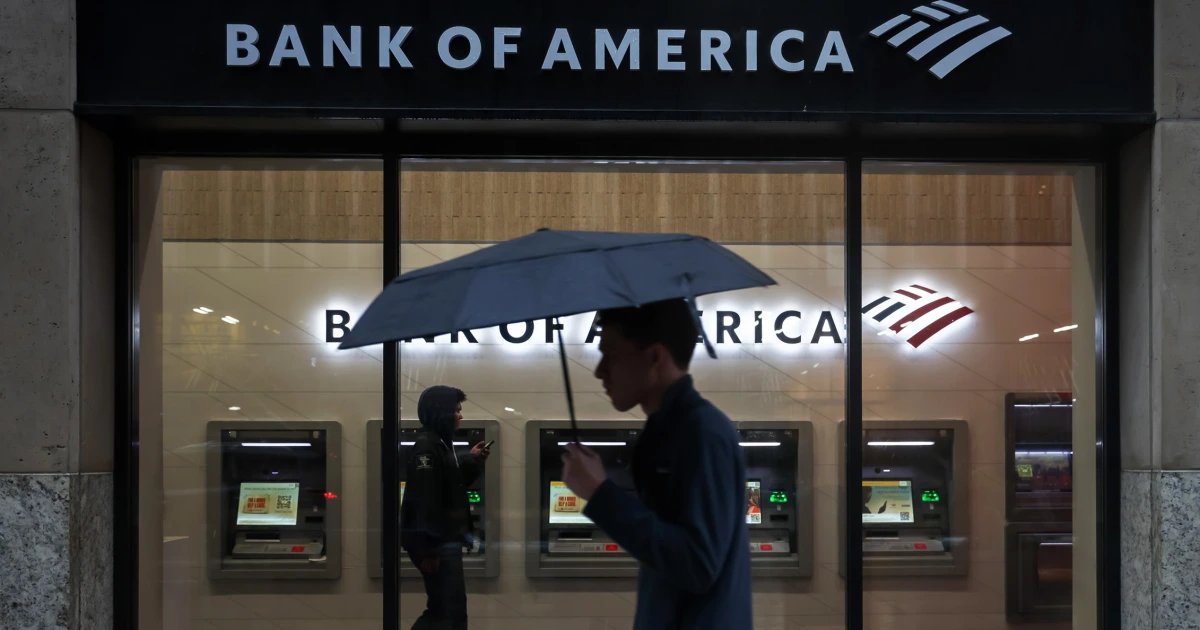
Bank of America has been hit with a massive $1.2 billion penalty following a federal crackdown on its failure to adhere to anti-money laundering and international sanctions protocols. The fine, announced by the U.S. Treasury Department on Tuesday, marks one of the most significant regulatory enforcement actions in the nation’s history, signaling a aggressive stance toward oversight of the country’s largest financial institutions.
The ruling includes a $750 million penalty issued by the Office of the Comptroller of the Currency (OCC), representing the largest fine that specific regulator has ever levied. Treasury Secretary Scott Bessent emphasized that the sheer scale of the bank’s operations—managing trillions in payments—made the lapses in compliance particularly dangerous. “Today’s actions send a clear message that even the biggest financial institutions are not above the law,” Bessent stated.
## Systemic Failures in Compliance Oversight
The regulatory findings reveal that Bank of America admitted to willfully violating the Bank Secrecy Act. Specifically, the bank failed to maintain mandatory anti-money laundering (AML) safeguards and neglected to file required Suspicious Activity Reports (SARs).
Federal investigators identified that the bank allowed over $5 billion in suspicious transactions to pass through its systems without timely reporting to the Financial Crimes Enforcement Network (FinCEN). Of this total, approximately $1 billion was linked to high-risk illicit finance, including connections to Chinese money laundering networks, trade-based fraud, and suspicious financial activities centered near the U.S. southwest border. Furthermore, the Office of Foreign Assets Control (OFAC) identified 475 instances where the bank processed payments in violation of sanctions programs targeting nations and entities involved in terrorism, narcotics trafficking, and aggressive state-level conflicts, including Russia, Iran, and Belarus.
## Tech-Driven Compliance in the Age of AI
Bank of America responded to the ruling by highlighting the ongoing modernization of its financial security infrastructure. In a statement, the bank noted that it has already invested billions into new technology and the expansion of its compliance workforce.
In the modern financial landscape, the tech industry plays a critical role in how institutions like Bank of America manage risk. Major financial firms are increasingly turning to Artificial Intelligence (AI) and machine learning to replace legacy monitoring systems. Modern compliance platforms now use predictive analytics to identify patterns indicative of money laundering that human analysts might miss. However, regulators have increasingly warned that as banks adopt sophisticated AI to streamline payment processing, those same systems must be rigorously stress-tested for regulatory compliance.
Google’s own suite of enterprise tools, including advanced cloud-based data analytics and Google Cloud’s Security AI Workbench, are frequently utilized by large-scale institutions to fortify their internal monitoring. As banks process trillions of dollars, the integration of these AI tools is becoming a regulatory necessity rather than a competitive advantage. The Treasury’s mandate suggests that as the volume of global transactions grows, reliance on outdated manual oversight is no longer tenable for the banking sector.
## Future Outlook for Banking Regulation
The sheer size of the fine underscores a shift in how federal agencies evaluate the risk profile of “systemically important” financial institutions. By forcing an admission of “willful” violations, the Treasury is signaling that it will no longer accept human error or technical debt as a defense for gaps in monitoring.
As Bank of America prepares to release its third-quarter earnings, the $1.2 billion charge serves as a stark reminder of the costs associated with failing to scale security infrastructure alongside technological growth. The bank has pledged to complete the necessary remedial work to address the gaps identified by regulators, aiming to restore confidence in its role as a gatekeeper of the U.S. financial system.
Disclaimer: This content is auto-generated for informational purposes only.
Source: Read Original News