









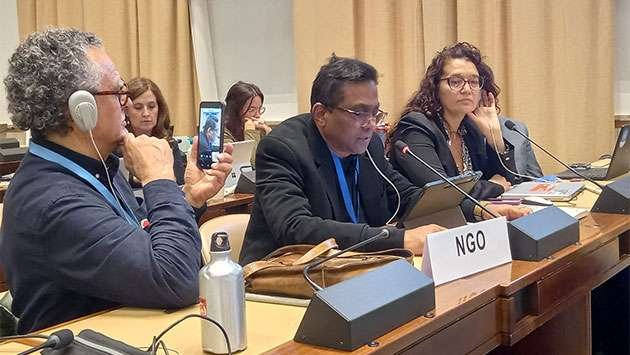
GENEVA – A high-level coalition of international legal experts, environmental scientists, and human rights advocates has launched a formal campaign calling for the establishment of a new global framework to ensure “legal accountability” for large-scale environmental destruction. The initiative, announced Wednesday, seeks to classify widespread ecological damage—often referred to as “ecocide”—as a punishable offense under international law, mirroring the severity of war crimes and crimes against humanity.
Proponents of the movement argue that the current patchwork of national regulations is insufficient to address the scale of modern environmental crises. “The planet is reaching a breaking point,” said Dr. Elena Vance, a lead environmental jurist, during a press conference at the United Nations headquarters. “Too often, corporations and state actors operate with impunity, treating environmental degradation as a mere operational cost rather than a criminal violation. We must shift the burden of responsibility so that global accountability is the rule, not the exception.”
The proposal aims to create a binding legal mechanism that would empower international courts to prosecute those responsible for deliberate, large-scale destruction of nature, such as massive deforestation, the pollution of international water systems, and catastrophic chemical contamination. While international environmental law currently focuses heavily on regulation and mitigation, this new movement insists that punitive action is the only viable deterrent against what they term “the death of ecosystems.”
The movement has gained significant momentum in the wake of recent reports on the accelerating rate of biodiversity loss and the worsening climate emergency. Advocates are pushing for an amendment to the Rome Statute, the founding treaty of the International Criminal Court (ICC), to include ecocide as a core crime. If adopted, this would mark the most significant expansion of international criminal law since the Nuremberg Trials.
However, the initiative faces stiff opposition from powerful industry lobbies and several nations concerned that such laws could infringe upon economic sovereignty and complicate global trade. Critics argue that defining environmental “crimes” is inherently subjective and could lead to protracted legal battles that do little to address the root causes of climate change.
“While the intent is noble, we must be wary of creating legal structures that stifle economic development or lack the clarity required for criminal prosecution,” noted Marcus Thorne, an international trade policy analyst. “The challenge lies in distinguishing between industrial development and criminal negligence.”
Despite these hurdles, the coalition remains defiant, citing a growing consensus among legal scholars that the “right to a healthy environment” must be codified as a fundamental human right. As the debate moves from international forums to the public eye, advocates are encouraging citizens worldwide to demand that their governments support a global legal standard. “Nature is the silent victim,” Dr. Vance concluded. “It is time we gave the Earth a voice in the halls of justice.”
Disclaimer: This content is auto-generated for informational purposes only.
Source: Read Original News