








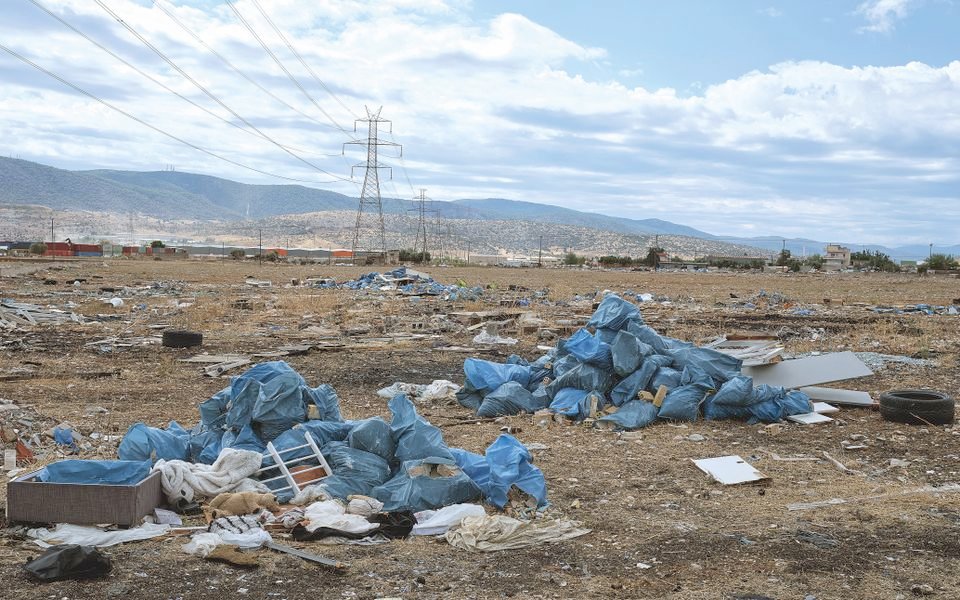
In the Thriasio Plain of western Attica, an industrial expanse defined by oil refineries and steel mills, a specialized seven-member police unit is fighting a persistent war against an environmental crisis. Since its inception in July 2025, the Illegal Waste Dumping Prevention Team has worked in plainclothes and used unmarked vehicles to surveil a landscape scarred by mounds of rubble, smoldering construction debris, and abandoned furniture.
The unit, led by Police Captain Stelios Chatzis, was formed to combat the rampant, uncontrolled dumping that has turned the region into a repository for the capital’s waste. Their efforts recently culminated in a significant breakthrough: the interception of a tanker truck caught discharging hazardous liquid waste into a fuel station’s drainage system in the district of Egaleo. Through a month of rigorous surveillance, investigators discovered the waste was being funneled directly into the Kifissos River and subsequently into the sea. By coordinating with the public water utility EYDAP to use dye tracers and cameras, the team confirmed an environmental “time bomb” that had been operating in plain sight.
The scale of the problem is vast. Drone mapping of the Aspropyrgos area alone reveals that over 96 hectares of land are currently blanketed in illegally dumped debris. Chatzis notes that the situation has worsened due to surging demand for renovation programs, which generate massive amounts of construction waste that small-scale operators often illegally dump to avoid management fees. To date, the unit has made 116 arrests and seized 26 vehicles, signaling a shift toward proactive enforcement.
However, the team has increasingly identified an organized criminal element behind the scenes. While some dumping is performed by individual truck owners looking for extra cash, the police have uncovered sophisticated networks of professional drivers who are paid by companies to transport waste to legal facilities but instead pocket the fees and dump the loads in remote areas. These actors frequently adjust their routines to mirror police shift patterns, underscoring the level of planning involved.
The impact of this negligence is felt acutely by local governments. Aspropyrgos Mayor Giannis Ilias reports that the municipality has spent approximately €3.5 million over the last two and a half years just to clear illegally dumped materials. “They set fire to the rubble every night to make room for more,” Ilias said. Meanwhile, Fyli has turned to punitive measures, raising the fine for illegal dumping to €30,000 to deter offenders.
The environmental degradation is visible everywhere. Vasilis Sfakianopoulos, founder of the volunteer group Save Your Hood, leads cleanup efforts that are often rendered futile within days as new waste is deposited. He emphasizes that the “trash tells a story,” often including internal company documents and receipts that implicate businesses in the illegal disposal of their own operational waste.
According to the Ministry of the Environment, an estimated 3 to 4 million tons of waste remain unrecorded annually in Greece, in addition to the 17 million tons managed legally in 2025. Manolis Grafakos, general secretary for waste management coordination, advocates for a more stringent regulatory environment, including real-time GPS tracking for waste transport and tighter cross-checking at recycling facilities.
While the Illegal Waste Dumping Prevention Team has succeeded in curbing some of the most egregious offenses, its members acknowledge that current manpower and resources are stretched thin. For the officers on the front lines, the mission remains a grueling but necessary daily battle against a tide of pollution that continues to threaten the ecology of the Attica region.
Disclaimer: This content is auto-generated for informational purposes only.
Source: Read Original News