








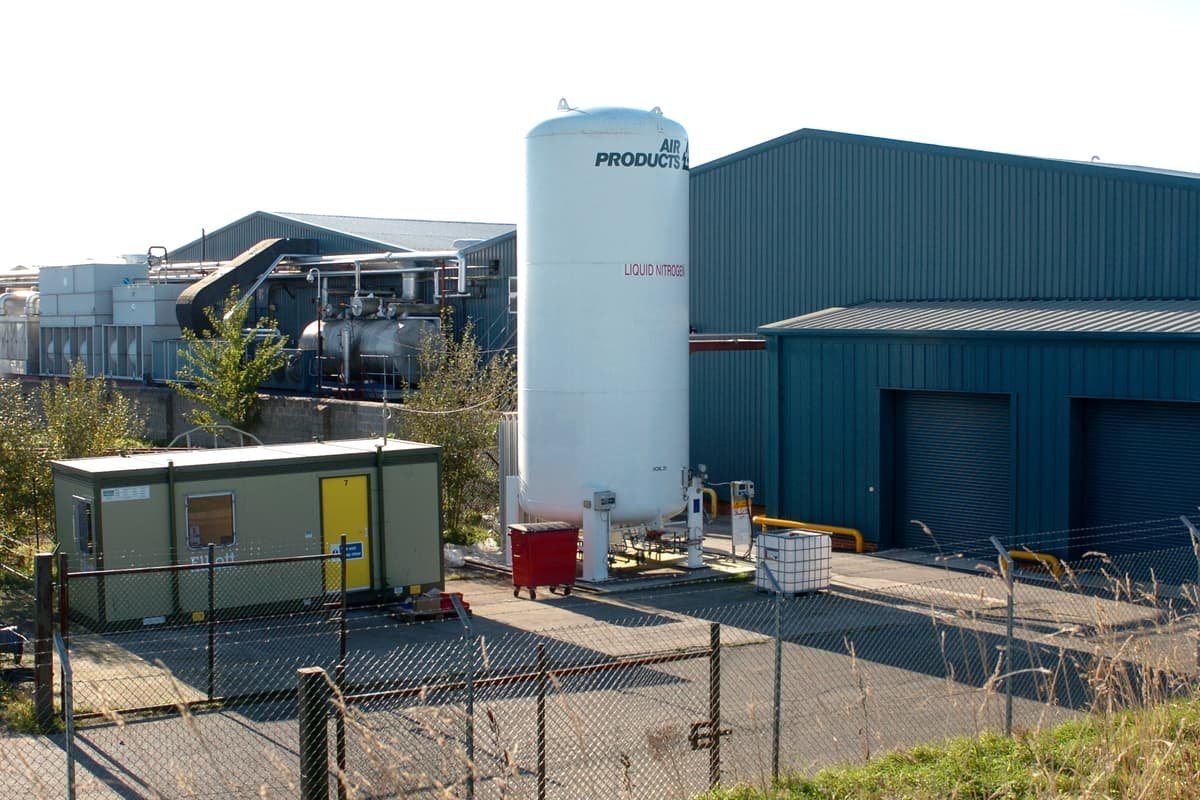
Residents in east Leeds have voiced significant concerns after local authorities greenlit the conversion of a former ice cream factory into an industrial storage facility. The decision, which paves the way for the redevelopment of the site on Manston Lane, follows a heated planning panel meeting at Leeds Civic Hall where community members and local representatives pushed back against the project’s environmental impact.
The application, a joint venture between the Moorfield Group and Peloton Real Estate, seeks to transform the site into a hub for the storage of building materials and vehicles. However, the proposal has been met with stiff resistance from the outset. Leeds City Council received more than 60 letters of objection from households in the immediate vicinity, citing fears regarding noise pollution, the circulation of dust, and degraded air quality resulting from an increase in Heavy Goods Vehicle (HGV) traffic.
Labour ward councillor James Gibson, a vocal opponent of the scheme, challenged the necessity of the project, arguing that it sits in an “overwhelmingly residential” area. During the meeting, Councillor Gibson highlighted the proximity of the proposed facility to family homes, noting that some residences would be situated as little as ten metres from the storage site.
“I wish to object to this application because it will have an unacceptable impact on residential amenity through noise, dust, and visual intrusion,” Councillor Gibson told the panel. He further emphasized that residents were already contending with existing environmental stressors, noting that complaints regarding air quality and dust from another nearby industrial site were already a point of contention in the community.
Local resident Kevin Greenwood echoed these sentiments during the session, characterizing the approval of the storage site as a “backward step” for the neighborhood. “It will negatively impact me, the other nearby residents, and the general tone and aspect of the area,” Greenwood stated.
Despite the mounting opposition, council members were informed that the site is formally allocated for employment purposes within the local planning framework, rather than for residential use. This land-use classification played a decisive role in the panel’s deliberations, as the developers sought to address concerns by offering concessions.
Representing the applicant, planning agent Brad Wiseman told the panel that significant revisions had been made to the original plans to mitigate the potential impact on surrounding homes. As part of the approved framework, the developer has agreed to strictly regulate truck movements and implement a ban on HGVs using Manston Lane and Smeaton Approach. Additionally, the developers are required to make financial contributions totaling £44,000 to offset the impact of the development.
The panel eventually voted to move the scheme forward for approval. While the project has secured its path to development, final authorization has been delegated to the city’s chief planning officer, contingent upon the successful completion of a formal road safety audit and the finalization of the required legal agreements.
For the residents of Manston Lane, the outcome serves as a stark reminder of the ongoing tension between urban industrial requirements and the preservation of residential quality of life. While developers maintain that the site has been optimized to minimize community disturbance, the local community remains wary of the long-term environmental consequences of bringing heavy industrial activity to their doorstep.
Disclaimer: This content is auto-generated for informational purposes only.
Source: Read Original News