








The public perception of fame often demands a curated window into the private lives of our icons. We expect red carpet appearances, synchronized social media posts, and a clear, linear narrative of domestic bliss. But when a figure as enigmatic as Nana Patekar is involved, the script is rarely conventional. Following the recent passing of the legendary actor, who succumbed to a cardiac arrest in Goa at the age of 75, the discourse shifted from his storied career to the complex, quiet reality of his family life—specifically the enduring, non-traditional bond he maintained with his wife, Neelkanthi Patekar.
A Legacy of Resilience and Privacy
Nana Patekar was a man of intense craft, known for his simmering on-screen persona and a rugged, grounded philosophy toward life. However, it was his son, filmmaker Malhar Patekar, who recently pulled back the curtain to clarify the dynamics of a family that lived under the microscope but chose to operate in the shadows. The presence of Neelkanthi at the state funeral was a somber reminder of a partnership that, while unconventional by societal standards, remained legally intact for nearly five decades.
Married in 1978, Nana and Neelkanthi walked a path that diverged from the norm. While they had lived apart for over 35 years, they never sought a divorce. For many onlookers, this status served as fodder for tabloid speculation. Yet, for Malhar, the arrangement was never a point of contention—it was simply the structure of their life, one rooted in a shared, quiet history rather than a performative public union.
Reframing the ‘Estrangement’ Narrative
In an industry where every relationship status is dissected and categorized, Malhar Patekar’s recent interview offers a refreshing, albeit bittersweet, counter-narrative. The filmmaker expressed frustration with the external judgment leveled against his parents, noting that society’s obsession with “social media evidence” of happiness often misleads the public.
“Whatever it looks like from the outside to people doesn’t matter to me,” Malhar shared, emphasizing the strength and resilience he inherited from both his parents. He pushed back against the narrative that physical separation equates to emotional detachment. To the Patekar family, the 38-year divide was not an indicator of a severed bond, but a choice that allowed the two individuals to remain fundamentally connected. “Mujhe sab ka pyar mila hamesha (I always received love from everyone), and that matters,” he added, silencing the whispers that sought to paint a portrait of discord where there was actually, in his view, a deep-seated, quiet loyalty.
Debunking the Myths of the Final Hours
One of the most painful aspects of celebrity loss is the proliferation of misinformation. Following the actor’s death, rumors began to circulate suggesting that the veteran star had spent his final days in isolation. Malhar was quick to dismantle these claims, asserting that the narrative of a lonely, ailing man did not reflect the man he knew.
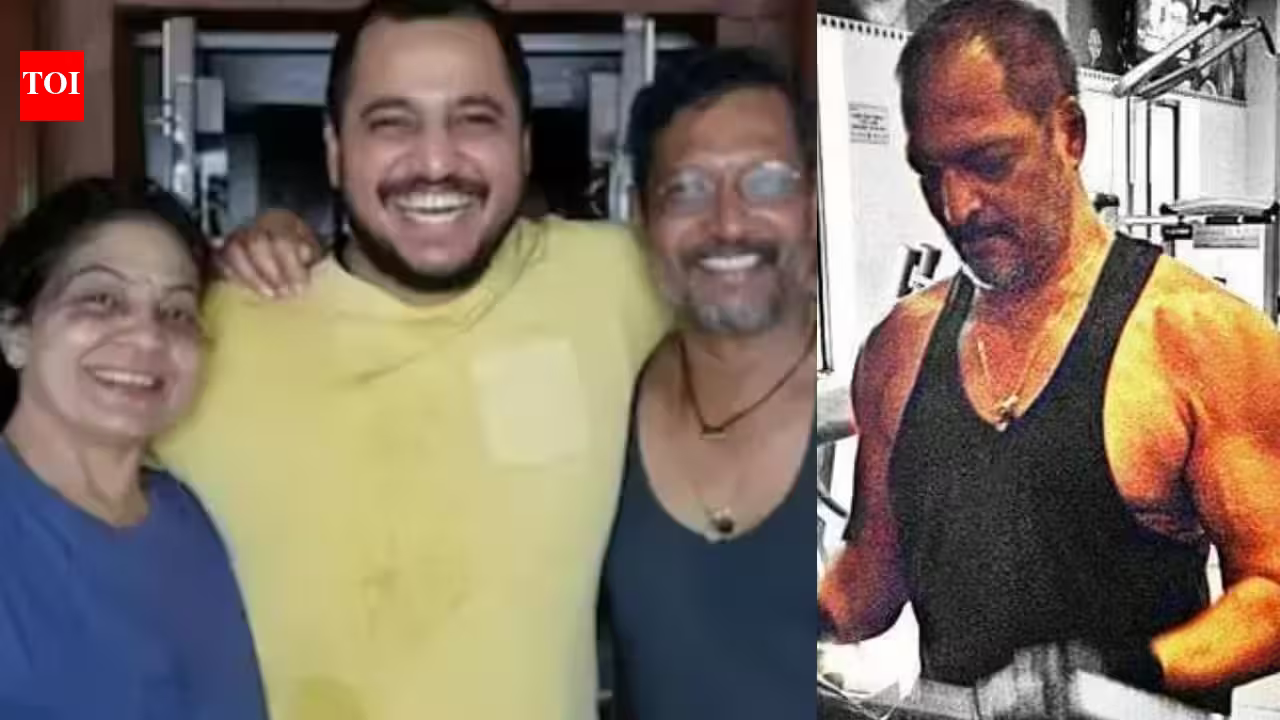
“Itna sab kuch viral ho raha, woh kitna ghalat hai (So much that is going viral is completely wrong),” Malhar stated. He provided a vivid account of a man who, until the very end, defied his years with a level of vitality that would put most people half his age to shame. According to his son, Nana remained physically formidable, maintaining a rigorous fitness routine that included two and a half hours of gym work—an intensity that Malhar noted “youngsters nahin kar pate” (youngsters cannot manage).
Furthermore, the logistical reality of his final days was one of constant companionship. As Nana prepared to shoot for KBC Marathi alongside Madhuri Dixit, his inner circle was in constant flux, moving between Mumbai and Goa to ensure he was never truly on his own. “We all never left his side; one of us was always with him,” Malhar clarified.
The Strength of an Unbroken Bond
The juxtaposition of the actor’s state funeral with his complex personal life highlights a universal truth: relationships do not require a singular definition to be significant. Nana and Neelkanthi’s ability to navigate nearly four decades of life apart while maintaining a unified front at the most critical of moments speaks to a level of maturity that is rare. They existed in a space that defied the “all or nothing” pressure of traditional marriage.
Malhar’s defense of his father’s final days serves as a tribute to the man beneath the celebrity veneer. It serves as a reminder that behind the intense dialogue and the commanding screen presence lay a human being who was deeply anchored by his family, even if the world wasn’t granted a front-row seat to their daily interactions.
Beyond the Tabloid Gaze
As we bid farewell to a titan of Indian cinema, it is worth considering what his life—and his family’s reaction to his death—teaches us about modern relationships. The Patekars did not feel the need to document their reconciliation or their daily support systems on Instagram. Their bond was not predicated on the validation of an audience, but on an internal understanding of what their family unit required to function.
Malhar Patekar’s candor is more than just a family member clearing the air; it is a challenge to the way we consume celebrity deaths. It asks us to look past the headlines and the assumptions. Nana Patekar, a man who lived his life on his own terms, clearly died the same way—surrounded by the people who mattered most, regardless of the labels the outside world tried to apply to them. In the end, the only narrative that holds any weight is the one held by those left behind: that there was love, there was presence, and there was no loneliness. That is, perhaps, the most dignified exit any icon could hope for.
Disclaimer: This content is auto-generated for informational purposes only.
Source: Read Original News