








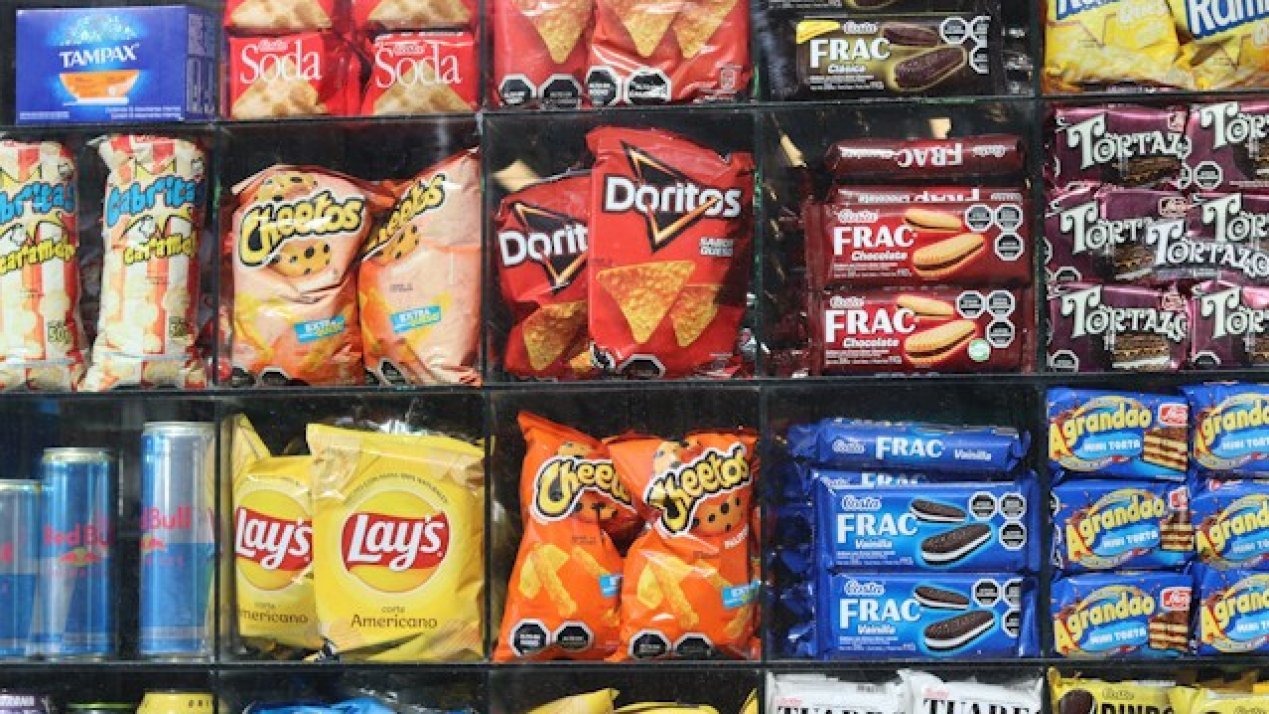
Mexico’s Supreme Court of Justice (SCJN) has issued a landmark unanimous ruling that firmly upholds the national ban on the sale of “junk food” across all levels of the country’s education system. The decision marks a major victory for federal public health initiatives and serves as a significant legal setback for major food and beverage corporations.
The court rejected a series of amparo lawsuits brought by powerful entities, including Embotelladora del Fuerte—a subsidiary of Coca-Cola—as well as bakery chain Maison Kayser and the vending machine operator Mega Vending de México. These companies argued that the government’s 2024 health guidelines infringed upon commercial rights, freedom of competition, and the autonomy of educational institutions. The Supreme Court dismissed these claims, asserting that the state’s obligation to ensure nutritious food for the population transcends private economic interests.
Curbing a National Health Crisis
The ruling validates the regulatory framework established by the Ministry of Public Education (SEP) and the Ministry of Health, which seeks to mitigate the country’s severe obesity epidemic. Recent government data indicates that five out of every 10 elementary school students in Mexico are currently classified as overweight or obese.
SCJN Chief Justice Hugo Aguilar emphasized the urgency of the situation, noting that the prevalence of obesity—affecting nearly three-quarters of the adult population and over a third of children—has doubled since the 1980s. The economic burden of this crisis is estimated at approximately MX$650 billion annually. By restricting the sale of products high in sugar, fat, and sodium within schools, the government aims to establish a healthier environment for the next generation. Minister of Public Education Mario Delgado lauded the ruling, noting that 86% of schools have already transitioned away from selling restricted items.
Legal Precedent and the Limits of Autonomy
A significant portion of the legal debate centered on whether these regulations could be enforced in autonomous universities. Justice Yasmín Esquivel argued that applying the guidelines to autonomous institutions could overstep legal boundaries, but the majority of the court disagreed.
Justices María Estela Ríos and Lenia Batres argued that while universities maintain administrative autonomy, that independence does not grant them immunity from national public health mandates. The court clarified that the restrictions are targeted at the commercial entities operating within these spaces, rather than the internal self-governance of the schools themselves. Furthermore, the court rejected the argument that the ban infringes on the rights of adult students, clarifying that the constitutional right to healthy food applies to all individuals regardless of age.
Technological and Regulatory Implementation
The mandate originated from a 2023 decree amending the General Education Law. Following the decree, the National Commission for Regulatory Improvement (CONAMER) published specific guidelines restricting processed foods—including sugary drinks, cookies, and items bearing front-of-pack warning labels—in school cooperatives and vending machines.
To manage the logistics of this transition, the government has increasingly leaned on integrated data systems to monitor school compliance. The digitalization of school health data, combined with robust tracking of nutrition metrics, is becoming a pillar of the federal strategy to combat childhood obesity. While some industry groups, such as the National Alliance of Small Merchants, have expressed concern that the ban might inadvertently increase the demand for restricted goods, the administration remains focused on using the school environment as a tool for nutritional education rather than commercial profit. The Supreme Court’s decision solidifies the legal infrastructure required to maintain these standards indefinitely across the national education system.
Disclaimer: This content is auto-generated for informational purposes only.
Source: Read Original News