






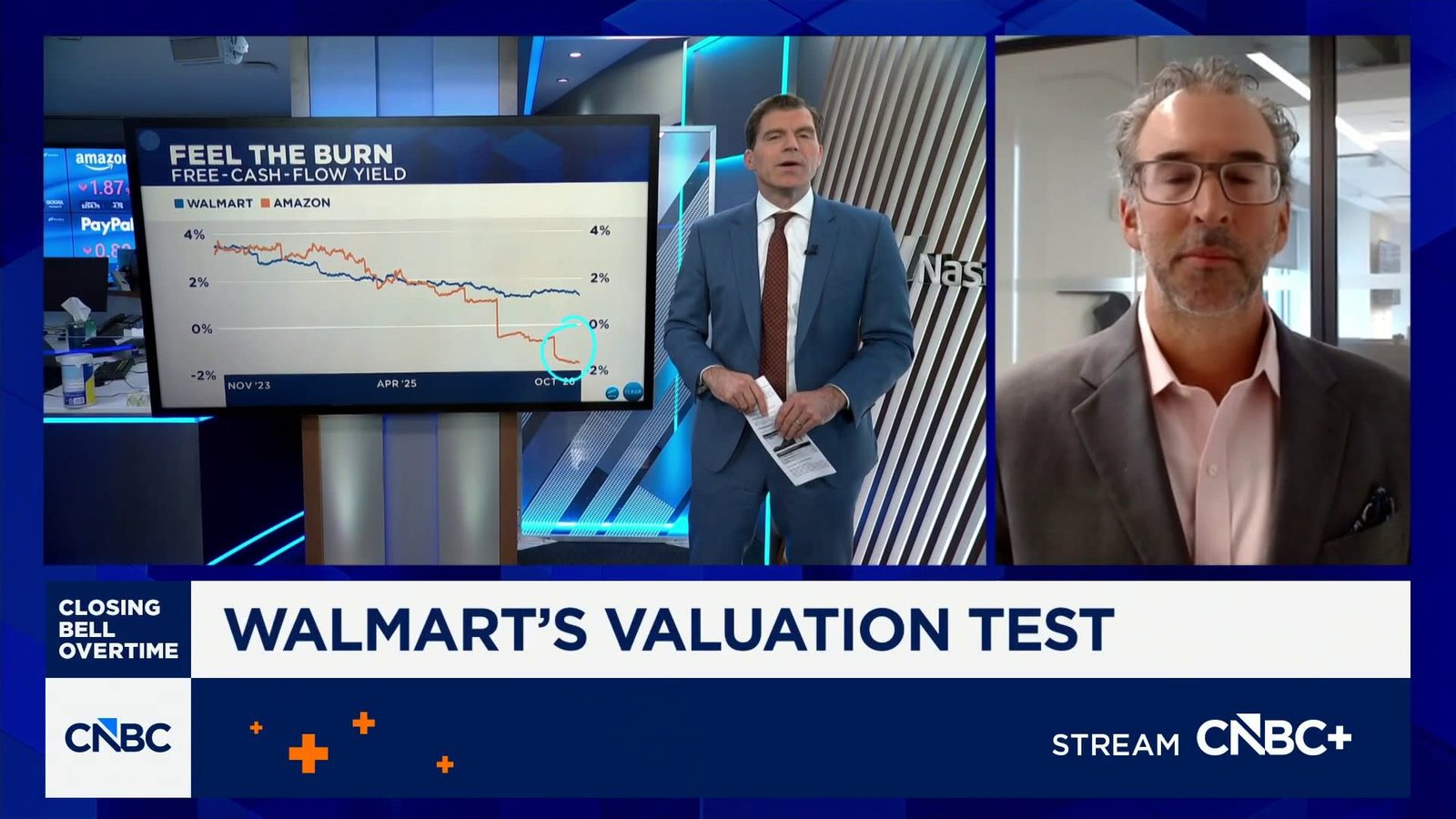
As retail giant Walmart continues to solidify its dominance in the brick-and-mortar and e-commerce sectors, market analysts are increasingly scrutinizing the company’s strategic expansion—particularly regarding its implications for environmental, social, and governance (ESG) standards. Michael Baker, Managing Director and Senior Research Analyst at D.A. Davidson, recently addressed the company’s growth trajectory on CNBC’s Closing Bell Overtime, highlighting how Walmart’s aggressive market maneuvering is balancing financial performance with the complex realities of modern retail operations.
Walmart’s expansion strategy, which has pivoted heavily toward integrating high-tech logistics and expanding its grocery market share, presents a dual narrative for environmental observers. On one hand, the retailer has utilized its massive scale to commit to significant renewable energy investments, aiming to power its facilities with 100% renewable energy by 2035. However, the sheer physical footprint of such an expansion necessitates a careful look at the environmental costs associated with supply chain logistics, packaging waste, and the carbon intensity of an ever-growing national distribution network.
Baker noted that while Walmart’s valuation remains robust compared to its retail peers, the company faces inherent risks that could influence its long-term viability. From an investment perspective, these risks are often financial, but they are increasingly linked to operational sustainability. For instance, as Walmart expands its delivery capabilities—often promising faster, more frequent shipping—it creates a surge in last-mile emissions. While the company has begun deploying electric delivery vans, the environmental challenge lies in scaling these green solutions at a pace that keeps up with the retailer’s rapid growth.
“The expansion areas Walmart is targeting are indicative of a retailer trying to be everything to everyone,” Baker said. “They are capturing market share because they have the infrastructure to support it, but the pressure to maintain that momentum in a cost-effective way is the central tension of their current stock story.”
For environmental analysts, this tension is most visible in the company’s efforts to reduce plastic packaging and food waste. As Walmart expands its grocery dominance, it assumes a larger responsibility for the waste generated by its private-label brands. The company has made public commitments to transition to more sustainable packaging materials, yet the scale of its operation—serving millions of customers daily—means that even incremental changes in product design have outsized impacts on global waste streams.
Furthermore, Baker pointed out that the competitive landscape is shifting. As Walmart competes more directly with agile, e-commerce-first retailers, the pressure to optimize logistics often conflicts with sustainability goals. The “race to the bottom” regarding shipping times and fulfillment costs can sometimes lead to reduced focus on sustainable routing or energy-efficient warehousing. Investors are now watching closely to see if Walmart can leverage its massive capital expenditure to favor carbon-neutral technologies over cheaper, more carbon-intensive alternatives.
Ultimately, Walmart’s position as a retail behemoth makes it a bellwether for the broader industry. As the company continues its expansion, it serves as a massive case study on whether a legacy retailer can successfully decarbonize while maintaining the scale required to satisfy shareholders. For Baker, the stock’s performance will likely remain tied to its ability to manage these operational complexities. For the environmental community, the focus remains on whether Walmart’s definition of “growth” can effectively align with the urgent requirements of planetary stewardship, or if the demands of the retail market will continue to drive a carbon-heavy expansion model. As the company continues to refine its valuation in the eyes of investors, the environmental impact of its supply chain will undoubtedly emerge as a critical, non-negotiable metric for long-term corporate health.
Disclaimer: This content is auto-generated for informational purposes only.
Source: Read Original News