








Understanding the Mechanics of the iPhone Duo Protective Case
As Apple enters the foldable smartphone market with the newly released iPhone Duo, accessory manufacturers and the company itself have had to engineer novel ways to protect a device with moving parts. A primary challenge with foldable hardware is the inability to use a traditional, singular rigid shell that wraps around the entire chassis. To address this, Apple has introduced the iPhone Duo Case, a two-piece solution that utilizes industrial-strength adhesive strips to maintain a secure fit on the device’s unique exterior.
Unlike standard iPhone cases, which snap into place using tension, the iPhone Duo Case requires a specific installation process. Each unit includes a set of adhesive strips along the inner edges of the polycarbonate frame. Users are instructed to peel away the protective film before aligning the two pieces with the device. Once positioned, firm pressure is applied to ensure the adhesive bonds with the surface of the phone. This methodology ensures that the case remains stationary while the user opens and closes the device, preventing the slippage that could occur with a simple friction-fit cover.
Material Composition and Structural Design
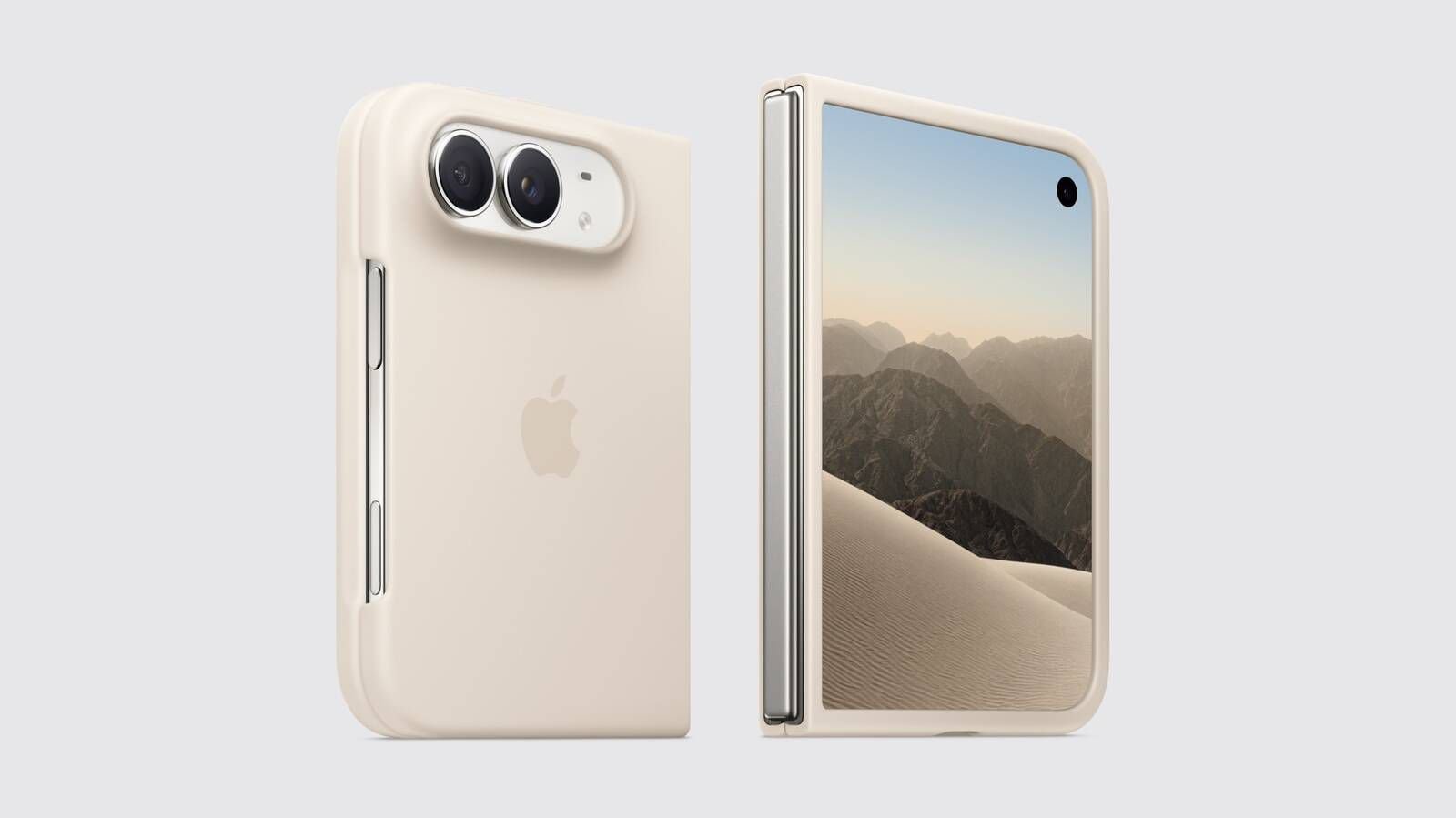
The iPhone Duo Case is constructed from high-grade polycarbonate, chosen for its structural integrity and light weight. This material is particularly suited for a folding device, as it provides rigidity without adding significant bulk, which is critical for a phone that already carries a higher thickness profile when folded. The case is currently available in two distinct finishes: Sand and Navy Blue.
Regarding its protective coverage, the design focuses on the most vulnerable areas of the device. The polycarbonate shell wraps around the rear panels, specifically accommodating the raised camera array to prevent direct contact with surfaces. On the front, it offers a frame around the outer display, ensuring that the screen edges are shielded from minor drops. It is important to note that the case is designed primarily for the exterior panels; it does not provide physical protection for the internal folding display or the hinge mechanism itself when the device is in an open state. This design choice prioritizes thinness and usability, leaving the interior screen to be protected by the user’s handling and the device’s own internal folding architecture.
The Alternative Approach: The Folio with Kickstand
For users who prefer a non-adhesive attachment method, Apple offers the iPhone Duo Folio with Kickstand. This accessory utilizes a magnetic mounting system rather than adhesives, allowing for easy removal and reattachment. The design of the Folio prioritizes a different set of user needs, focusing on utility and integrated support.
The Folio features a sturdy, integrated kickstand reinforced with metal hinges, providing a reliable viewing angle for media consumption. Because it attaches magnetically, it provides a cleaner aesthetic for those who dislike the residue or the semi-permanent nature of the adhesive-backed case. However, this convenience comes with trade-offs in coverage. The Folio does not protect the sides of the device, and in its closed state, it functions as a cover for the entire front display. When the user needs to access the outer screen, the magnetic flap must be folded back, which provides a familiar experience for those accustomed to traditional folio-style phone covers.
Impact of Adhesive Accessories on Device Longevity
The use of adhesive in the iPhone Duo Case is a departure from Apple’s historically adhesive-free case designs, marking a shift in how the company approaches accessory compatibility with its hardware. While some users may be concerned about the impact of these strips on the phone’s finish, the design is clearly intended to solve the problem of lateral movement. Without these strips, a two-piece case would likely slide off the curved edges or become misaligned during the act of opening the phone.
This reliance on adhesive reflects a broader trend in the foldable segment, where manufacturers are increasingly adopting “sticker-based” mounting systems for protective covers to maintain a slim profile. By securing the case directly to the phone body, Apple ensures that the accessory moves in perfect synchronization with the device’s hinges. It represents a balancing act between providing meaningful drop protection and respecting the delicate engineering of a foldable smartphone.
Availability and Market Outlook
The launch of the iPhone Duo has been characterized by significant demand, as evidenced by initial inventory selling out almost immediately upon the opening of pre-orders. With shipping estimates for the device itself now extending into late January, the early availability of the associated cases in retail locations serves as an essential stopgap for consumers awaiting their hardware.
The pricing strategy reflects the complexity of these accessories, with the standard iPhone Duo Case retailing at $79 and the more feature-rich Folio with Kickstand at $129. These price points suggest a premium accessory market that will likely continue to grow as the iPhone Duo gains wider adoption. As users begin to receive their devices next Friday, the long-term performance of these adhesive-backed cases—particularly in how they hold up under the mechanical stress of daily folding—will be a key metric for evaluating the success of Apple’s debut foldable ecosystem.
Disclaimer: This content is auto-generated for informational purposes only.
Source: Read Original News