








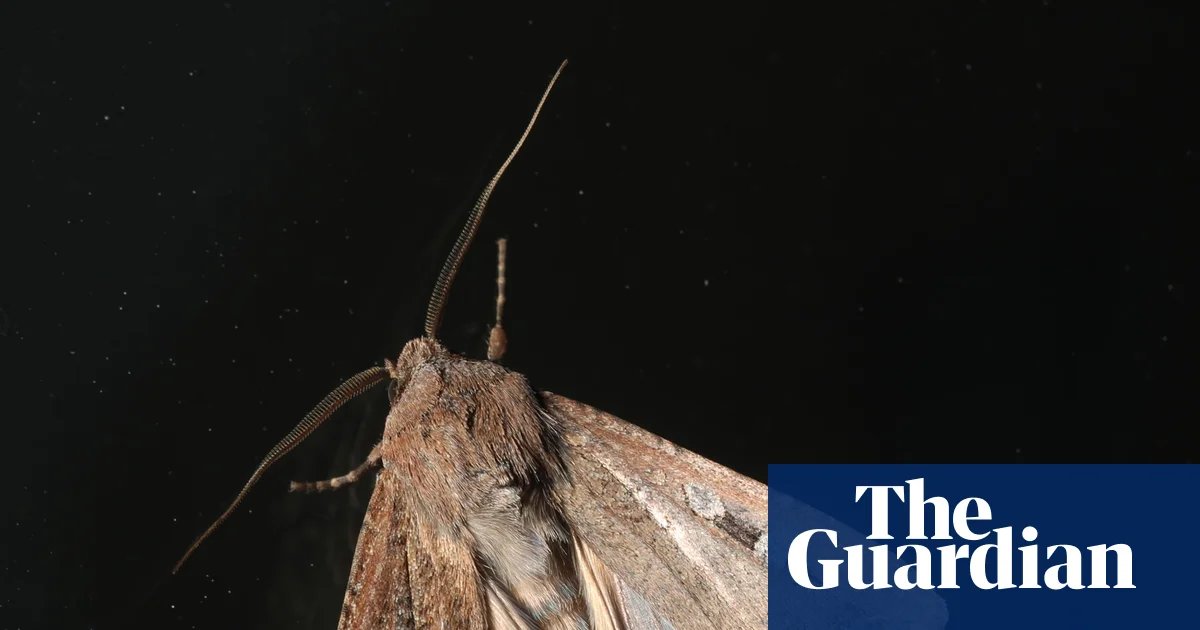
It was during the 2000 Sydney Olympic Games that a swarm of bogong moths, vast enough to be mistaken for rain by local meteorologists, first captured the public imagination. Twenty-six years later, the moths have returned in similarly staggering numbers, and this time, they are firmly on the radar—literally.
Across eastern New South Wales, weather radars designed to detect hail, snow, and rain are lighting up with “echoes” that have left forecasters puzzled. “Every single night, particularly across eastern New South Wales and around Sydney, widespread rain is appearing on the imagery,” an ABC meteorologist reported recently. “The only problem is, many nights there hasn’t been a drop of rain on the ground.”
The Bureau of Meteorology has confirmed that these radar anomalies are likely caused by the massive migration of bogong moths as they head toward the Australian Alps. When radio pulses hit insect bodies and wings, they bounce back in a way that mimics the signature of light precipitation, especially during the moths’ peak movement times at sunrise and sunset.
For scientists, this unintended data collection is “absolute gold.” Dr. Kate Umbers, an associate professor in zoology at Western Sydney University and managing director of Invertebrates Australia, has spent years attempting to map the migration routes of these elusive insects. “It poses all sorts of interesting possibilities,” she says, noting that researchers are now looking to quantify the data: “How many bogong moths equals heavy rain?”
The use of meteorological radar for ecological monitoring is an emerging frontier. Professor Justin Welbergen, an ecologist at Western Sydney University, has successfully pioneered the use of these tools to track flying foxes. By viewing flying foxes as a “big bag of water” on radar imagery, Welbergen has been able to observe the highly organized, nightly emergence of bat colonies, with demographic groups departing in a specific, predictable order.
Welbergen is now working on an initiative dubbed “Aerocast,” which aims to apply similar algorithms to track other aerial species, including bogong moths and birds. Similar to the United States-based “BirdCast” project, this technology uses historic and real-time weather station data to track large-scale animal movements, offering a non-invasive, large-scale method for conservation monitoring.
“Techniques for detecting flying foxes are, I expect, readily transferable to moths,” Welbergen says. “Because on the radar, flying foxes are effectively just giant moths.”
This technical support arrives at a critical juncture for the bogong moth. Following a devastating population collapse in recent years, the current surge is a promising sign, though experts urge caution. Dr. Umbers emphasizes that while the public sightings are heartening, urban swarms do not necessarily indicate a total recovery of the species, which continues to face significant threats from habitat loss and global heating in its alpine breeding grounds.
Nevertheless, the return of the swarm has reconnected a new generation of Australians with an iconic, if sometimes overwhelming, natural phenomenon. As the moths make their epic journey, the data gathered by these unintended “rain” reports may provide the insights needed to protect them.
“The moths are saying: don’t forget about us, look after us, look how amazing and impactful and epic we can be,” says Umbers. For now, with millions of “research assistants” across Sydney and Canberra documenting their progress, the bogong moth has once again secured its place on the national map.
Disclaimer: This content is auto-generated for informational purposes only.
Source: Read Original News