







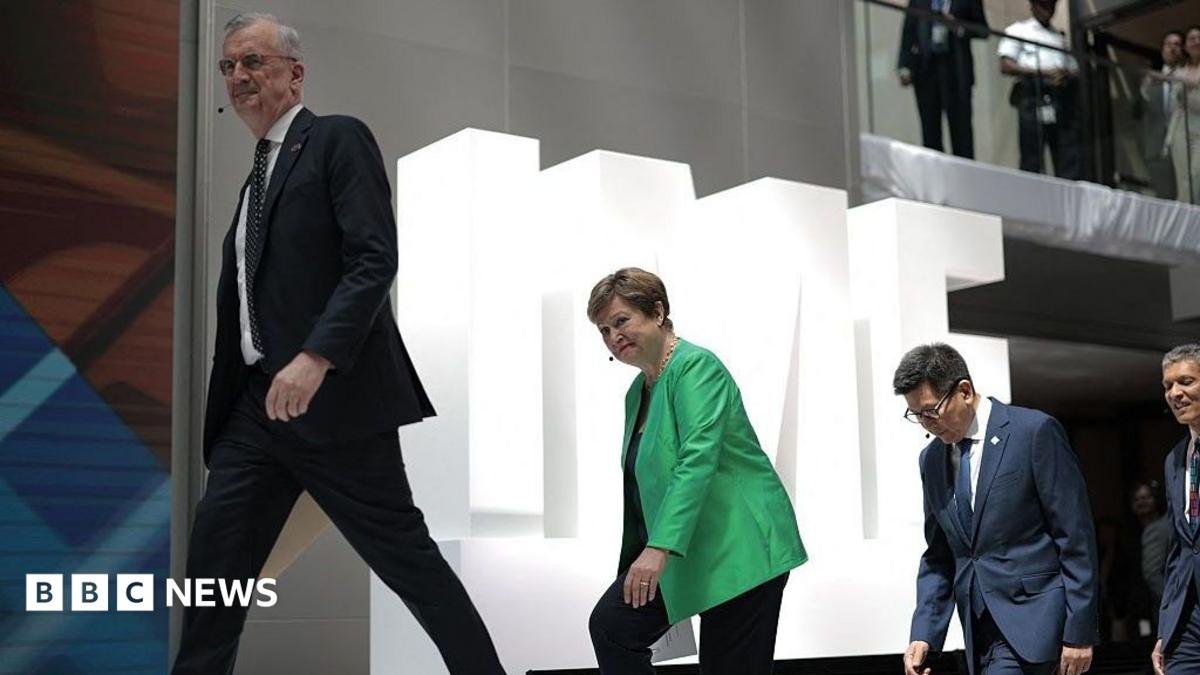
BANGKOK – A high-stakes tug-of-war for the future of the global economy has taken center stage at this week’s IMF meetings in Bangkok, as top financial leaders struggle to determine whether the world is heading toward a period of renewed innovation or a systemic debt reckoning.
The global economic narrative is currently defined by two opposing forces. Weighing heavily on growth are the persistent shadows of the energy shock, intensifying trade conflicts, and the continued fallout from ongoing geopolitical wars. These pressures have manifested most acutely in the sharply rising borrowing costs now confronting advanced economies.
Countering this downward pull, however, is a surge of optimism driven by massive capital allocation into artificial intelligence and the unexpected tenacity of smaller economies. These nations have demonstrated an astonishing ability to pivot, forging new trade routes for oil, gas, and commodities out of sheer necessity, effectively insulating themselves from traditional supply chain fractures.
Even the most senior officials at the IMF’s “top table” remain divided, with no consensus on which force will ultimately prevail. In the absence of clarity, international bond markets have become the ultimate arbiter, with their gaze currently fixed firmly on the fiscal stability of the United States and France.
French Finance Minister Roland Lescure sought to quell investor anxiety during the summit, asserting that while debt has become more expensive to service, his government has faced no difficulty in securing funding. Lescure also struck a diplomatic chord, claiming credit for helping stabilize the G7, which he argued was on the brink of collapse just a year ago due to persistent political tensions.
Against this backdrop, the absence of a major global recession—or a full-blown debt crisis in a significant emerging market—has been hailed by many as a minor miracle. The Thai finance minister, speaking from the conference floor, touted the resilience of his nation’s borrowing costs, drawing favorable comparisons between his country’s fiscal health and that of the United States.
Perhaps the greatest surprise of the week, however, has been the rehabilitation of the United Kingdom. Once persona non grata in the eyes of international investors, the UK has been rebranded as the “model pupil” by the IMF. The institution has signaled its willingness to accept the British government’s latest budget plans at face value, a move that highlights a stark lack of confidence in the fiscal rigor of other G7 nations.
For UK Chancellor John Healey, the summit served as a critical platform to capitalize on this newfound credibility. Healey noted that the UK’s growth data for 2026 has consistently outperformed expectations, describing the current pace of expansion as “strong.”
“We are seeing the first signs that our targeted investment in AI and tech is beginning to move the needle on growth,” Healey stated.
As bond traders and financiers mill through the halls of the Bangkok summit, the sentiment toward the UK appears to be shifting. After years of economic crisis, the “model pupil” is finally enjoying a second look from the world’s harshest critics.
Disclaimer: This content is auto-generated for informational purposes only.
Source: Read Original News