






India Rejects UN Rapporteur’s Report on Youth Suppression as ‘Hearsay’
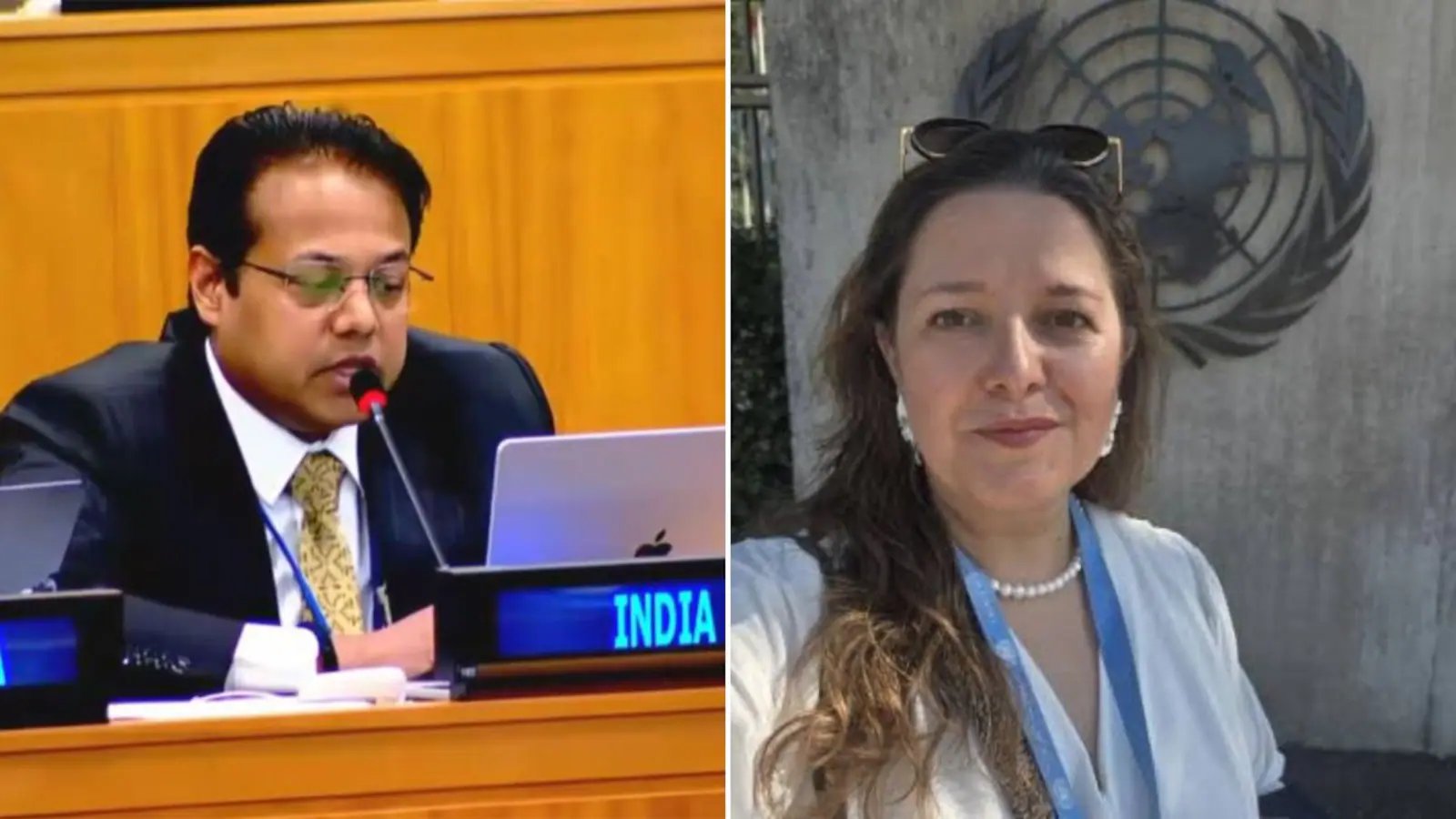
India has issued a sharp and categorical dismissal of recent claims made by UN Special Rapporteur Gina Romero, which suggested that young people in the country face systemic retaliation or stigmatization for engaging in discourse on mental health and gender justice. During the 81st session of the United Nations General Assembly (UNGA) Third Committee, Indian diplomat Anuj Swarup labeled the allegations as fundamentally flawed, noting that they were based on unverified, anonymous submissions.
Defending Constitutional Freedoms
Representing New Delhi at the interactive dialogue, First Secretary Anuj Swarup underscored that India’s constitutional framework serves as the bedrock for civil liberties. He emphasized that Article 19 of the Constitution explicitly guarantees freedom of speech, expression, and peaceful assembly to every citizen. According to Swarup, these rights are not merely theoretical but are actively protected by a robust independent judiciary, a transparent press, and the oversight of the National Human Rights Commission.
Swarup expressed deep frustration with the report’s methodology, arguing that the UN institutions are risking their international credibility by producing “arbitrary” findings. He described the report as a collection of “hearsay, dressed up as a UN report,” which unfairly casts a shadow over the world’s largest youth population without providing any tangible evidence to back its sweeping conclusions.
The Reality of Civic Engagement
Challenging the narrative of a repressed youth, the Indian delegation pointed to the visible, active political participation of young Indians. Swarup highlighted that the very report claiming a hostile environment for dissent acknowledges the existence of satirical political movements—a phenomenon he argued would be impossible in a truly repressive state.
He cited the example of the “Cockroach Janta Party” (CJP), a youth-led political entity, whose members were able to march on the national capital and engage in direct dialogue with senior Union Ministers. Furthermore, Swarup noted that UN Human Rights Commissioner Volker Turk had recently acknowledged the effectiveness of constructive dialogue between the Indian government and young leaders—a point he suggested the Special Rapporteur had conveniently ignored.
A Call for Institutional Rigor
The Indian mission further defended the government’s track record in handling student-led movements. Swarup pointed to recent instances where the state engaged constructively with students protesting irregularities in public examination systems, resulting in tangible policy reforms. Additionally, he highlighted initiatives like the “Viksit Bharat Young Leaders Dialogue,” which has seen the active participation of over five million young people in shaping the nation’s policy priorities.
In a stern closing message, the Indian diplomat urged mandate holders within the UN to uphold higher standards of verification. “A mandate holder who relies on anonymous inputs to generalize for 1.4 billion people does a disservice to the very mandate she holds,” Swarup stated. He concluded by calling on the Special Rapporteur to verify facts before issuing public accusations, urging a return to the rigor and fairness that such high-level international offices are expected to maintain.
Disclaimer: This content is auto-generated for informational purposes only.
Source: Read Original News