









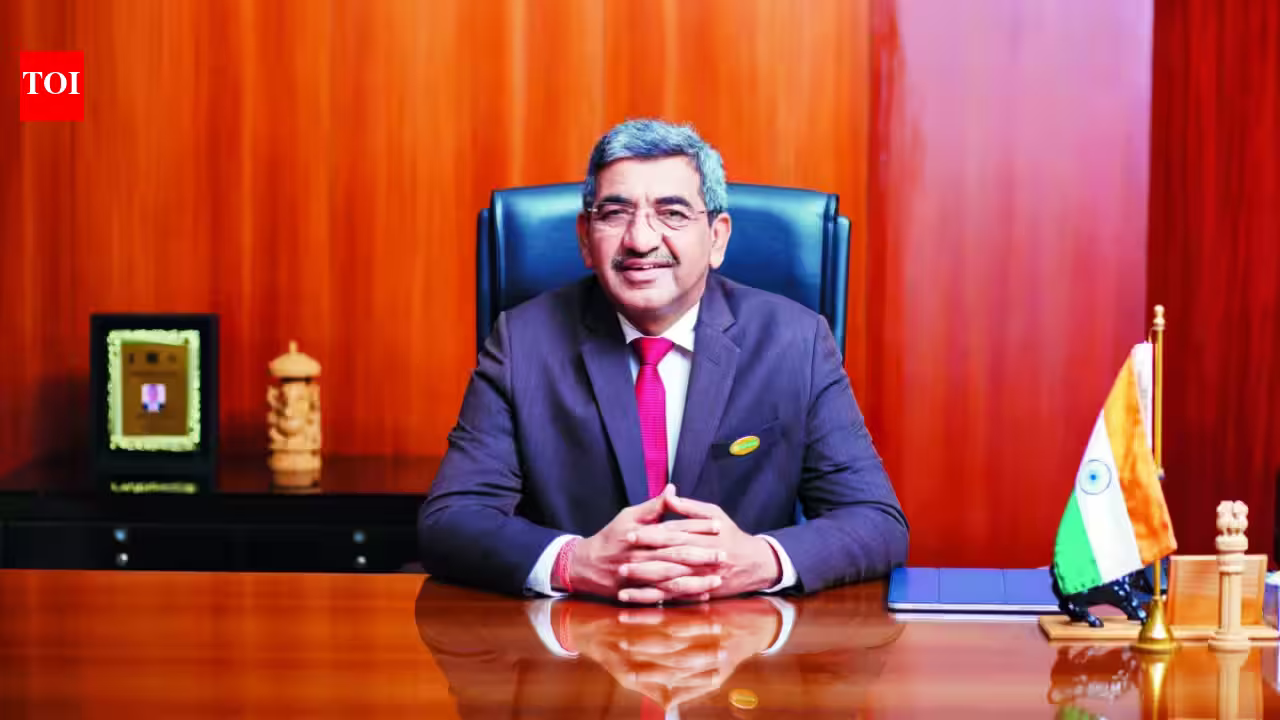
The Evolution of IDBI Bank: A Case Study in Institutional Turnaround
The banking sector in India has witnessed several dramatic transformations over the past two decades, yet few stories are as illustrative of resilience and strategic pivot as that of IDBI Bank. Once a powerful development financial institution, the bank faced existential threats characterized by mounting non-performing assets (NPAs) and heavy capital erosion. The recent developments surrounding the continued leadership of Rakesh Sharma, supported by a distinguished advisory board under the aegis of Fairfax, signify a new chapter in the bank’s journey. This transition reflects not just a change in ownership structures but a broader shift in how distressed Indian public sector assets are managed and primed for long-term viability.
For years, the narrative surrounding IDBI Bank was defined by its inclusion under the Reserve Bank of India’s Prompt Corrective Action (PCA) framework in 2017. This regulatory intervention was a response to alarming indicators: severe capital inadequacy, excessive exposure to toxic assets, and persistent operational losses. The path to recovery was arduous, involving systemic clean-ups through the Insolvency and Bankruptcy Code (IBC) and capital infusions from the government amounting to approximately Rs 25,000 crore between 2010 and 2020. That the institution has moved from the brink of collapse to a stage of strategic growth is a testament to disciplined leadership and the efficacy of rigorous financial restructuring.
Leadership Continuity Amidst Structural Shifts
The decision to retain Rakesh Sharma as the Managing Director and CEO amidst the transition to private management is a strategic move aimed at stability. Often, when organizations undergo ownership changes, the risk of leadership vacuum or cultural friction is high. By maintaining the same hand that steered the ship through the difficult years of the PCA framework, the new management signal a commitment to continuity and institutional memory.
Sharma’s career path is a study in perseverance. His transition from the State Bank of India to leadership roles at Lakshmi Vilas Bank and Canara Bank, before arriving at IDBI, highlights the growing permeability between public sector banking experience and the demands of private-sector-led operational excellence. His tenure has been marked by a focus on asset quality improvement and granular growth, prioritizing risk-adjusted returns over aggressive, high-risk credit expansion. This cautious approach is precisely what a transitioning institution requires to build credibility with investors and regulators alike.
The Role of Strategic Oversight and Advisory Boards
The inclusion of stalwarts such as NS Kannan as chairman, alongside advisors like Deepak Parekh, Rajendran CVR, and Paresh Sukthankar, creates a formidable governing structure. In the context of the Indian financial market, the caliber of this board is a significant signal to institutional investors. Deepak Parekh’s decades of experience in mortgage finance and capital markets, combined with Paresh Sukthankar’s legacy in building India’s largest private sector bank, provides a wealth of strategic depth.
For a bank that has long operated under the constraints of public sector protocols, the arrival of this advisory panel represents a shift toward a more agile, performance-oriented corporate governance model. These individuals bring an understanding of market cycles, credit appraisal precision, and the digital transformation imperatives that modern Indian banks must embrace to remain competitive. By balancing the ground-level operational expertise of the existing management with the high-level strategic oversight of industry veterans, the bank is positioning itself to navigate the complexities of a changing macroeconomic environment with greater confidence.
Market Insights and the Privatization Paradigm
The privatization of IDBI Bank is a landmark event in the Indian banking landscape. It serves as a test case for the government’s intent to divest from non-core sectors and improve the efficiency of financial institutions. From a market perspective, the attractiveness of IDBI lies in its extensive retail network, its corporate banking relationships, and the structural improvements achieved over the last seven years.
Investors are closely watching how the transition will impact the bank’s loan book composition. Historically, the bank carried a heavy weight of legacy infrastructure and corporate debt. The current strategy of moving toward retail and MSME credit is designed to diversify the risk profile and improve Net Interest Margins (NIMs). The support from the Fairfax group provides the bank with the much-needed capital buffer to pursue these segments aggressively without compromising on the quality of the balance sheet. Furthermore, the ability to retain and attract talent in a competitive banking landscape will depend on the cultural integration that follows this shift from a public-sector mindset to a private-sector mandate.
Navigating Regulatory and Macroeconomic Headwinds
Any bank operating in India today must contend with a rapidly evolving regulatory environment. The Reserve Bank of India’s focus on digital lending norms, data privacy, and the strengthening of internal audit mechanisms requires institutions to remain agile. For IDBI, the challenge lies in modernizing its legacy infrastructure while ensuring that compliance remains non-negotiable.
Macroeconomically, India’s credit growth remains robust, driven by infrastructure spending and private consumption. However, the cyclical nature of interest rates and global liquidity trends necessitates a conservative approach to asset-liability management (ALM). The leadership team’s experience in dealing with past crises will be an asset in managing current liquidity pressures. By focusing on low-cost deposits and high-yield lending, the bank is positioning itself to be more resilient against the volatility of the interest rate cycle. This balance is critical, as it allows the bank to sustain profitability even if credit growth rates fluctuate in the broader economy.
Future Outlook: Beyond the Turnaround
The transition of IDBI Bank is a clear indicator of a maturing Indian banking sector where institutional longevity is fostered through a mix of regulatory oversight and private sector expertise. The period of “stop-gap” management is now firmly behind the institution. Moving forward, the focus will likely turn toward scaling operations, enhancing the technology stack, and capturing a larger share of the affluent and mid-market retail segments.
The success of this transition will be measured by more than just the balance sheet; it will be judged by the bank’s ability to become a preferred partner for the next generation of Indian borrowers and businesses. By combining the stability of its legacy with the agility of its new leadership structure, IDBI Bank has the potential to redefine its market position. The next few years will be defining, as the bank transitions from being a salvaged asset to a competitive, growth-oriented financial powerhouse in one of the world’s fastest-growing economies. For stakeholders, the message is clear: the bank is no longer just surviving; it is actively preparing to lead.
Disclaimer: This content is auto-generated for informational purposes only.
Source: Read Original News