







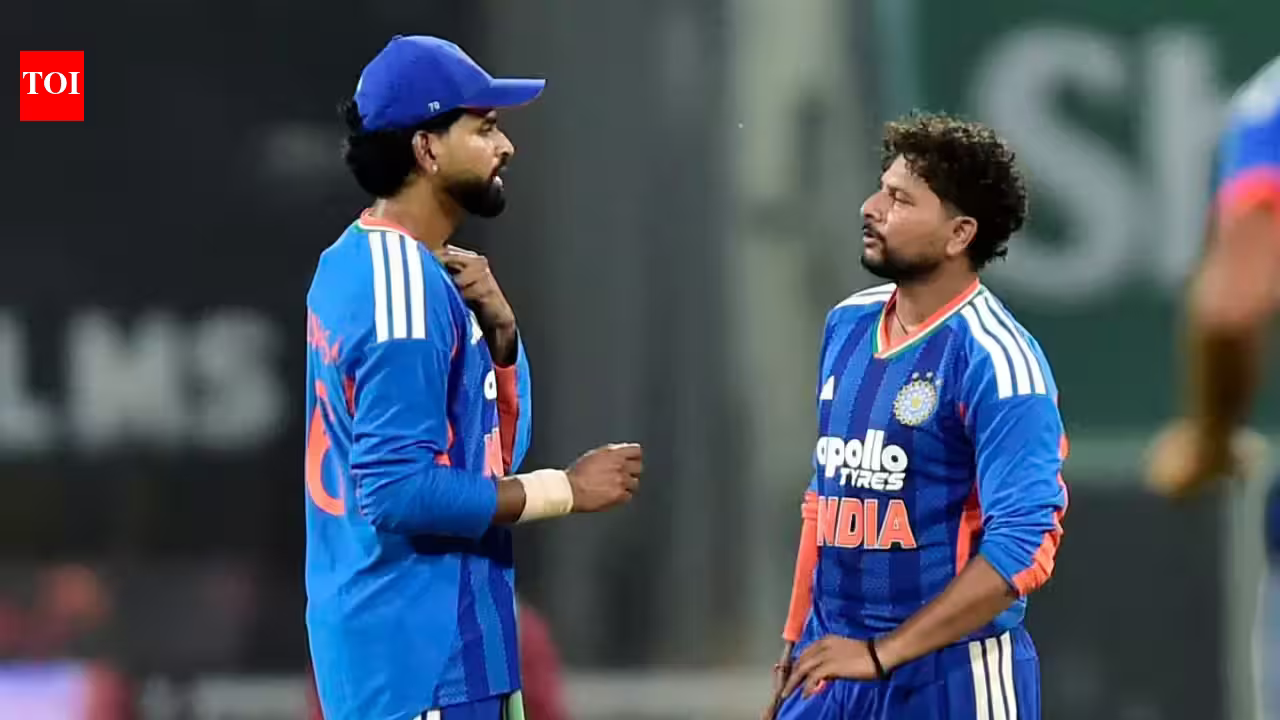
CONTROVERSY has erupted in the Indian cricketing fraternity as former Australian captain Michael Clarke launched a scathing critique of the Indian team management’s decision to sideline star wrist-spinner Kuldeep Yadav for the pivotal final stages of the T20I series against the West Indies. The decision to omit one of the nation’s most potent wicket-taking threats has ignited a fierce debate regarding team composition, tactical philosophy, and the perceived “safety-first” approach often adopted by modern T20 captains.
A Strategic Blunder or Necessary Rotation?
The selection spotlight intensified following a defensive collapse by India’s bowling unit in the fourth T20I. Facing a relentless onslaught from the West Indies lineup, the Indian attack appeared toothless, conceding a daunting 247/3. This massive total left the Indian batting unit scrambling to keep pace with an escalating required run rate, ultimately forcing them into high-risk strokes that led to their downfall.
The primary point of contention lies in the management’s preference for an all-rounder-heavy side, opting to include Naman Dhir as the secondary spin option alongside Axar Patel. While the team favored this pace-heavy combination to add depth to the batting order, the lack of a genuine strike-bowler in the middle overs became glaringly evident. Kuldeep, who has been a consistent thorn in the side of the West Indies throughout the white-ball leg of the tour, found himself relegated to the bench, a decision that has left many, including Clarke, bewildered.
The ‘Clarke Doctrine’: Prioritizing Wickets Over Economy
Speaking candidly on his Beyond23 cricket podcast, Michael Clarke did not mince words regarding the current tactical trends in the sport. He argued that the modern obsession with containing runs has led to a stagnation in attacking intent, particularly among captains who prioritize defensive economy rates over aggressive wicket-taking.
“I have made my point clear about Kuldeep Yadav several times,” Clarke asserted. “I cannot believe he is not their first-choice spinner. He is a wicket-taker, and it doesn’t matter the format; you are looking to bowl the opposition out. Too many captains play by the rules of the game in T20s and ODIs. They just say, ‘Let the opposition get whatever they do, and we will chase,’ rather than looking to bowl the opposition out.”
Clarke’s argument strikes at the heart of the current Indian strategy. By omitting Kuldeep—a bowler whose primary value is his ability to break partnerships and entice batters into errors through guile and turn—the team arguably stripped itself of its greatest defensive weapon: the ability to stop a total from ballooning by taking wickets in clusters.
Analyzing the Numbers: The Case for Kuldeep
To understand the frustration surrounding the selection, one must look at the body of work Kuldeep has produced. Despite an expensive outing in Ranchi where he conceded 53 runs for one wicket, his track record remains undeniably elite. In 56 T20I appearances, the wrist-spinner has accumulated 98 wickets at a staggering average of 14.20 and a miserly economy rate of 7.10. His ability to produce game-changing performances—exemplified by three four-wicket hauls and two five-wicket hauls—highlights his role as a genuine match-winner.
Furthermore, his recent form against this very West Indian side underscores his utility. Across the five-match white-ball series, Kuldeep has been a constant threat, claiming 10 wickets total. This includes an impressive seven-wicket haul across three ODIs, where he frequently found himself as the architect of collapse for the Caribbean side.
The Role of Naman Dhir and Tactical Evolution
Defenders of the team management point to the performance of Naman Dhir as justification for the current structure. Dhir has provided a useful utility role, picking up five wickets across four matches at an average of 22.80. His inclusion provides a vital cushion to the batting order, allowing the team to play more aggressive shots in the final overs without the fear of an early collapse.
However, the statistical argument is nuanced. While Kuldeep has struggled slightly in 2026—recording eight wickets in six matches at an average of 25.75 and an economy rate of 9.36—many analysts argue that this represents a temporary dip rather than a long-term decline. The question remains: can India afford to drop an established, world-class wicket-taker simply because of a brief fluctuation in form, particularly when the alternative offers significantly less threat to the opposition’s batting core?
The Road Ahead
As the dust settles on the recent T20I series, the questions raised by Clarke reflect a broader existential debate for the Indian team. With major tournaments on the horizon, management must decide whether their current “all-rounder-first” philosophy is robust enough to handle high-pressure chases and dominant opposition batting lineups.
For now, the benching of Kuldeep Yadav serves as a lightning rod for criticism. Whether the management chooses to reintegrate him as their primary spin spearhead or continues to experiment with a more conservative, balanced side, the pressure is on. One thing remains certain: in the high-stakes environment of international T20 cricket, the luxury of keeping a proven match-winner in the shadows is a gamble that may prove increasingly costly for India as the international calendar rolls on.
Disclaimer: This content is auto-generated for informational purposes only.
Source: Read Original News