








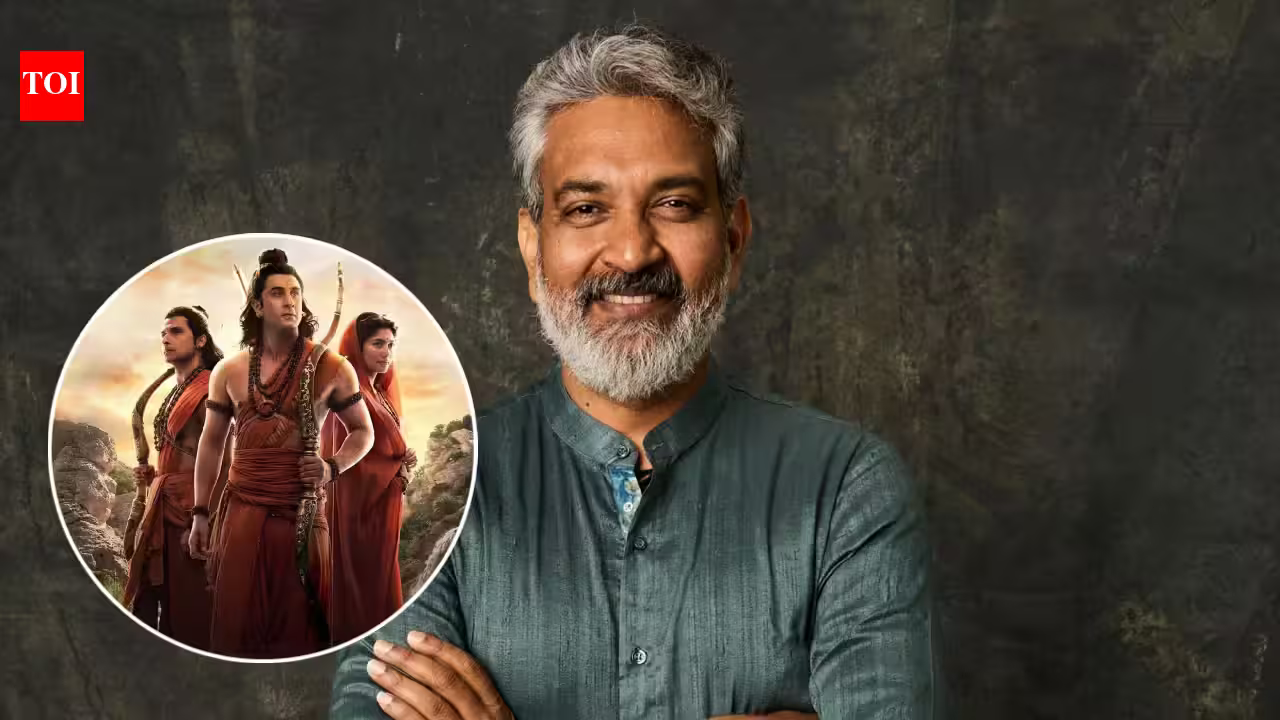
The cinematic landscape in India is bracing for a seismic shift. When a filmmaker of SS Rajamouli’s stature—a man who redefined the boundaries of Indian spectacle with Baahubali and RRR—weighs in on a project, the industry listens. With the release of the latest trailer for Nitesh Tiwari’s Ramayana, Rajamouli has offered his formal seal of approval, positioning the film as a cultural milestone that promises to bridge the gap between ancient legend and modern technical prowess.
As anticipation builds for the November 5, 2026, release, the buzz surrounding this two-part epic is palpable. With Ranbir Kapoor stepping into the mantle of Lord Rama, Yash embodying the formidable Ravana, and Sai Pallavi cast as the ethereal Sita, the film isn’t just another big-budget production; it is being treated as the definitive adaptation of one of the world’s most enduring epics.
Rajamouli’s Stamp of Approval
SS Rajamouli, no stranger to the gargantuan task of bringing mythology to the big screen, took to social media to voice his admiration for the team’s ambition. In a post that quickly gained traction, he noted that Ramayana is the story every Indian storyteller aspires to tackle. By highlighting that Nitesh Tiwari and producer Namit Malhotra have achieved this on a “grand scale,” Rajamouli effectively validated the aesthetic and thematic direction of the project.
Perhaps more importantly, he noted that the performances—led by Kapoor and Yash—bring “depth” to characters that are often flattened by repetition. In a landscape where mythological adaptations have occasionally been criticized for being hollow spectacles, Rajamouli’s assertion that the actors have grounded these timeless figures is the kind of endorsement that could silence early skeptics. His concluding sentiment, “Looking forward to 5th November,” serves as a direct invitation to the massive fanbases of his own cinema to converge on this new epic.
Deconstructing the Epic: A Darker Vision
The newly released 156-second trailer offers a stark departure from the traditional, sanitized portrayals of the Ramayana often seen on Indian television. It sets a tone that is atmospheric, ominous, and decidedly heavy. The narration begins by establishing a mythic era where “men walked among gods,” quickly shifting to the encroaching shadows cast by Ravana.
What stands out in this footage is the characterization of Ranbir Kapoor’s Rama. We see a man burdened by duty—a far cry from the serene, unwavering icon usually depicted. Kapoor’s dialogue, “If this is my fate… I will not hesitate to destroy him,” signals a version of Rama that is active, conflicted, and profoundly human. Conversely, the trailer treats Yash’s Ravana as an elemental force of nature, emphasizing his rise from “fire and fury.” The pacing of the trailer, bolstered by its English international edit, suggests that the makers are aiming for a global appeal, framing the conflict not just as a religious text, but as a universal story of good versus an existential, encroaching darkness.
The VFX Controversy and the Pursuit of Perfection
It would be remiss to ignore the bumpy road this film has traveled to reach this point. The reveal of the first trailer earlier this year was met with a chorus of scrutiny regarding its visual effects. Social media was ablaze with critiques about the CGI, with many viewers concerned that the film might lack the visual polish required to do justice to its heavy source material.
However, the team behind Ramayana—led by visual effects giant Namit Malhotra—has leaned into the feedback rather than retreating. The shift in tone in this latest trailer suggests a concerted effort to refine the visual language of the film. By presenting it in a high-fidelity international format, the production team is signaling that they are playing for the long game. Their response to the backlash has been simple yet bold: wait for the theatre experience. They are betting that the scale of a 3D and IMAX release will transform the perception of the visuals from “video game-like” to “cinematically immersive.”
A Two-Part Saga: Defining a Legacy
One of the most strategic decisions in this production is the division of the epic into two distinct parts. Ramayana: Part 1 is slated to dominate the box office in November 2026, with the conclusion arriving exactly a year later, in Diwali 2027. This structure allows the creative team the luxury of time and narrative depth, avoiding the common pitfall of rushing through the complex layers of the epic to reach a neat conclusion.
By opting for a multi-language release—spanning Hindi, Tamil, Telugu, Kannada, and Malayalam—the film is making a clear play for pan-Indian supremacy. In an era where “Pan-India” has become a buzzword for successful blockbusters, Ramayana is positioned as the ultimate manifestation of that concept. It is designed to be the “most immersive 3D cinematic experience” ever produced in the country, a claim that, if realized, could set a new benchmark for Indian VFX-heavy cinema.
Ultimately, the excitement surrounding the film lies in the intersection of nostalgia and innovation. Whether it can live up to the sky-high expectations of a billion people remains to be seen. But with the backing of visionaries like Rajamouli and the raw star power of its lead cast, Ramayana isn’t just releasing a movie; it is attempting to reclaim a cultural mantle. As the countdown to November 5, 2026, begins, all eyes are turned toward what promises to be one of the most significant cinematic events in the history of Indian film.
Disclaimer: This content is auto-generated for informational purposes only.
Source: Read Original News