





Chaos in the Capital: Controversial ‘Cockroach’ Party Founder Freed Amid Legal Tussle
NEW DELHI — The political landscape of the national capital was sent into a frenzy this week as the founder of the self-styled ‘Cockroach Party’—an insurgent political group known for its provocative, unorthodox public demonstrations—was released from police custody following a marathon legal battle.
The activist, who identifies himself solely by the pseudonym ‘Chirag the Survivor,’ walked out of the Tihar Jail complex late Wednesday evening, greeted by a vocal, albeit small, cohort of supporters. His arrest last week had sparked a wave of debate across social media regarding the boundaries of dissent and the nature of political satire in India’s democratic framework.
The Genesis of the ‘Cockroach’ Movement
The Cockroach Party, which gained prominence earlier this year, derives its name from a central ideological premise: that the common citizen, much like the resilient cockroach, can survive any environmental catastrophe or administrative failure thrown their way. The party’s platform focuses on extreme urban grievances, demanding immediate action on infrastructure neglect, waste management, and bureaucratic red tape through what they describe as “tactical visibility maneuvers.”
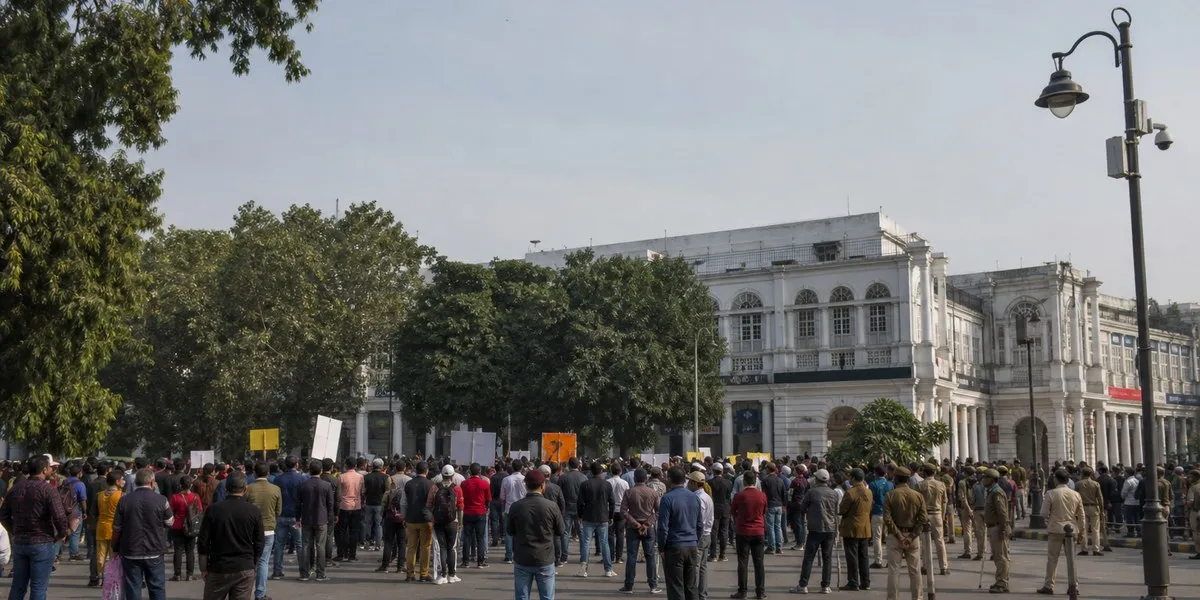
Their most recent protest, which led to the founder’s detention, involved releasing thousands of non-toxic, wooden replicas of insects outside a municipal office to symbolize the growing infestation of civic apathy. While supporters cheered the artistic protest, authorities labeled the event a public nuisance and a security risk.
A Legal Tug-of-War
Upon his release, the founder was met with strict bail conditions, including a mandate to refrain from staging public demonstrations within a three-kilometer radius of government administrative buildings. Legal counsel for the party argued that the initial detention was a gross overreach of state power, intended to stifle satirical discourse.
“The police treated a symbolic protest as an act of public disorder,” said Advocate Meera Varma, who represented the founder in court. “The right to express frustration with municipal governance is a cornerstone of our constitution. My client was not inciting violence; he was highlighting a policy vacuum.”
Conversely, police officials maintained that the arrest was necessary to ensure public safety. “There is a thin line between free speech and the obstruction of public infrastructure,” a senior police spokesperson stated. “The methods employed by this group caused mass traffic disruption and panic among commuters. We are not against protests, but we are against anarchy disguised as performance art.”
Public Sentiment and the Path Forward
The ‘Cockroach’ movement has tapped into a vein of frustration among urban youth, who feel traditional political parties have failed to address the hyper-local issues plaguing India’s rapidly expanding cities. However, the movement remains polarizing. Critics argue that the group’s shock-value tactics distract from meaningful policy debate and occupy valuable public space without offering constructive solutions.
As he re-entered the political arena, the founder promised that his time behind bars had only galvanized the movement. “If you try to step on us, we will simply scatter and return in greater numbers,” he told reporters, signaling that the party plans to move its focus toward digital campaigns and more structured, localized ward-level organizing in the coming months.
For now, the capital watches with bated breath to see if the Cockroach Party can transition from a social media curiosity into a legitimate political force, or if their brand of protest will continue to find itself at odds with the law.
Disclaimer: This content is auto-generated for informational purposes only.
Source: Read Original News