








The Mechanics of India’s Sustained Economic Expansion
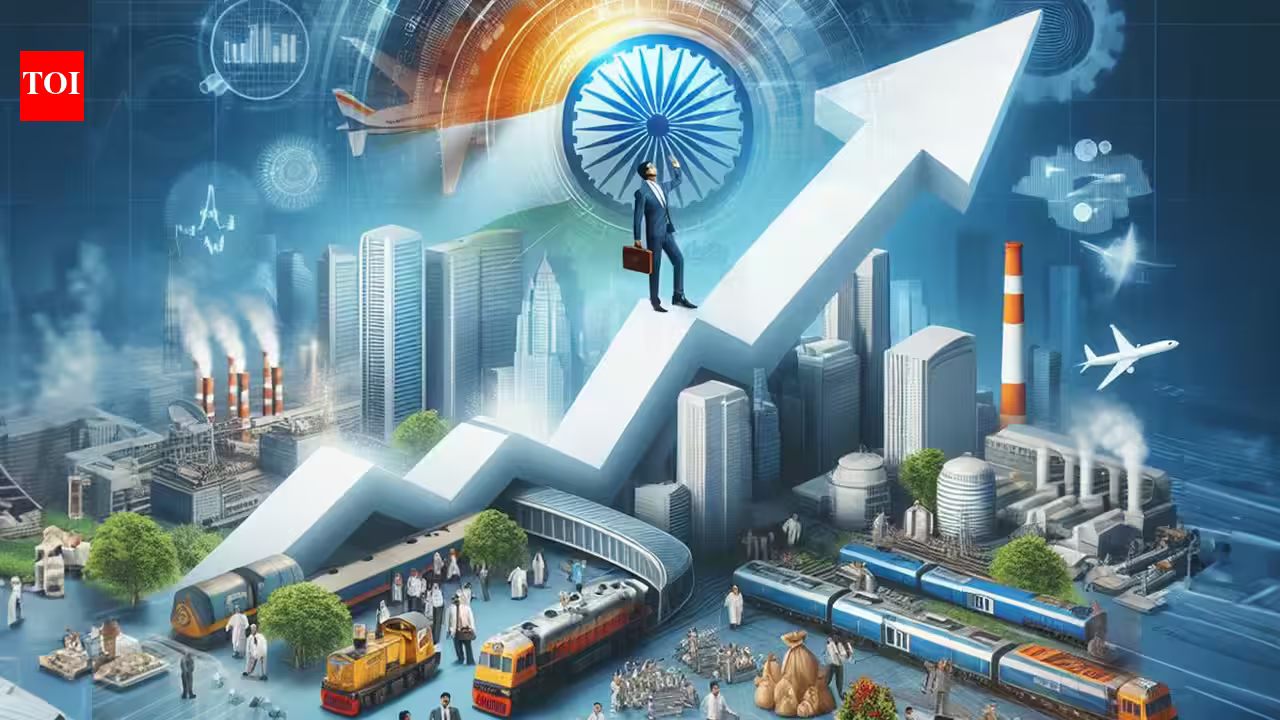
The trajectory of the Indian economy over the past five years offers a compelling case study in resilience and structural adaptation. Despite a sharp contraction during the pandemic year of 2020, India has executed a recovery that has consistently outperformed expectations from both domestic analysts and global financial institutions. Data analysis reveals that India has maintained a GDP growth rate exceeding 7% for five consecutive years—a feat that echoes the high-growth era of 2003–2007.
What differentiates the current period from previous growth cycles is the sheer scale of the Indian economy. In 2007, India’s GDP hovered just above the $1 trillion mark. Today, that figure is approaching $4 trillion. Consequently, a 7% growth rate in the current decade represents a significantly larger absolute expansion in economic output than it did nearly two decades ago. This quantitative leap indicates that the base of the economy has widened substantially, allowing for more robust absorption of global economic shocks, including geopolitical tensions in the Middle East and shifting international trade policies.
Structural Resilience Amid Global Volatility
India’s ability to navigate external pressures—ranging from the Russia-Ukraine conflict to disruptions in the Strait of Hormuz, a critical maritime passage for its energy imports—is rooted in its evolving economic architecture. Importing approximately 90% of its crude oil requirements makes India inherently sensitive to global energy prices. Yet, recent quarterly estimates have consistently beaten projections, suggesting that the domestic economy has developed a mechanism to buffer itself against supply-side shocks.
A significant driver of this performance is the strategic pivot toward manufacturing and self-sufficiency. Through initiatives such as the Production Linked Incentive (PLI) schemes, the government has successfully incentivized large-scale manufacturing, particularly within the electronics sector. This transition from a services-heavy economy to one that emphasizes integrated manufacturing supply chains has enhanced India’s export capabilities. Furthermore, the proactive monetary policy managed by the Reserve Bank of India (RBI) has played a pivotal role in maintaining inflation within target ranges, even as the global environment remains inflationary.
The Role of Demographic Dividends and Market Depth
The foundation of India’s long-term growth story remains its massive, youthful population and the depth of its domestic market. With 1.4 billion people, the country possesses a demographic dividend that is currently being mobilized through improved infrastructure and digital connectivity. This internal demand acts as a critical stabilizer when global trade volumes fluctuate.
Economists emphasize that the synergy between a large, consumption-driven domestic market and ongoing structural reforms is what keeps India on a high-growth trajectory. While challenges such as workforce skill development and labor market participation persist, the current growth momentum reflects an economy that is increasingly formalizing. The integration of technology in financial services and commerce has lowered the cost of doing business, allowing smaller enterprises to contribute more effectively to the GDP, thereby broadening the base of economic participation.
Global Revisions and International Confidence
In recent months, major international bodies, including the International Monetary Fund (IMF), the World Bank, and the Asian Development Bank, have revised their growth forecasts for India upward. These adjustments are not merely reflective of immediate quarterly results but represent a broader acknowledgment of the economy’s improved potential. The IMF, for instance, has validated India’s refined methodology for calculating GDP, aligning it with international statistical best practices.
The upward trajectory is particularly striking when contrasted with other major economies, some of which face contraction or stagnation. India, alongside select others, has seen its growth outlook consistently improved in the latest World Economic Outlook reports. This trend is bolstered by India’s active pursuit of free trade agreements (FTAs) with major partners such as the European Union and the United Kingdom. By reducing tariffs and streamlining regulations, these agreements are positioning India to integrate more deeply into the global value chain, effectively neutralizing the impact of protectionist trade measures implemented by larger economies.
Projecting the Path to the World’s Third-Largest Economy
Looking toward the next decade, the analytical consensus remains optimistic. As per the latest IMF projections, India is on track to ascend to the position of the world’s third-largest economy by 2031, trailing only the United States and China. Achieving this milestone will require the continuation of current structural reforms, further investments in human capital, and the sustained modernization of logistics and supply chain infrastructure.
The “India growth story” is no longer defined by a singular spike in activity but by a persistent ability to compound growth under challenging conditions. As the nation pivots from a developing market to a global manufacturing and services hub, the focus will likely shift from mere growth rates to the quality and inclusivity of that growth. For investors and policymakers alike, the primary takeaway is that the Indian economy has moved into a new league of stability. Despite fluctuations in currency valuations and nominal dollar-denominated GDP, the underlying real economy continues to demonstrate a level of strength that is increasingly drawing the attention of global capital markets. The next phase of development will test whether this momentum can be sustained through further innovation in the green energy transition and the continued expansion of the middle-class consumer base.
Disclaimer: This content is auto-generated for informational purposes only.
Source: Read Original News