







CHRIS WOAKES has long been the picture of the consummate professional: a reliable, tireless servant of English cricket whose contribution to the game spanned 217 international appearances and countless high-pressure moments. Yet, in the pages of his newly released autobiography, The Wizard, the former seam-bowling stalwart reveals that his exit from the international stage was anything but professional.
The man who played 62 Tests and was a cornerstone of England’s white-ball renaissance has laid bare the emotional toll of his departure, characterizing the management style of Managing Director Rob Key as “cold” and “shabby.”
The Final Bow at The Oval
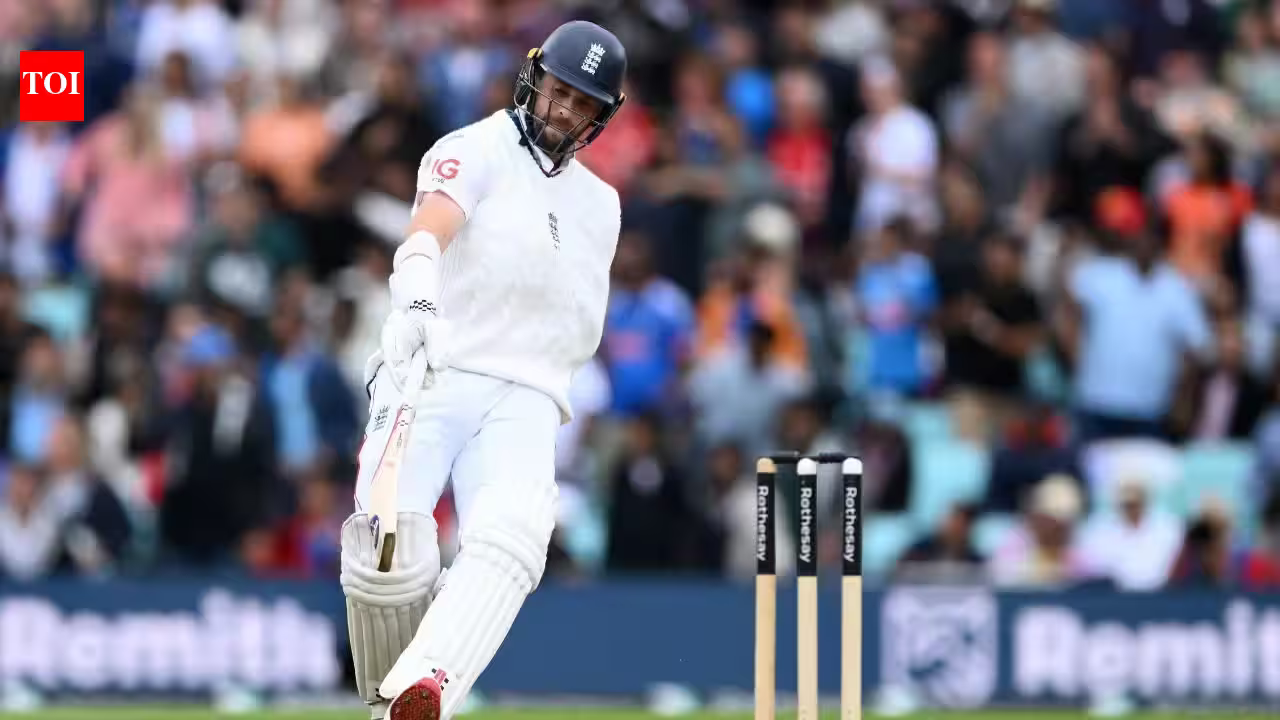
To understand the sting of Woakes’ exit, one must look back to the fifth Test against India at The Kia Oval in August 2025. It was a match that encapsulated the spirit Woakes brought to the England dressing room. While fielding, the seamer suffered a dislocated shoulder—a grueling, painful injury that would have sidelined most players immediately.
Yet, showing the grit that defined his decade-long career, Woakes emerged from the pavilion with his arm in a sling to bat. It was a final, desperate act of commitment to the side, an attempt to stabilize an innings for a team that had become his second family. It was a moment of pure, unadulterated passion for the badge. Little did he know, while he was fighting through the pain of a dislocated joint, the machinery of the England and Wales Cricket Board (ECB) was already preparing to close the book on his career.
A Public Omission
The heartbreak of the injury was soon compounded by a stinging public declaration. While Woakes was prepared for the reality of professional sport—that all careers have a shelf life and that the next generation of fast-bowling talent was knocking on the door—he was not prepared for the manner in which his redundancy was communicated.
In a move that stunned the cricket world and left the player himself reeling, Rob Key addressed the media, explicitly stating that “Chris Woakes isn’t in our plans—at all.”
The bluntness of the statement cut deep. In The Wizard, Woakes reflects on the impact of those words: “That final bit felt a bit cold. A bit shabby, really.”
For a player who had contributed so significantly across all formats, the lack of a private conversation prior to such a definitive, public dismissal felt like a breach of the professional decorum that should exist between a governing body and its veterans. “He could have easily had that conversation first with me, rather than the press,” Woakes writes.
The Reality of Modern Sport
While the critique is sharp, Woakes displays a tempered perspective that suggests he is not interested in burning bridges. He acknowledges the complexity of the job Key holds and suggests that perhaps the phrasing of the announcement was a symptom of the fast-paced, high-pressure environment of top-tier cricket management rather than an act of malice.
“I have always got on well with Rob and maybe those words slipped out, not necessarily how he meant them,” he notes. However, the lack of contact in the time since the incident suggests that the rift remains, even if the venom has dissipated.
When asked about the current state of his relationship with Key, Woakes is pragmatic. “We have barely spoken since. He is a busy man and moved on to different things. I am sure at some point we will discuss it.”
Ultimately, the autobiography serves as a meditation on the transactional nature of elite athletics. Woakes concludes with a sobering realization that resonates with many players who have walked this path before him: “In any walk of professional sport, there isn’t much loyalty because the game moves on.”
A Legacy Beyond the Headlines
The irony, perhaps lost on the selectors during the chaotic build-up to the following Ashes series, is that England might have benefited from a calmer, more experienced hand during their subsequent 4-1 collapse against Australia.
Woakes’ retirement followed the announcement of his exclusion from the Ashes squad, effectively bringing an end to an illustrious international journey that saw him serve as the ultimate team man. Whether on a green top in Leeds or a flat track in India, his ability to offer control and his penchant for producing magical spells with the ball will be remembered long after the “shabby” nature of his exit fades from the headlines.
As the dust settles on his international career, The Wizard offers fans more than just a list of wickets and runs. It provides an honest, sometimes raw, look at the human cost of the international game. Chris Woakes may have been told he was no longer in the “plans,” but for those who watched him walk out at The Oval with his arm in a sling, his place in English cricket history is already firmly set.
Disclaimer: This content is auto-generated for informational purposes only.
Source: Read Original News