








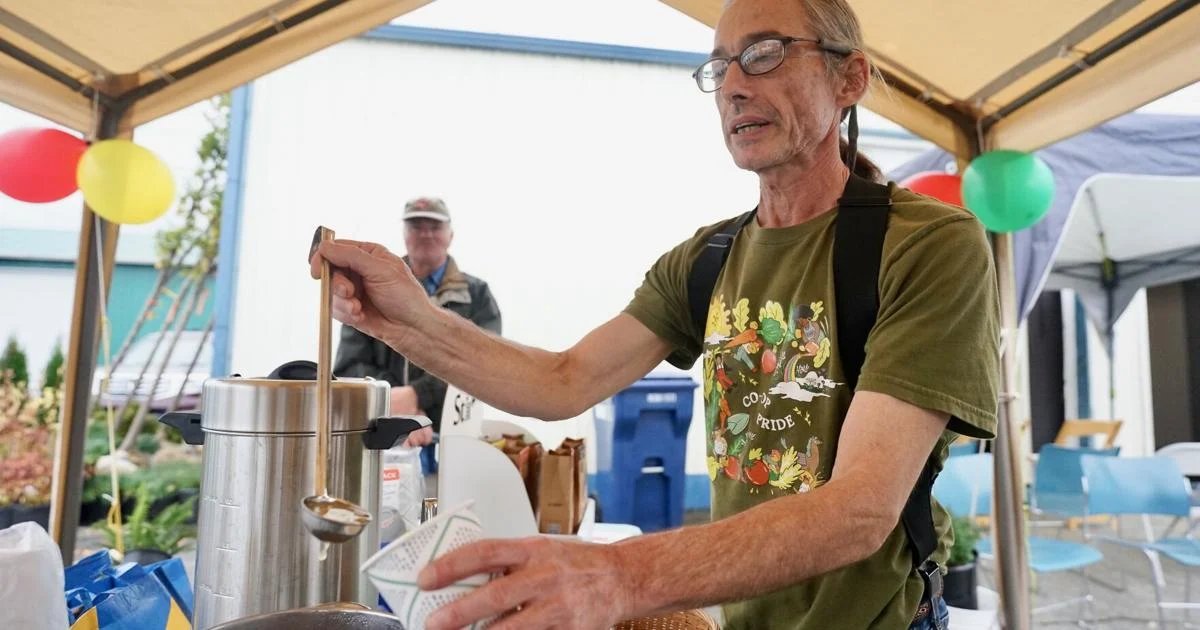
ANACORTES — In an era dominated by rapid digital transformation, AI-driven inventory logistics, and the encroaching presence of tech-heavy retail giants, the Anacortes Food Co-op serves as a resilient reminder of the power of local connection. On October 9, the nonprofit grocery store celebrated its 10th anniversary, proving that community-owned models can thrive even in a landscape increasingly defined by automated supply chains and national conglomerates.
The milestone event, held in the parking lot of the shop’s current location at 2403 Commercial Ave., featured samples from roughly 10 local vendors, including artisans like 3 Generations Jam, MicroLife Gardens, and Sujin’s Original Kimchi. For these small producers, the co-op represents more than just shelf space; it acts as a human-centric alternative to the data-optimized algorithms that dictate product placement in major supermarkets.
From Grassroots Vision to Digital-Age Resilience
The co-op’s origins were decidedly analog, grounded in the initiative of high school students Brian Jo, Alex Pitz, and Casey Bacetich. With the support of Su Jin Jo, who provided space in her restaurant, the group successfully rallied hundreds of neighbors to buy into the concept before a brick-and-mortar storefront even existed.
“Those folks joined without a storefront to come to, just because of the idea,” said Shawn Bell, chair of the board of directors. This early “crowdfunding” of community interest allowed the co-op to establish its identity. While major tech companies are currently racing to integrate AI into grocery shopping—using computer vision for checkout-free experiences and predictive analytics for stock management—the Anacortes Food Co-op has remained focused on the social infrastructure of its membership.
Navigating Physical Transitions
The journey of the co-op reflects the evolving needs of a small town. After operating in a cramped space on Commercial Avenue—notoriously hot during the summer—the co-op took a significant leap of faith. In 2022, the board decided to move away from its legacy location to renovate a former NAPA Auto Parts building.
The transition required more than just physical labor; it required a commitment to modernization while maintaining the co-op’s ethos. Bell, who spearheaded much of the renovation, transformed the utilitarian auto-parts facility into a bright, spacious environment that opened in the summer of 2023. By reinvesting in its own infrastructure, the nonprofit has ensured it remains a permanent fixture in a town where residents are often swayed by the convenience of larger, low-cost chains like Safeway.
The Human Edge in a Tech-Dominated Retail Market
As the retail industry continues to pivot toward AI-assisted commerce and online-only marketplaces, the success of the Anacortes Food Co-op serves as a case study in human-centric retail. While global platforms use sophisticated software to push products to consumers, the co-op relies on the tangible relationships between producers and neighbors.
Becca Green, owner of 3 Generations Jam, noted that surviving a decade in such a competitive market is a testament to the community’s loyalty. “We’re a pretty small town,” Green said. “So the fact that they’ve managed to keep kicking for 10 years is, I think, great.”
By prioritizing local food systems over mass-market efficiency, the Anacortes Food Co-op has built a level of resilience that pure retail metrics cannot capture. As it enters its second decade, the store remains a vital hub for local commerce, demonstrating that even in a world obsessed with tech-driven efficiency, there is an enduring, irreplaceable value in the “community-first” approach to the grocery industry. Whether through the frying of kimchi pancakes or the sourcing of artisan soaps, the co-op remains a model for how small-scale, nonprofit entities can hold their own in the shadow of big-box competitors.
Disclaimer: This content is auto-generated for informational purposes only.
Source: Read Original News