








Paris is grappling with the aftermath of intense civil unrest that swept through the city this past weekend. What began as demonstrations against the rising cost of living rapidly escalated into scenes of chaos, leaving a trail of destruction across several districts. While city officials and business owners begin the arduous process of recovery, the economic impact is already proving significant.
## A City Divided: The Path of Destruction
The violence, which peaked on Saturday, saw masked rioters clashing with law enforcement in central areas including the iconic Marais shopping district and near the Place de République. Reports from the ground described a “dystopian” atmosphere as tear gas filled the air and protesters set vehicles and refuse bins ablaze.
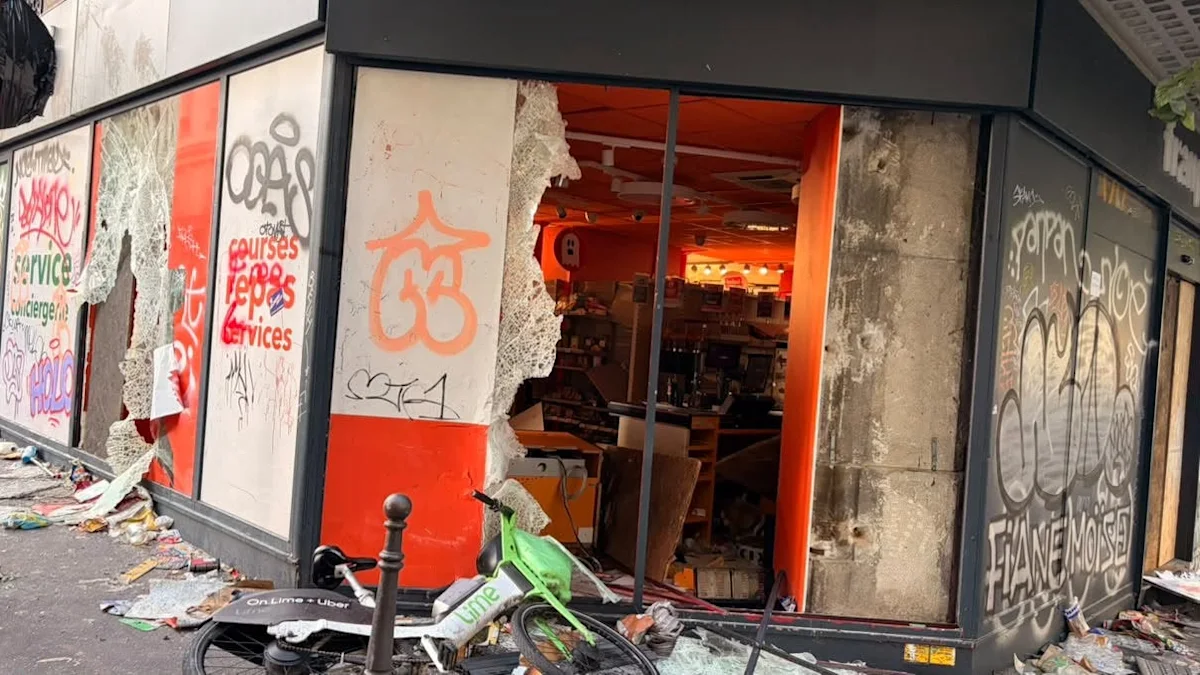
The destruction was not uniform across the capital. While neighborhoods like Montmartre remained largely unaffected, with local businesses operating under a veneer of normalcy, other areas were left scarred. Shopkeepers arriving on Sunday morning to assess their livelihoods were met with shattered glass, looted shelves, and empty display cases. One small business owner described the devastating reality of returning to find their store completely ransacked, a sentiment echoed by several other local proprietors who were forced to shutter their doors as the violence intensified.
## Economic Fallout and Corporate Impact
The scale of the damage extends well beyond small, independent boutiques. Major retail chains have reported extensive losses, signaling a broader economic disruption. Alexandre Bompard, CEO of the Carrefour Group, estimated that repair costs for their impacted locations would exceed $11 million. He cautioned that the destruction would have far-reaching consequences, potentially forcing franchise owners to scale back employee hours, further straining the local economy.
In response to the mounting tension, the city is moving to support affected merchants. Mayor Emmanuel Grégoire has announced the formation of an emergency task force designed to assist business owners with the bureaucratic complexities of insurance claims and administrative recovery. “You bring Paris to life every day. Today, it’s Paris’s turn to stand by your side,” Grégoire stated.
## Tech and Digital Infrastructure Challenges
While the physical damage is visible, the unrest has also highlighted the vulnerability of urban retail infrastructure in an increasingly digitized era. Beyond the loss of physical inventory—such as at a ransacked Nicolas wine store—many retailers must now address the security of their digital and payment systems. As physical storefronts recover, there is growing pressure on the tech sector to provide better-integrated security and monitoring solutions.
The integration of AI-driven surveillance and predictive analytics has become a focal point for security firms looking to protect urban corridors. In similar environments, smart city technology is often deployed to monitor crowd density and detect anomalous activity in real time. However, the events in Paris illustrate the limitations of current systems when faced with large, mobile groups. As companies like Google continue to advance their “Google Public Sector” initiatives—which focus on infrastructure and data security for municipalities—the need for robust, privacy-compliant technology to manage public safety during civil unrest remains a critical industry discussion.
For now, the focus in Paris remains on immediate cleanup and stabilization. While volunteers and repair crews work to restore the city’s streets, the long-term question remains how the government and private sector can collaborate to safeguard the future of the capital’s commercial heart against recurring volatility.
Disclaimer: This content is auto-generated for informational purposes only.
Source: Read Original News