







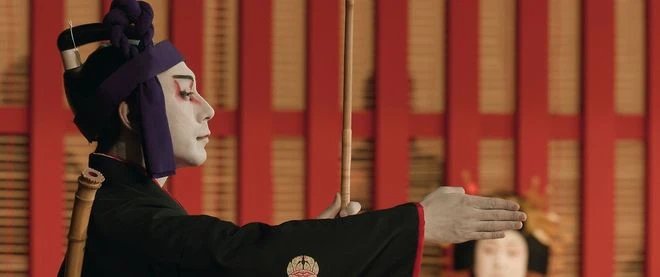
Acclaimed filmmaker Takashi Miike, known for his prolific work in genre cinema and high-octane action, has traded stylized violence for the sacred traditions of the stage in his debut documentary, “Shumei: The Living Legacy of Kabuki.” The film serves as a high-definition testament to a momentous transition in Japanese cultural history: the succession of Kabuki star Ichikawa Ebizo to the prestigious name Ichikawa Danjuro XIII.
The documentary chronicles the personal and professional journey of the Ichikawa family, capturing not only the actor’s formal name-taking but also his eldest son’s adoption of the name Ichikawa Shinnosuke VIII. The production, born from Miike’s deep professional and personal ties to Ebizo—with whom he collaborated on Hara-Kiri: Death of a Samurai and the Roppongi Kabuki series—offers an intimate look at a multi-generational legacy.
What began as a straightforward documentation project quickly evolved into a chronicle of resilience. Originally intended to cover a one-year period, the filming timeline was thrown into turmoil by the COVID-19 pandemic, which forced a two-and-a-half-year delay in the succession ceremonies. “I thought the project would be over in one year, but the pandemic wreaked havoc,” Miike noted. “That’s what the documentary is all about, and I guess that it was how it was meant to be.”
The film is bifurcated in its approach. The first half provides an orthodox historical context, detailing the origins of Kabuki and the lineage of the 12 preceding generations of Danjuro. However, the second half shifts dramatically, eschewing narration and subtitles in favor of raw, immersive stage footage. Miike captures the intense beauty of Danjuro’s performance in Sukeroku Yukari no Edozakura and Shinnosuke’s Uiro-uri with a minimalist lens. “I made sure to keep it as pure as possible so that the audience could feel the beauty and intensity of his performances,” the director explained.
Perhaps the most poignant moment of the film occurs during the presentation of Kanjincho. In a stroke of creative inspiration discovered just weeks before completion, Miike utilized editing techniques to bridge the past and present, weaving together footage of the current Danjuro with performances by his father and grandfather.
“After capturing the current and future, I wanted to bring in the past,” said Miike. “I felt a sensation, or even an impulse, that I had never felt while making fictional movies.”
As for whether the mantle of Danjuro has fundamentally transformed the man previously known as Ebizo, Miike remains reflective. He suggests that, much like the process of filmmaking, true understanding often arrives only in retrospect. Through Shumei, Miike has successfully delivered a definitive, high-definition record of a living art form, ensuring that the legacy of the Ichikawa name remains preserved for the world to witness.
Disclaimer: This content is auto-generated for informational purposes only.
Source: Read Original News