








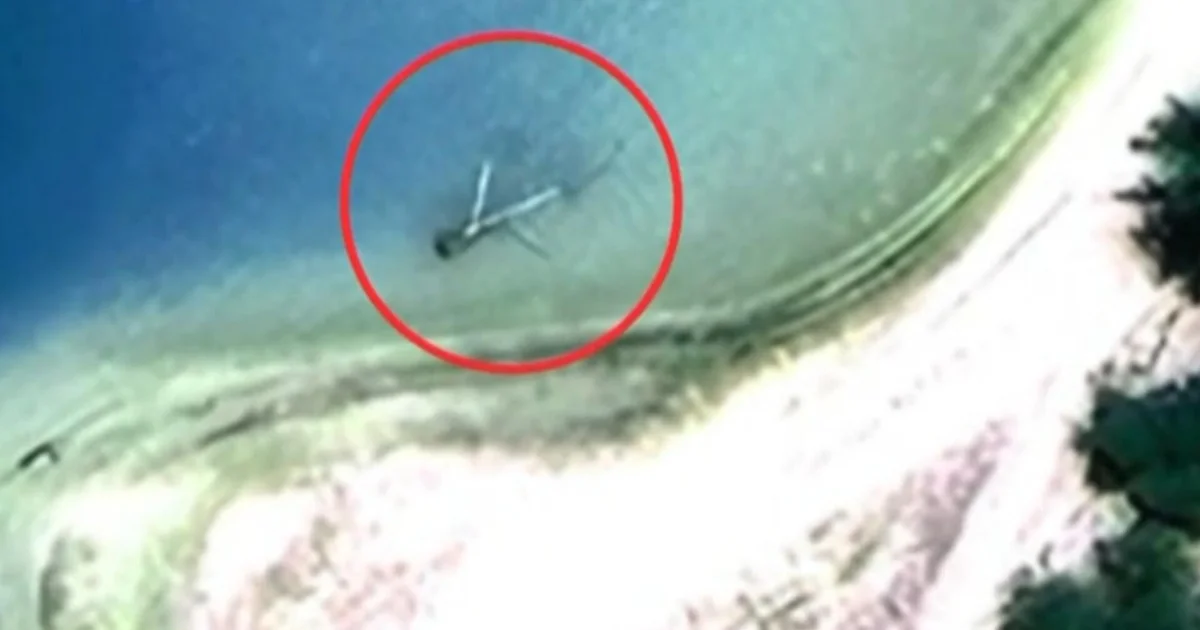
The decades-long quest to solve one of aviation’s most enduring enigmas has hit another dead end. Researchers confirmed this week that a mysterious object discovered near the remote Pacific island of Nikumaroro is not the wreckage of Amelia Earhart’s long-lost Lockheed Electra 10-E.
The so-called “Taraia Object,” which had fueled intense speculation since being identified in satellite imagery in 2020, was revealed to be a natural formation rather than a piece of history.
A 17-member expedition team, led by Steve Schultz of Purdue University and Richard Pettigrew of the Archaeological Legacy Institute, arrived at the remote site on Oct. 14 after a grueling five-day voyage. Their mission was met with significant environmental challenges; severe weather confined the researchers to their ship for three of the five days allotted for the search. By the time the team could physically inspect the site, much of the debris had been broken apart by the elements.
“Evidence gathered at the Taraia Peninsula on Nikumaroro confirmed that the visual anomaly first seen in satellite imagery in 2020 was likely a collection of large trees deposited along the peninsula’s sandspit,” the researchers stated. What appeared in satellite imagery to be a metallic structure was ultimately identified as a single, Y-shaped log segment. The deceptive “metallic” sheen that had previously excited experts was dismissed as a result of a carbonate veneer—a common phenomenon in the area where objects become coated in a shiny, concretized amalgam of coral sand.
Amelia Earhart and her navigator, Fred Noonan, vanished on July 2, 1937, while attempting to become the first individuals to circumnavigate the globe around the equator. Despite nearly 90 years of searching, their final resting place remains a mystery.
While this specific lead proved fruitless, the team remained resolute in their mission. “Amelia Earhart’s spirit of courage and curiosity drove every step of the search,” said Pettigrew. “We accomplished our goal to determine what the Taraia Object was, and we’re deeply grateful to the private donors who shared our vision.”
The search for the Electra has been characterized by “near misses” and mistaken identities. Just last year, another expedition team captured a sonar image that appeared to show an aircraft on the ocean floor, only for it to be identified as a natural rock formation.
Pettigrew continues to maintain the hypothesis that Earhart and Noonan landed on Nikumaroro and may have survived there for a time, citing 1930s-era relics found on the island. As the search for physical proof continues, interest in the case remains at a fever pitch, underscored by a recent order from President Trump to declassify government records related to the aviator’s disappearance. For now, however, the Pacific remains silent on the fate of the pioneer pilot.
Disclaimer: This content is auto-generated for informational purposes only.
Source: Read Original News