








INDIA’S TRACK-AND-FIELD dominance at the 2026 Aichi-Nagoya Asian Para Games reached a fever pitch on Monday as the nation celebrated a stunning 1-2 finish in the women’s 1500m T12/T13 event. In a display of tactical brilliance, grit, and seamless coordination with their guides, Soumya Kumar and Radha Venkatesh etched their names into the history books, securing gold and silver respectively to bolster India’s growing medal haul in Japan.
## A Golden Masterclass in Strategic Running
The women’s 1500m T12/T13 final was always expected to be a grueling test of endurance, but the unique nature of the classification format added a layer of complexity that favored the prepared. Because the T12 and T13 categories were combined for this race, the podium was decided by a points-based system—a system that rewards not just raw speed, but the technical mastery of an athlete’s classification bracket.
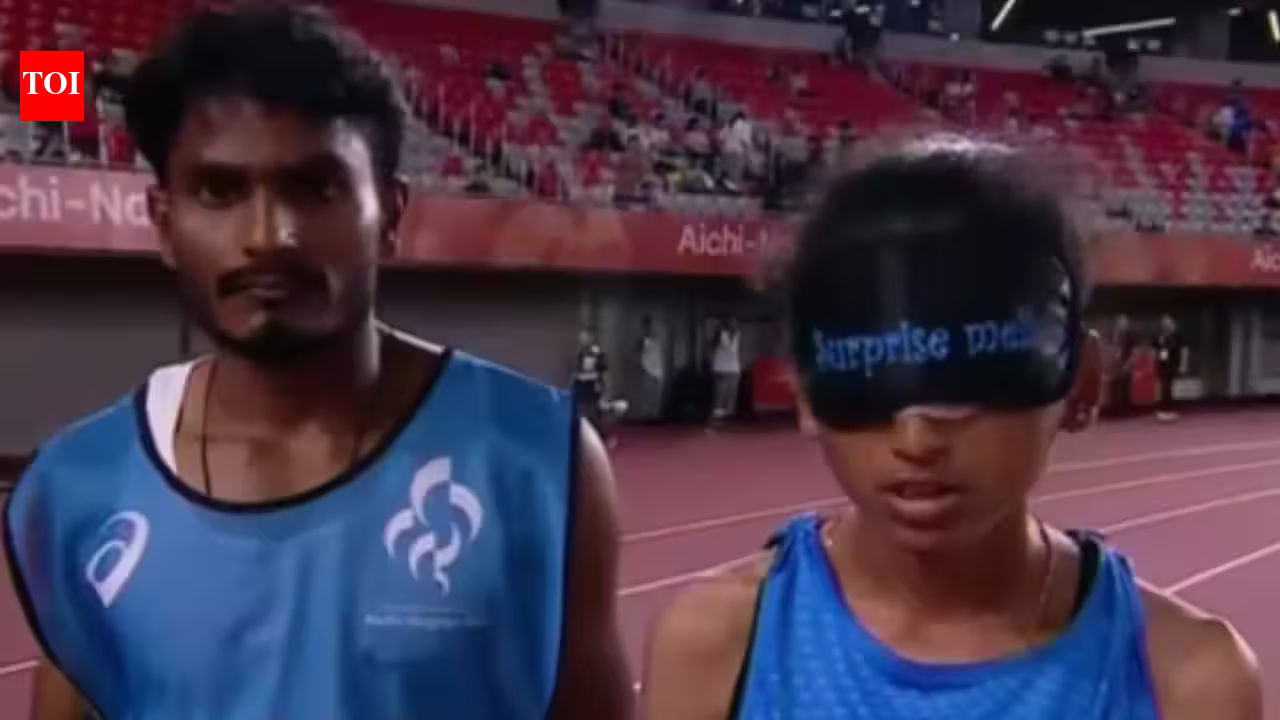
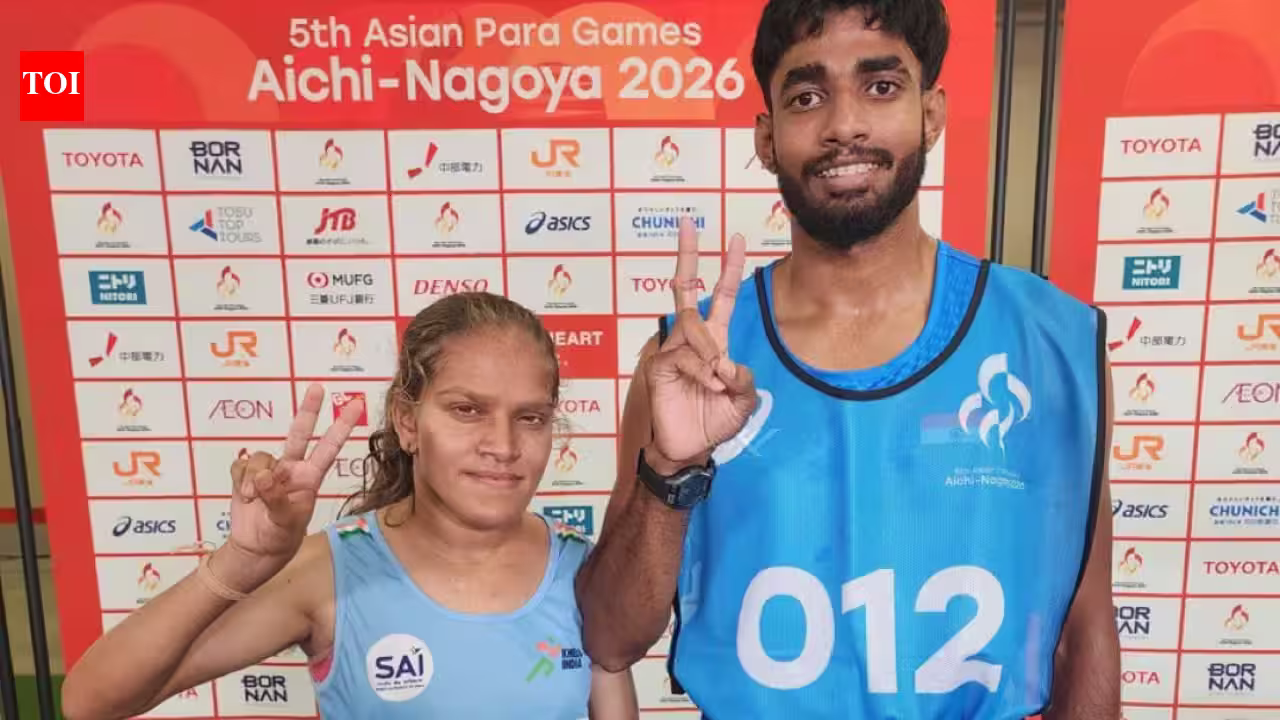
Soumya Kumar, partnered with her guide Bharath Kumar, executed a near-perfect race. Despite the stiff competition on the track, Soumya crossed the line with a personal best time of 5:12.39. In the points-based evaluation, that effort netted her a commanding 621 points, comfortably placing her at the top of the podium. The synergy between Soumya and her guide was evident throughout the race, as they maintained a disciplined pace that allowed them to peak exactly when it mattered most.
Radha Venkatesh, flanked by guide Govind Solanki, completed the historic Indian sweep. Clocking a time of 5:30.90, Radha secured 421 points, locking in the silver medal. While Japan’s Mana Sasaki crossed the finish line with a faster raw time of 5:12.15, the scoring system prioritized the classification adjustments, ultimately leaving Sasaki with the bronze medal at 336 points. For the Indian contingent, it was a reminder that in the world of Para-athletics, performance is as much about intelligence as it is about physical output.
## Overcoming the Odds: The Points-Based Challenge
The complex scoring mechanism at the Aichi-Nagoya Games often creates high-stakes drama, and Monday’s race was no exception. When dealing with mixed-classification events, the goal is to level the playing field, ensuring that the athletes’ specific physical challenges are factored into their final results.
For the Indian team, the outcome is a testament to the rigorous preparation leading up to the Aichi-Nagoya Games. Head coaches and support staff had clearly emphasized the necessity of hitting specific time benchmarks that would maximize their points potential under the classification formulas. Both Soumya and Radha executed that game plan with surgical precision. To walk away with two of the three medals in such a competitive field is a massive statement of intent for the Indian athletics program, demonstrating that they are not just capable of participation, but are legitimate contenders for international supremacy.
## Rakshitha Raju Adds to the Indian Tally with Bronze
The success on the track was not limited to the T12/T13 categories. Moments later, the focus shifted to the women’s 1500m T11 event, where Rakshitha Raju continued the Indian medal charge.
In a race defined by high-intensity efforts from the Chinese team, Raju displayed immense mental fortitude to clinch the bronze medal with a time of 5:31.45. It was a race that required every ounce of energy, as the T11 category—which features athletes with the most severe visual impairments—demands a level of trust between athlete and guide that is unparalleled in any other sport.
While the gold and silver went to China’s Shanshan He and Zengli Huang, respectively, the Indian camp had plenty to be proud of. Ravanni Valasanaini, also representing India, put in a monumental effort to finish fourth. Her time of 5:41.85 was not only a personal best but a clear sign that the depth of talent within the Indian para-running program is expanding rapidly.
## Looking Ahead: Building Momentum
As the dust settles on this high-octane day of competition at the Asian Para Games, the implications for the Indian team are significant. These results do more than just add numbers to the medal table; they provide a blueprint for future middle-distance success. By mastering the intersection of raw speed and regulatory scoring systems, Indian athletes are proving that they are world-class operators.
The camaraderie shown by the guides—Bharath Kumar, Govind Solanki, and the wider support network—was a recurring theme throughout the day. In the world of adaptive sports, these partnerships are the backbone of every victory. As the Aichi-Nagoya Games continue, the momentum generated by Soumya, Radha, and Rakshitha will undoubtedly serve as a massive morale boost for the rest of the Indian contingent, who now head into their respective events with the wind in their sails and a proven path to the podium.
For the fans back home, Monday was a morning to remember—a 1-2 finish and a hard-fought bronze, marking one of the most successful days for Indian track athletes in the history of the Asian Para Games. The journey in Japan is far from over, but if these performances are any indication, the Indian squad is ready to chase every available medal with everything they have.
Disclaimer: This content is auto-generated for informational purposes only.
Source: Read Original News