








The Strategic Shift in India’s Energy Security Framework
The decision by the Indian government to shelve plans for mandatory coal imports marks a significant shift in its approach to managing energy security. For years, the reliance on imported coal to bridge the gap between domestic production and surging power demand has been a standard, albeit costly, stopgap measure. However, with international coal prices hovering at three-year highs and the depreciation of the Indian rupee against the US dollar, the economic rationale for importing fuel has eroded significantly.
By prioritizing domestic output and optimizing supply chain logistics, the government is attempting to insulate the economy from the volatility of global energy markets. This move reflects a broader national strategy: to enhance self-reliance in the power sector by leveraging Coal India Limited (CIL) and streamlining the domestic coal transportation network. This approach is not merely about cost containment; it is a structural adjustment aimed at ensuring that the power sector, which serves as the backbone of India’s industrial growth, remains shielded from the inflationary pressures of foreign energy markets.
Economic Pressures and the High Cost of Dependency
The rationale behind discontinuing the push for imported coal blends is deeply rooted in macroeconomic realities. Thermal coal prices on the global stage have reached levels that would impose an unsustainable burden on domestic power distribution companies, many of which are already grappling with narrow margins and mounting debt. Furthermore, the weakening of the Indian rupee exacerbates this burden, as the cost of procurement is paid in foreign currency. When the domestic currency depreciates, the effective landed cost of imported fuel rises, forcing power producers to either absorb the cost—eroding their financial stability—or pass the burden to end-consumers.
India’s energy strategy has historically been caught in a cycle of reacting to seasonal shortages. By mandating imports, the government previously ensured that power plants could operate at peak capacity during periods of high demand. However, this strategy is essentially a form of importing inflation. The current decision signifies that policymakers now view the long-term sustainability of domestic mining and logistics as a more prudent path. By directing Coal India Limited to accelerate extraction and coordinating with the Indian Railways to ramp up daily rake availability, the government aims to substitute expensive foreign purchases with domestic supply chains that are priced in rupees, thereby stabilizing the cost structure of electricity generation.
Operational Challenges and Inventory Management
The urgency of these policy shifts stems from the critical state of coal inventories at thermal power plants. Recent data from the Ministry of Power indicates that nearly half of India’s coal-fired plants have faced critically low stocks, defined as holding less than 25 percent of the required buffer. This depletion has been driven by a confluence of factors, most notably an erratic monsoon cycle. While excessive rainfall can disrupt mining operations, a poor or delayed monsoon—as seen recently—extends the duration of peak temperatures, which in turn spikes demand for air conditioning and irrigation-related power consumption.
Simultaneously, the reduced contribution of hydropower due to inconsistent rainfall patterns has forced coal-fired plants to operate at higher capacity factors to fill the resulting generation gap. This “double-whammy” of increased demand and reduced supply diversity has stretched the supply chain to its limits. The Ministry of Power’s decision to monitor these plants as part of an early-warning system—rather than viewing every inventory dip as a potential shutdown—is a signal of tighter operational oversight. By identifying plants with critically low stocks early, the government has been able to redistribute supplies dynamically, ensuring that the most vulnerable facilities receive priority for fuel replenishment.
Infrastructure Logistics as the New Frontier of Efficiency
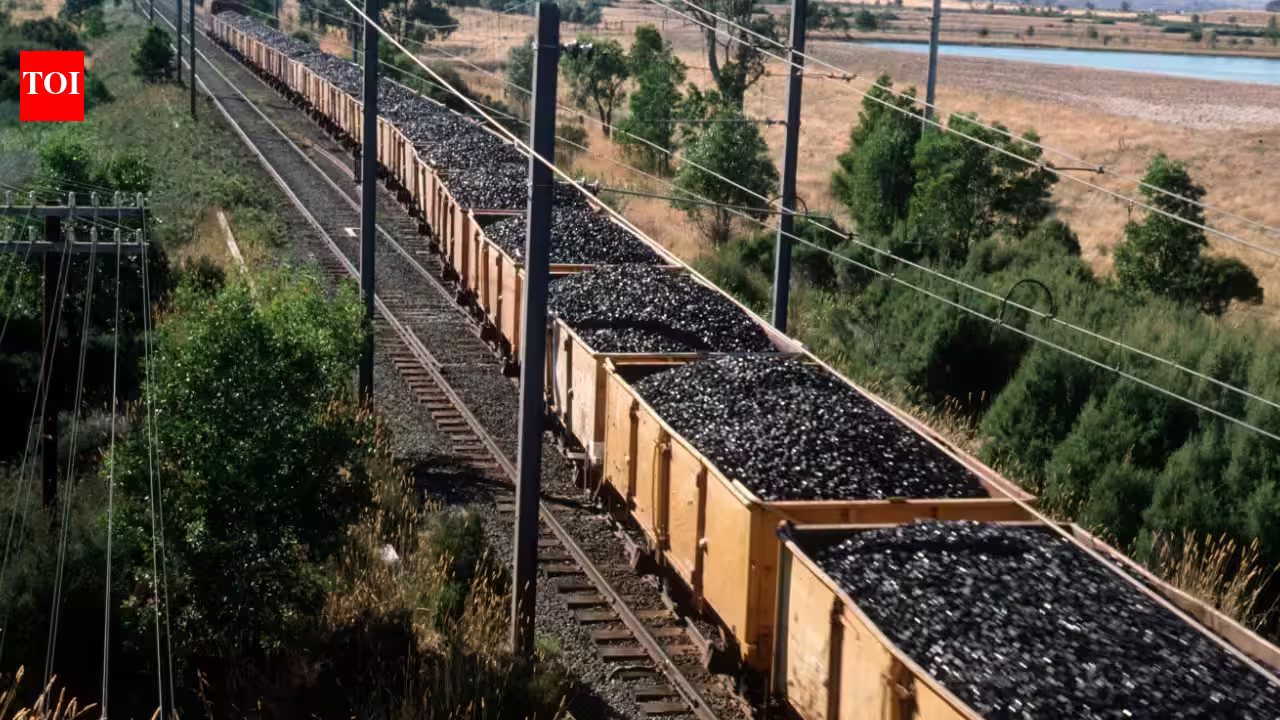
If domestic production is the engine of India’s energy security, then transportation is the transmission. The government’s renewed focus on rail logistics is critical to solving the current crisis. Moving coal from the mineral-rich eastern states of Jharkhand, Odisha, and Chhattisgarh to power plants across the north and south requires immense coordination. The daily target of 470 rakes is not just an operational goal; it is a vital metric for national energy stability.
Recent improvements in rail loading rates, which have seen a rise in the number of rakes dispatched per day, have already begun to pay dividends. By ensuring that Coal India Limited’s production translates directly into plant-side availability, the authorities are minimizing the “transit-time risk.” This optimization is crucial because coal stocks are not just a measure of volume but of velocity—how quickly fuel can be moved from the pit-head to the combustion chamber. Enhancing the frequency and consistency of these shipments is inherently more cost-effective than relying on imported coal, which involves longer lead times, port logistics, and exposure to ocean freight rate fluctuations.
Future-Proofing India’s Power Grid
Looking ahead, the policy to halt mandatory imports is part of a broader transition toward a more resilient power grid. The government’s directive requiring captive power plants to operate at maximum capacity underscores the priority placed on maintaining baseload power supply throughout the winter and the upcoming summer months. By ensuring that domestic capacity is utilized to its full potential, India can reduce its vulnerability to the whims of the international commodities market.
The challenge now lies in maintaining this momentum in domestic production and transport efficiency. As India continues to urbanize and industrialize, electricity consumption is expected to follow an upward trajectory. Sustaining growth will require not only the current “crunch-time” solutions of maximizing existing rakes and mining output but also long-term investments in coal handling infrastructure and more efficient rail corridors. The decision to forgo imports is a bold statement of confidence in India’s domestic capabilities. If the country can successfully balance the current inventory cycle through improved internal logistics, it will set a significant precedent for how major developing economies can manage their energy requirements without being overly tethered to the volatility of global markets. The upcoming months will serve as the true test of this strategy as the country enters the high-demand festive season and navigates the seasonal transition in weather.
Disclaimer: This content is auto-generated for informational purposes only.
Source: Read Original News