






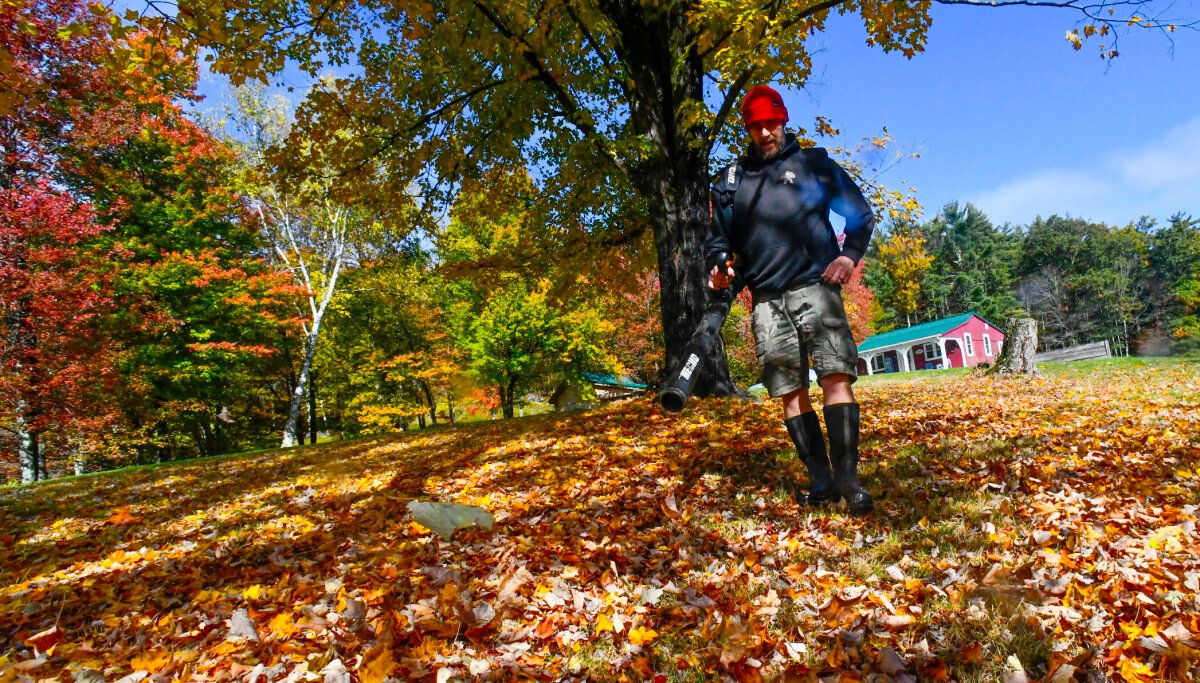
VERNON — In an era where digital networking often replaces face-to-face interaction, one local entrepreneur is proving that the most effective way to build a community is still through direct, physical labor. David Lafoe, a Vernon native who returned to his hometown three years ago, has successfully scaled his lawn care business, Deez Greens, by turning standard landscaping services into a catalyst for social connection.
Starting with just three clients, Lafoe’s operation has seen a steady trajectory of growth, now serving approximately 20 regular customers. While the business model is built on traditional manual labor, Lafoe’s success mirrors the modern tech-driven philosophy of “hyper-local” service—leveraging community needs to create a sustainable, scalable ecosystem that fosters long-term relationships.
## The Evolution of Local Service in the Digital Age
While many small businesses are now flocking to platforms like Google Business Profile, Nextdoor, and specialized AI-driven scheduling apps to manage client lists and search engine visibility, Lafoe’s approach highlights the enduring power of word-of-mouth. By focusing his efforts on Vernon’s older population, he has tapped into an underserved market that requires reliable, trust-based assistance.
His business model isn’t just about grass cutting; it is a community-first operation. Lafoe often engages in barter systems to acquire equipment, proving that resource management and community-based asset sharing can be just as effective as traditional capital investment. In many ways, his reliance on face-to-face interaction and personalized service acts as a low-tech alternative to the automated AI assistants that many larger landscaping corporations are currently testing to handle customer queries and logistics.
## Balancing Technological Demand with Manual Execution
Despite the rapid expansion of his client base, Lafoe continues to operate his business as a side venture, balancing his tasks with a full-time position at a local machine shop. As the seasons change, the demands on his schedule have spiked. A particularly rainy summer kept the grass growing at a relentless pace, and the arrival of autumn has brought a surge in leaf-removal requests that have kept his phone ringing “off the hook.”
For many modern workers, the rise of the “side hustle” is increasingly supported by the gig economy’s digital infrastructure. Tools like Google Calendar for time management, social media for lead generation, and mobile payment platforms have made it easier for people like Lafoe to manage complex schedules while keeping overhead low. However, Lafoe maintains that the core value of his work isn’t found in a dashboard or an algorithm, but in the physical ability to assist residents in reclaiming their gardens and maintaining their independence at home.
## Strengthening Community Bonds One Yard at a Time
The success of Deez Greens has fundamentally changed how Lafoe interacts with his environment. By taking on tasks ranging from clearing overgrown brush to standard mowing, he has embedded himself into the fabric of Vernon. He estimates that he now knows at least three people on every road in town—a metric of success that goes far beyond profit margins.
As the landscaping industry continues to integrate more advanced tech—from robotic, AI-guided lawn mowers to satellite-based mapping for property estimates—the human element remains the deciding factor for many customers. Lafoe’s commitment to his clients illustrates a vital lesson: even in an age dominated by global digital networks, the most robust connections are often forged locally. For Lafoe, the goal remains simple: providing a helping hand to those who need it most, ensuring that as long as there is work to be done in Vernon, the community continues to grow together.
Disclaimer: This content is auto-generated for informational purposes only.
Source: Read Original News