








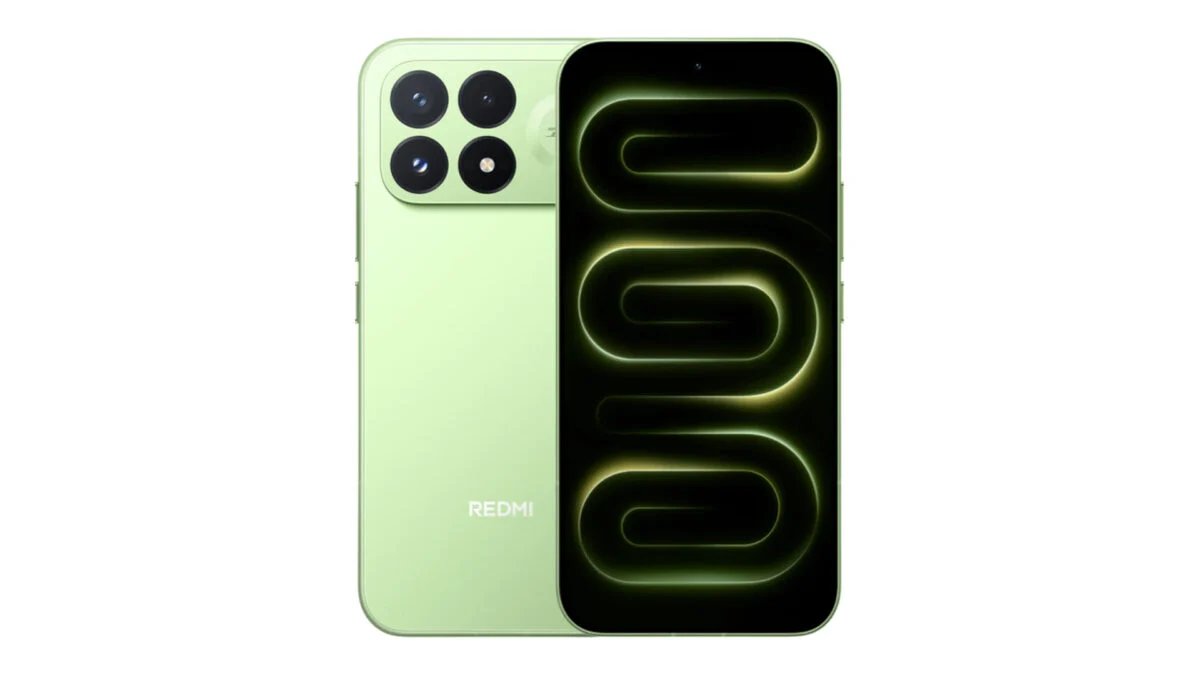
The landscape of smartphone hardware is shifting toward a new extreme. While Western manufacturers often focus on software integration and incremental hardware refinements, Chinese smartphone brands are locked in an aggressive race to push battery capacity to levels once reserved for specialized, ruggedized equipment. Xiaomi has entered this fray with the announcement of the Redmi K100, a flagship device poised to break the 10,000mAh threshold, signaling a departure from the industry standard of 5,000mAh to 6,000mAh.
The Rise of High-Capacity Battery Integration
The industry has watched as the standard for flagship battery life has remained relatively stagnant for years. Manufacturers like Samsung and Google have prioritized physical dimensions and thermal management, keeping their flagship batteries in the 5,000mAh range. In contrast, brands such as Honor, Realme, and now Xiaomi are effectively doubling those capacities. Honor’s recent “super power” iteration of the Magic 9 series reached 11,000mAh, with reports indicating that a 12,000mAh model is already undergoing trial production.
The Redmi K100, scheduled for a late October release, sits at the heart of this trend. By incorporating a 10,000mAh power source, Xiaomi is positioning the device as a powerhouse that prioritizes longevity over traditional slim-profile aesthetics. This shift suggests that for a significant segment of the global market, the trade-off—a heavier, thicker device—is secondary to the goal of removing the need for midday charging.
Dual-Chip Architecture for Sustained Performance
The decision to pair a massive battery with a dual-chip architecture in the base model of the Redmi K100 is significant. Historically, dedicated gaming chips were reserved for high-end “Pro” or “Ultra” variants, designed to offload graphical processing and frame-rate management from the primary system-on-chip. By moving this technology into the standard K100, Xiaomi is signaling that high-performance gaming is no longer a niche feature.
This architectural choice serves two purposes. First, it distributes the computational load, which helps manage thermal output—a critical factor when running resource-intensive applications for extended durations. Second, it allows the main processor to focus on background tasks, creating a more stable performance curve. As mobile titles become increasingly demanding, these auxiliary chips are becoming as essential as the main processor in maintaining consistent performance without significant drops in efficiency.
The Mobile Gaming Arms Race
The industry’s current fixation on battery size is deeply tied to the evolution of mobile gaming. Modern flagships are increasingly marketed with high-refresh-rate displays, such as the 185Hz OLED panels appearing in both the OnePlus 16 and models within the Honor WIN line. Running a high-resolution display at 185Hz is power-intensive, effectively creating a demand for the massive battery capacities currently being introduced.
This evolution is not merely about reaching a higher frame rate but about sustaining it. As mobile processors like the Snapdragon 8 Elite push the boundaries of what portable hardware can achieve, the bottleneck has shifted from raw compute power to power delivery and thermal regulation. These high-capacity batteries provide the headroom required to keep these “performance monsters” running at peak settings, turning traditional smartphones into devices that rival dedicated handheld gaming consoles.
Design Trade-offs and Engineering Constraints
Packing a 10,000mAh battery into a chassis that remains usable presents substantial engineering challenges. Standard lithium-ion density has limitations, meaning a 10,000mAh cell inherently occupies significantly more internal volume than a 5,000mAh cell. This often forces designers to compromise on camera hardware, internal cooling systems, or the physical footprint of the phone.
While the “hiking-grade” rugged phones of the past handled this bulk with rubberized casings and industrial designs, the new wave of 10,000mAh flagships attempts to maintain a sleek, consumer-friendly profile. This creates a fascinating technical dichotomy: the desire for thin, premium-feeling hardware versus the practical requirement for massive energy storage. Whether these devices can maintain structural integrity and effective heat dissipation over time remains the primary concern for power users.
Evaluating the Practical Utility of Extreme Batteries
The practical necessity of such high capacities is a subject of ongoing debate. While a 10,000mAh battery theoretically provides enough power for heavy users to go days without a charge, it also necessitates longer charging times unless the manufacturer implements extremely high-wattage charging protocols, which in turn place higher stress on battery chemistry.
Despite the technical marvel of fitting such capacity into a pocketable device, there are diminishing returns. A 5,000mAh battery is already sufficient for most users to comfortably clear a full day of heavy use. The push toward 10,000mAh appears to be a solution tailored to a specific demographic of power users who engage in prolonged, high-intensity gaming sessions that would otherwise necessitate an external power bank. As the market for the Redmi K100 and its counterparts expands, the success of this hardware trend will depend on whether this utility outweighs the added weight and charging requirements inherent in such a massive power system.
Disclaimer: This content is auto-generated for informational purposes only.
Source: Read Original News