




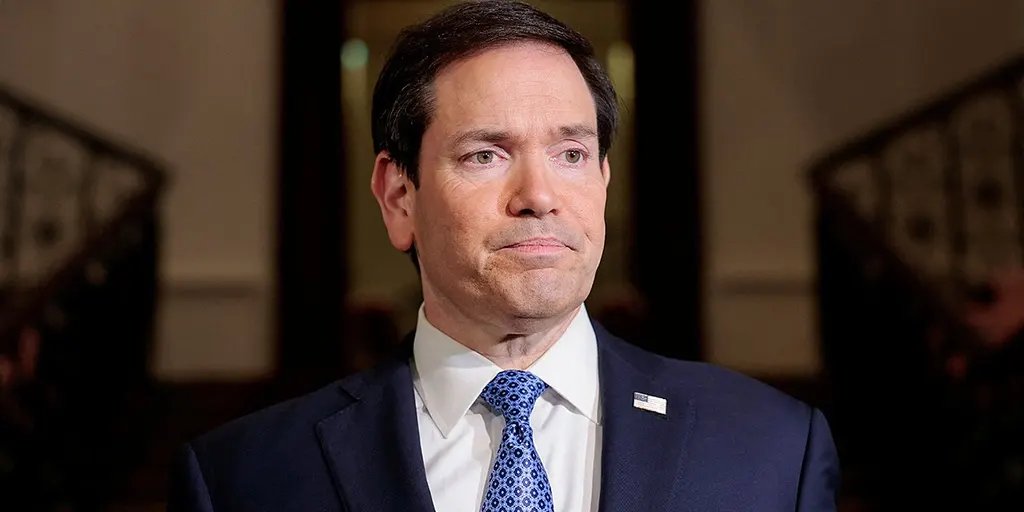
Strengthening the Strategic Horizon: Secretary Marco Rubio Outlines Indo-US Priorities
NEW DELHI — In a pivotal visit aimed at reaffirming the strength of the Indo-US strategic partnership, newly appointed Secretary of State Marco Rubio met with senior Indian officials this week to discuss the evolving security landscape and shared democratic values. The dialogue, which covered everything from Indo-Pacific stability to critical emerging technologies, signals a continuation of the robust diplomatic momentum established between Washington and New Delhi over the past decade.
Addressing the media following a series of high-level closed-door meetings, Secretary Rubio emphasized that the relationship between India and the United States has transcended mere transactional ties to become a defining alliance of the 21st century. “Our alignment on global affairs is not just a matter of convenience; it is a fundamental necessity in an era marked by shifting power dynamics and shared challenges,” Rubio stated.
Countering Global Instability
A primary focus of the deliberations was the shared commitment to a “free and open” Indo-Pacific. Both sides reportedly discussed the necessity of upholding international norms in the maritime domain, a thinly veiled reference to the growing influence of assertive actors in the region. Rubio noted that India’s leadership role is vital to maintaining regional equilibrium. By fostering deeper military interoperability and intelligence sharing, Washington and New Delhi aim to ensure that the region remains a corridor for commerce and peaceful cooperation.
Beyond security, the discussions touched upon the ongoing geopolitical turbulence in Europe and the Middle East. Secretary Rubio lauded India’s unique position as a bridge-builder, acknowledging New Delhi’s diplomatic weight in navigating complex humanitarian crises while maintaining a focus on global economic stability.
Fostering Technological Sovereignty
The meeting also marked a significant push toward deepening the Initiative on Critical and Emerging Technology (iCET). As the global race for dominance in artificial intelligence, semiconductor manufacturing, and space exploration intensifies, the US and India are looking to integrate their supply chains more tightly.
“We are moving past the era of standard trade agreements and into an era of deep technological collaboration,” Rubio noted. Senior Indian officials conveyed their interest in lowering bureaucratic barriers to bolster joint ventures in defense manufacturing and green energy. The objective is clear: to reduce dependency on volatile supply chains and ensure that both nations can dictate the terms of their own technological futures.
A Vision for the Future
The visit serves as a foundational step for the administration, illustrating that while US leadership in the State Department may have transitioned, the bipartisan consensus on the importance of the Indo-US relationship remains unshakable. The conversations in New Delhi underscored a mutual commitment to addressing transnational threats, including cyber-warfare and climate resilience.
As Secretary Rubio prepares to return to Washington, the takeaway from the visit is one of stability. Despite the myriad pressures exerted by a changing world order, India and the United States appear more synchronized than ever. The meetings concluded with a joint commitment to finalize several defense-industrial projects before the end of the fiscal year, setting the stage for even closer coordination in the months to come. For New Delhi, the visit confirms that the United States continues to view India as an indispensable partner in its broader strategy for global prosperity and security.
Disclaimer: This content is auto-generated for informational purposes only.
Source: Read Original News