








Lionel Messi’s global influence has officially transcended the pitch and taken root in the rugged terrain of the Peruvian Andes. In a botanical tribute that merges the worlds of elite athletics and natural science, researchers have officially identified a new sage plant and named it Salvia messii. This discovery marks the sixth species to be named in honor of the Argentine football icon, further cementing his place in the record books—not just for his trophy haul, but for his unprecedented footprint in biological taxonomy.
A new plant carries Messi’s name into the Andes
The newly classified Salvia messii is an endemic sage species thriving on the rocky, arid slopes of the Peruvian Andes, sitting at an altitude between 2,000 and 2,400 meters. A member of the mint family, Lamiaceae, the plant is noted for its potential medicinal properties, including anti-inflammatory and antiseptic characteristics.
Visually, the plant serves as a fitting homage to the World Cup winner. Standing approximately 1.5 meters tall, the species produces delicate pale blue and white flowers—the exact color palette of the iconic La Albiceleste jersey that Messi wore with distinction for over two decades. Following standard botanical naming conventions, the use of the suffix “i” transforms the footballer’s surname into a possessive Latin descriptor, translating effectively to “Messi’s sage.”
The identification was spearheaded by a team of experts, including Paul Gonzales of the Natural History Museum at the National University of San Marcos, in collaboration with Argentine researcher Rolando Uria and biologist Jean Capcha-Ramos of Huarango Nature. Their findings were published in the October edition of the prestigious botanical journal Phytotaxa.
However, the team behind the discovery has sounded an urgent note of caution. Despite the prestige associated with its namesake, Salvia messii has been classified as endangered. Scientists hope that attaching a globally recognizable name to the plant will serve a dual purpose: honoring a sporting legend while drawing critical attention to the fragile mountain habitat that this rare species requires for survival.
The sixth species added to Messi’s record
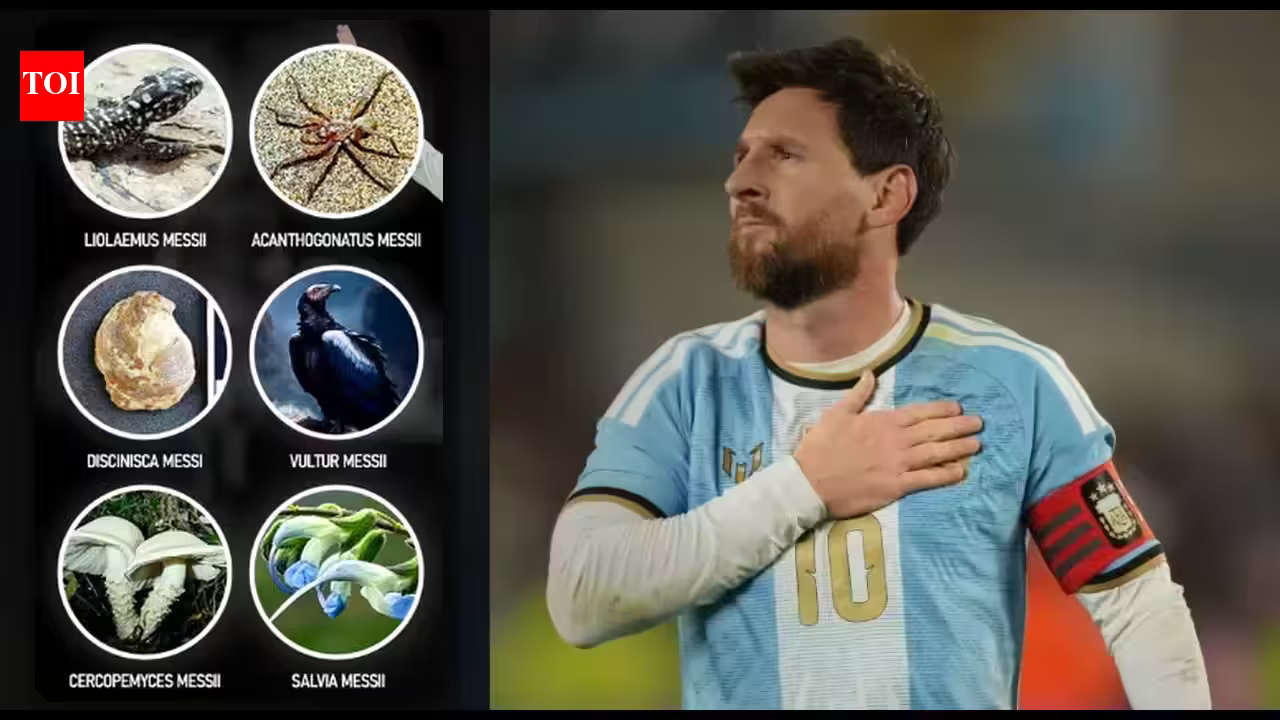
In May 2024, Guinness World Records formally recognized Messi as the footballer with the most species named after him. With the arrival of Salvia messii, that tally has officially climbed to six. This growing list of namesakes offers a bizarre and fascinating cross-section of the natural world, spanning living organisms, ancient fossils, and fungi.
The current register of “Messi-named” species includes:
- 2021: Liolaemus messii – An Iguanian lizard from Rosario de Lerma, Argentina.
- 2023: Acanthogonatus messii – A burrowing spider from Argentine Patagonia.
- 2023: Discinisca messi – A fossil brachiopod from the Miocene era.
- 2023: Vultur messii – A fossil condor from the Pliocene era.
- 2024: Cercopemyces messii – A fungus discovered in the Andean cloud forests of Salta Province.
- 2026: Salvia messii – A sage plant found in the Peruvian Andes.
This collection highlights that the honor is not limited to living biology; by including fossilized specimens like the condor and the brachiopod, the scientific community has effectively immortalized the Messi name across geological time.
What the names say about Messi’s legacy
The phenomenon of naming species after the Argentine captain is entirely organic, driven by the personal initiatives of researchers rather than any orchestrated campaign. This latest honor follows a monumental stretch in Messi’s career. Having made his international debut in 2005, Messi’s journey has been defined by his resilience—returning from a brief 2016 retirement to captain Argentina to back-to-back Copa América titles (2021, 2024) and the historic 2022 World Cup victory in Qatar.
Now 39 years old, Messi recently concluded his international career with a 3-0 victory over Benin, ending his tenure with 208 appearances and 126 goals for his country. While he continues to ply his trade with Inter Miami and remains a contender for the 2026 Ballon d’Or, his status as a cultural phenomenon is now etched into the very soil of the Andes.
Messi is not the first footballer honored by science
While Messi holds the Guinness record, he follows in a long tradition of footballers entering the scientific lexicon. In 2009, a group of researchers named 12 newly described microcaddisfly species after the members of Brazil’s 1958 World Cup-winning squad, including the legendary Pelé (Neotrichia pelei).
Diego Maradona has also seen his name attached to various organisms, including a fossil damselfly, a parasitic fluke, and a sea snail. However, the rigor of scientific naming can be unforgiving; one previous tribute, the fairy wasp Anaphes maradonae, was eventually invalidated after genetic analysis proved it to be the same species as a previously identified wasp.
For Lionel Messi, the inclusion of Salvia messii in the scientific record is more than a novelty. It serves as a reminder of his reach—a legacy that extends far beyond the stadiums of Miami or Buenos Aires, finding a permanent home in the diverse, and often endangered, ecosystems of South America. While his time on the field may be nearing its final act, the namesakes that bear his signature will continue to be a subject of study and conservation for generations to come.
Disclaimer: This content is auto-generated for informational purposes only.
Source: Read Original News