







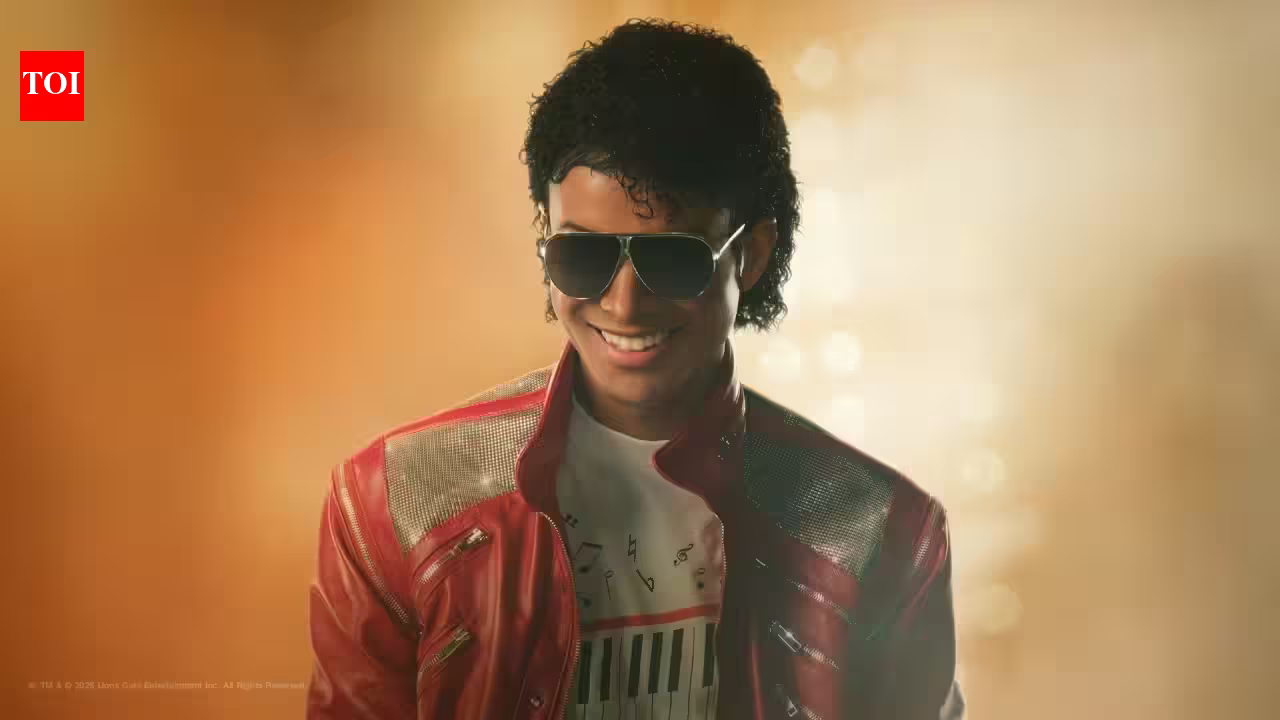
The shadow of the King of Pop has loomed over the entertainment industry for decades, but rarely has that shadow been as literal—or as cinematic—as it was this year. With the release of Michael, the high-budget biopic that saw the late icon’s nephew, Jaafar Jackson, step into the most scrutinized shoes in music history, the world held its breath. The film was a box-office powerhouse, a glittering tribute to the moonwalk, the glove, and the seismic cultural shift that was the Bad era. Yet, as the credits rolled, a persistent murmur grew into a roar across social media: Where were the ghosts in the machine?
For all its technical prowess and Jaafar’s uncanny ability to inhabit his uncle’s kinetic stage presence, Michael was criticized by some critics and viewers alike for its curated, hagiographic approach to the singer’s life. By largely sidestepping the darker chapters, legal battles, and disturbing allegations that followed Michael Jackson from the early 90s until his passing in 2009, the film invited a firestorm of debate. Now, as the gears turn on an inevitable sequel, Jaafar Jackson is finally breaking his silence on whether the franchise will pivot toward the harder, more uncomfortable truths that defined his uncle’s complicated legacy.
The Burden of Legacy and the Limits of Control
Sitting down with Variety recently, Jaafar Jackson navigated the question of his uncle’s controversies with the polished, cautious grace of a man who knows that every word is being analyzed for subtext. When pressed on whether the upcoming second installment would tackle the allegations of child abuse and grooming that irrevocably altered the public’s perception of the superstar, Jaafar didn’t shut the door—but he didn’t open it, either.
“I can’t say, because I don’t know,” he admitted. It is a humble stance for a man currently carrying the weight of a billion-dollar franchise on his shoulders. He was quick to clarify that the creative trajectory of the film is not his to dictate. “It’s not up to me. My job is to come prepared and deliver the best performance I can.”
This response highlights a key tension in the production of Michael. As a family member and the lead actor, Jaafar is positioned as the bridge between the myth and the man, yet he remains at the mercy of the studio’s narrative constraints. He hasn’t been “told anything concrete,” he noted, emphasizing that for him, the focus remains on the craft—the dance, the vocal nuances, and the grueling physical transformation required to channel a man who was, in many ways, an alien to the rest of the world.
Seeking Truth in the Art, Not the Headlines
If there is a core philosophy to Jaafar’s defense of the project, it is that the “real” Michael Jackson cannot be found in a deposition room or a tabloid headline. Instead, he points to the work. When asked about the controversies, Jaafar redirected the conversation toward the music, the poems, and the humanitarian work that occupied so much of his uncle’s time.
“Finding out who Michael was is in his music,” Jaafar insisted. “It’s in his lyrics. It’s in the poems he wrote, the videos, the messages he put out… it’s in what he devoted so much time to: charities, visiting other countries, and visiting countless children.”
It is a classic artist’s defense—that the work is the truest reflection of the soul. However, for those who believe that a biopic’s primary duty is historical accuracy, this perspective feels insufficient. Critics argue that by choosing to frame the narrative through the lens of the music alone, the film deliberately erases the very controversies that made Jackson a figure of such intense polarization. For the skeptics, the “real” Michael Jackson is inextricable from the allegations that marred his later years; to exclude them, they argue, is to present a sanitized fantasy rather than a biopic.
The Impossible Task of Capturing a Contradiction
The problem with a film about Michael Jackson is that the subject is essentially two different people: the global pop savior and the man embroiled in scandal. Balancing these two versions in a single narrative is a cinematic tightrope walk, and one that Michael has thus far avoided.
The first film took us from the precocious, wide-eyed youth in the Jackson 5 through the white-hot intensity of the 1988 Bad World Tour. It was a celebration of the ascent. But if the sequel intends to move into the 1990s and beyond, the narrative walls will inevitably begin to close in. The allegations of the early 90s were not peripheral to his life; they were seismic events that changed how the world interacted with him. To skip them would be an act of revisionism that many audiences may not forgive a second time.
What Lies Ahead for the ‘Michael’ Sequel?
As the production team moves forward with the next chapter, they face a pivotal decision. Do they continue to portray Jackson as an misunderstood genius hounded by an ungrateful world, or do they allow the film to explore the messy, uncomfortable, and often tragic intersections of his personal life?
Jaafar remains “fully enthusiastic” about returning to the role, demonstrating a deep, personal commitment to his uncle’s legacy. His dedication is palpable, and there is no doubt that his performance is the heartbeat of this project. But as he steps back into the iconic fedora and loafers, the industry and the audience will be watching not just for his dance moves, but for his willingness to confront the darkness.
Whether or not the sequel addresses the controversies remains, as Jaafar says, out of his hands. But the conversation surrounding the film proves that the public is no longer content with just the music. They want the full story—or at least, they want to see if this big-budget spectacle has the courage to look at the shadows as closely as it looks at the spotlight. Until then, Jaafar Jackson remains the perfect vessel for a myth that refuses to stop evolving, even when it is most heavily under fire.
Disclaimer: This content is auto-generated for informational purposes only.
Source: Read Original News