









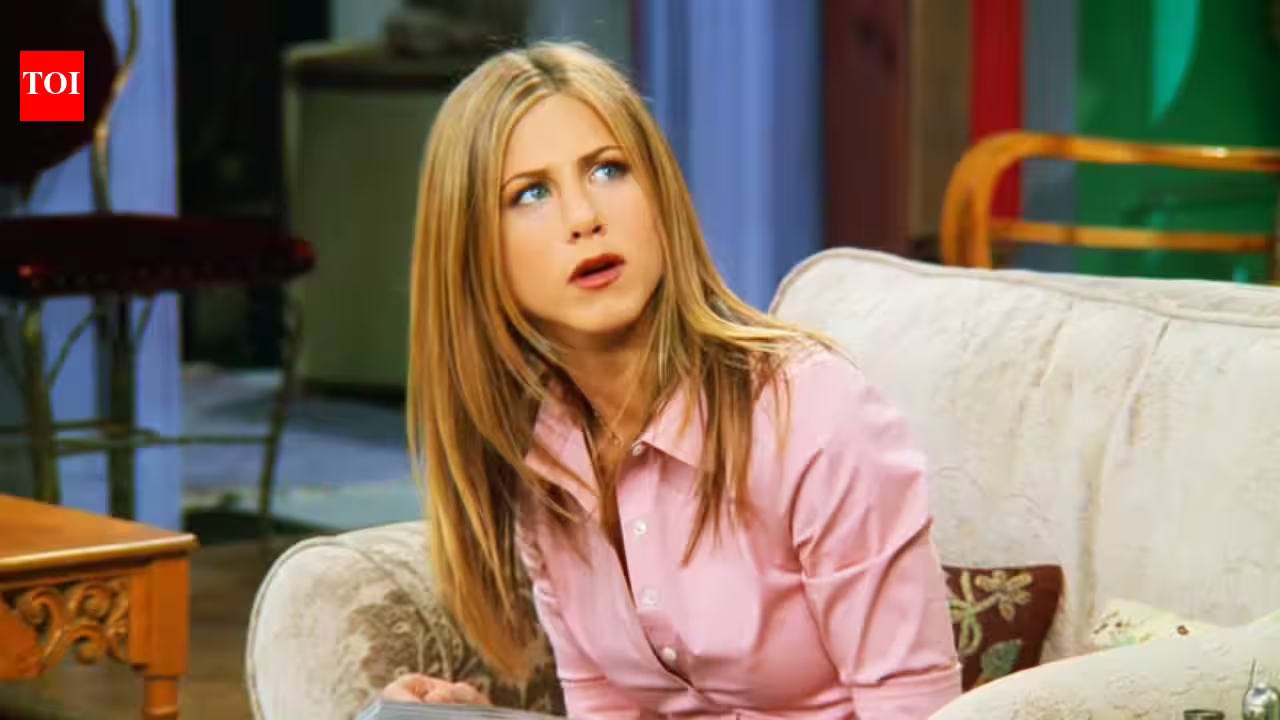
It is the kind of math that makes most of Hollywood weep with envy. Two decades after the fountain in the opening credits stopped splashing and the keys were left on the counter of a hollowed-out apartment in Manhattan, Friends remains an unstoppable financial juggernaut. At the center of this windfall is Jennifer Aniston, who, despite having spent the last twenty years establishing herself as a formidable dramatic force and a powerhouse producer, continues to see a $20 million payday hit her bank account annually—all thanks to a show that concluded in 2004.
It is a testament to the lightning-in-a-bottle chemistry of the “Central Perk Six,” but more importantly, it is a masterclass in the art of the deal. In an era where streaming platforms have complicated the traditional royalty model, the Friends cast’s ability to cling to their backend points is the stuff of industry legend.
From Coffee Shop Wages to Television Royalty
When Friends first debuted in 1994, the cast was comprised of relative unknowns. Their initial paycheck of $22,500 per episode, while a significant sum for burgeoning actors, hardly hinted at the cultural seismic shift to come. As the show’s popularity exploded—turning “The Rachel” into the defining hairstyle of the decade—the actors realized they held all the cards.
The cast’s collective bargaining strategy is now the gold standard for television contract negotiations. Ahead of the third season, the six leads famously opted to negotiate as a unit, refusing to pit their individual salaries against one another. This “all for one” mentality meant that by the time they reached the final two seasons, every one of the six was taking home $1 million per episode. When you factor in that pay scale across the final seasons, it’s easy to see how they secured their generational wealth. But their true genius wasn’t just in the per-episode fee; it was in what they secured for the “forever” column.
The Backend Deal That Defied Industry Standards
In the year 2000, as the show solidified its status as a cornerstone of American culture, the stars pushed for a piece of the pie that was, at the time, almost exclusively reserved for executive producers and studio heads: syndication royalties. They successfully negotiated a 2% share of the show’s backend profits.
At the time, it was a move that raised eyebrows in high-level executive boardrooms. Today, it is viewed as perhaps the smartest career move in television history. Because Friends is owned by Warner Bros., the show continues to generate well over $1 billion annually through global broadcast rights, massive streaming licensing deals—such as the reported multi-hundred-million-dollar move to HBO Max—and international distribution. When that fountain of revenue flows, the cast’s 2% stake ensures they remain very wealthy, regardless of what they are doing on screen at any given moment.
The Human Side of the Syndication Fortune
While the numbers are staggering, the legacy of the show is currently being viewed through a more poignant lens. Lisa Kudrow recently confirmed the $20 million figure during an interview, but her comments touched on something far more significant than bank balances: the emotional weight of watching the show in the wake of Matthew Perry’s 2023 passing.
Kudrow shared that revisiting the episodes has allowed her to detach from her own self-criticism as an actor and instead appreciate the sheer brilliance of the ensemble. Hearing her speak about Perry’s “extraordinary” contribution serves as a stark reminder that while the show is a corporate asset, it was built on a unique, almost impossible-to-replicate chemistry. The annual royalty check isn’t just a payment for past labor; it is a recurring acknowledgement of a piece of art that fundamentally changed the trajectory of sitcom history.
Beyond Rachel Green: Aniston’s Post-Friends Empire
It would be a mistake to categorize Jennifer Aniston solely by her past success. While that $20 million annual cushion certainly offers a degree of creative freedom that most actors dream of, Aniston has spent the last two decades meticulously building a career that refuses to be anchored by a coffee shop set.
After the finale, many industry skeptics wondered if the “sitcom star” label would prove to be a trap. Instead, Aniston successfully navigated the transition into film, holding her own in both comedies and poignant dramas. More impressively, she transitioned into the world of production—a field that, as she has noted in the past, was not always welcoming to women in the early 2000s. By co-founding production company Echo Films and later Plan B Entertainment, she ensured she would have a seat at the table long after her days as a cast member were over.
Today, her work on Apple TV’s The Morning Show alongside Reese Witherspoon is not just a commercial success; it represents her pivot toward the kind of gritty, high-stakes storytelling that solidified her position as an industry power player. She is currently starring in and executive producing the series, which has already been greenlit for a fifth season.
For Jennifer Aniston, the $20 million from Friends is undeniably a wonderful perk, a reward for a gamble taken two decades ago. But for the woman who has navigated the shifting tides of Hollywood with calculated, consistent intent, the money is merely a footnote. The real success isn’t that she’s still getting paid for the work she did in 2004; it’s that she is still just as relevant to the audience in 2026.
Disclaimer: This content is auto-generated for informational purposes only.
Source: Read Original News