







With less than two weeks remaining until Election Day, the 2026 campaign cycle hit a fever pitch this week as candidates in critical Senate and gubernatorial races held their final debates. From Michigan to Kansas and Wisconsin, the economy and the war in Iran emerged as the dominant themes, underscoring a nation deeply divided on both domestic prosperity and foreign intervention.
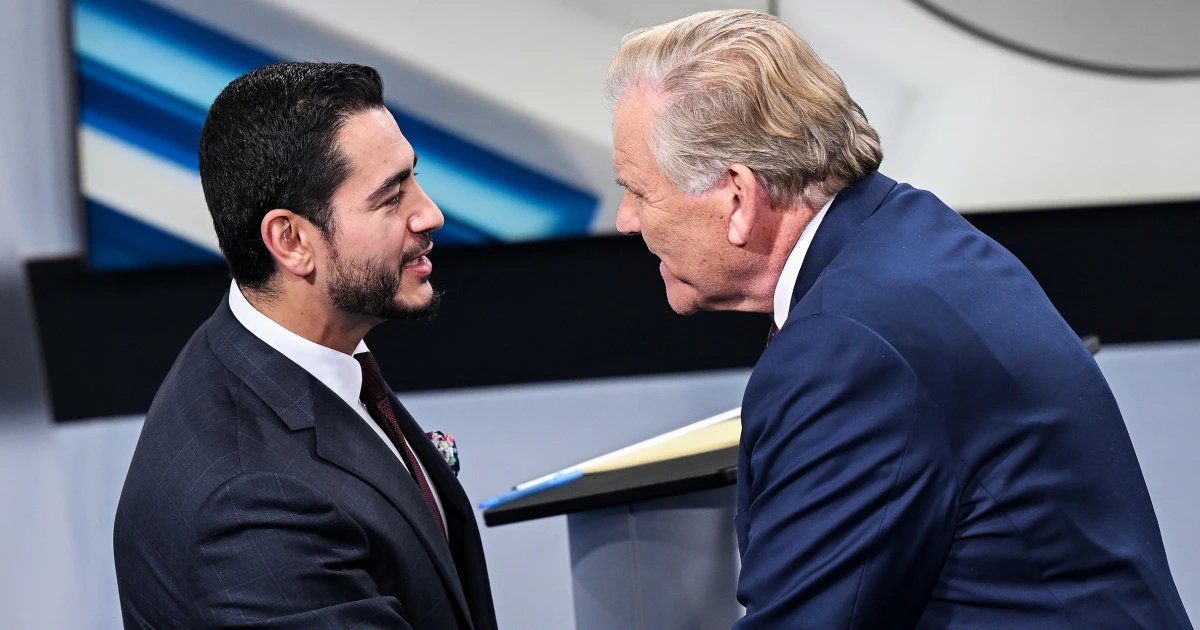
In Michigan, the high-stakes battle to succeed retiring Sen. Gary Peters saw a final, tempered clash between Republican Rep. Mike Rogers and Democratic nominee Abdul El-Sayed. The debate was marked by attempts to define the other’s allegiance: El-Sayed worked to tether Rogers to the agenda of former President Donald Trump, while Rogers pivoted to question El-Sayed’s background, casting doubt on his trustworthiness and potential ties to Islamist fundamentalist groups. El-Sayed forcefully rejected those claims as an assault on his constitutional loyalty, while both candidates continued to trade jabs over their disparate economic visions.
The intensity of the rhetoric was mirrored in Kansas, where incumbent Republican Sen. Roger Marshall faced off against Democratic challenger Adam Hamilton. In an effort to keep the seat red, Marshall leaned heavily into his support for the Trump agenda, specifically defending tariff policies and the lifting of sanctions on Russian energy. Conversely, Hamilton—a megachurch pastor positioning himself as an independent-minded Democrat—attacked Marshall’s stance on the war in Iran and promised to oppose Senate Minority Leader Chuck Schumer, a move designed to appeal to moderate Kansas voters.
Meanwhile, in Wisconsin, the gubernatorial debate between Republican Rep. Tom Tiffany and Milwaukee County Executive David Crowley signaled the end of a long-standing political era as the state prepares for its first open gubernatorial election since 2010. Tiffany focused his platform on tax relief and returning state surplus funds, while Crowley argued for a “fair tax” structure aimed at bolstering infrastructure and public education.
While candidates fought for votes, the physical landscape of the country is shifting due to the explosive growth of data centers. Big Tech giants like Amazon, Microsoft, and Google are rapidly expanding into rural America, drawn by cheap land and electricity. However, an analysis shows that this boom is not universally welcomed. In communities like those in Oregon’s Morrow and Umatilla counties, the influx of massive infrastructure has created deep local rifts, leaving residents divided over whether the centers represent a path to economic vitality or a threat to their way of life.
Beyond the campaign trail, foreign policy remains a central focus of the national conversation. Former President Donald Trump is pursuing a strategy of tactical flattery to draw Russian President Vladimir Putin to the negotiating table regarding the war in Ukraine. This approach, which includes recent compliments from Trump’s lead negotiator Steve Witkoff, has been met with skepticism by some and has caused friction within Republican ranks. Experts remain split on whether the gambit will yield results in the absence of a clearly articulated White House agenda.
Disclaimer: This content is auto-generated for informational purposes only.
Source: Read Original News