








The Grand Convergence: When Icons Collide on Screen
In the modern landscape of Indian cinema, the “crossover” has shifted from a rare gimmick to a standard operating procedure for blockbuster success. However, few films manage to balance the heavy lifting of multiple superstars without buckling under the weight of their own ambition. Jailer 2 arrives not just as a continuation of Nelson Dilipkumar’s gritty, eccentric universe, but as a calculated, high-octane celebration of what happens when legends share the frame.
The film’s climax is perhaps the most audacious sequence in recent memory, serving as a masterclass in audience-pleasing spectacle. Watching Rajinikanth, Mohanlal, Shivarajkumar, and Jackie Shroff occupy the same cinematic space isn’t just a narrative necessity; it is a cultural event. The sheer gravity generated by these four icons—each a titan of their respective regional industries—transforms the final act into an exercise in pure, unadulterated “fan service” in the best sense of the term. For the average moviegoer, these are the moments that justify the price of a ticket and the long wait in line at the concessions stand. It is a calculated high that reminds us why, despite the rise of streaming, the theater remains the only appropriate venue for such scale.
Hrithik Roshan and the Art of the Surprise
While the presence of the industry stalwarts was a major draw, the inclusion of Hrithik Roshan in a surprise cameo adds a distinct layer of gloss to the proceedings. Bringing a Bollywood superstar into the Jailer fold accomplishes two things: it widens the film’s geographic reach and adds an element of modern, slick kineticism to the finale.
The integration of Hrithik into the already crowded climax is a delicate tightrope walk. Too much screen time, and the focus shifts away from the film’s central protagonist; too little, and it feels like a hollow marketing stunt. Fortunately, the execution leans into the latter with enough panache that it doesn’t feel forced. It acts as a stylistic bridge, acknowledging that in today’s pan-Indian market, the barriers between industries are effectively dissolving. For a film that lives and dies by its ability to generate “mass moments,” the inclusion of a star of Hrithik’s stature provides the perfect spark to ignite the audience’s enthusiasm.
Anirudh Ravichander: The Architect of Atmosphere
One cannot discuss the success of this franchise without addressing the man responsible for the film’s heartbeat: Anirudh Ravichander. In a film that relies heavily on stylized action and exaggerated character tropes, the music is the glue that holds the chaos together. Anirudh’s score for Jailer 2 is less of a background accompaniment and more of a primary character in its own right.
He understands the “Nelson Dilipkumar” school of filmmaking: prioritize the mood, lean into the quirkiness, and dial up the intensity when the bullets start flying. Anirudh’s ability to build tension through minimalist motifs before exploding into full-blown orchestral swells is precisely what keeps the audience’s pulse racing during the slower, more uneven stretches of the screenplay. When you have a screen filled with legends, the music must be powerful enough to stand alongside them. Anirudh doesn’t just meet that challenge; he sets a new standard for how modern masala films should sound.
The Nelson Dilipkumar Signature: Mass over Method
Director Nelson Dilipkumar has carved out a niche that is uniquely his own—a blend of dark, dry humor and high-stakes action. Jailer 2 is a quintessential Nelson product. It is a film that refuses to take itself too seriously, yet it treats its “mass” elements with the utmost reverence.
Critics often point to the screenplay’s “uneven stretches” as a point of contention. There are moments where the narrative pacing stumbles, struggling to justify the transition from quiet character study to explosive, bombastic action. Yet, to judge a film like Jailer 2 on the strict merits of its screenplay is to miss the point entirely. The film isn’t designed to be a tight, three-act drama; it is designed to be a crowd-pleasing spectacle. Nelson knows exactly what his audience wants—the slow-motion walks, the sharp one-liners, and the grand, ego-defying showdowns—and he delivers them with the precision of a seasoned showman. He understands that for the Jailer universe to thrive, it must feel larger than life, even at the cost of traditional narrative consistency.
A Box-Office Juggernaut and the Power of the “Event Film”
The reported worldwide haul of over Rs 500 crore speaks volumes about the current state of the film industry. We are living in the era of the “Event Film,” where the draw isn’t just a single star, but the promise of a collective experience. Jailer 2 succeeds because it gamifies the viewing process. It turns the theater into a stadium, where every guest appearance is a goal scored and every iconic pose is a victory lap.
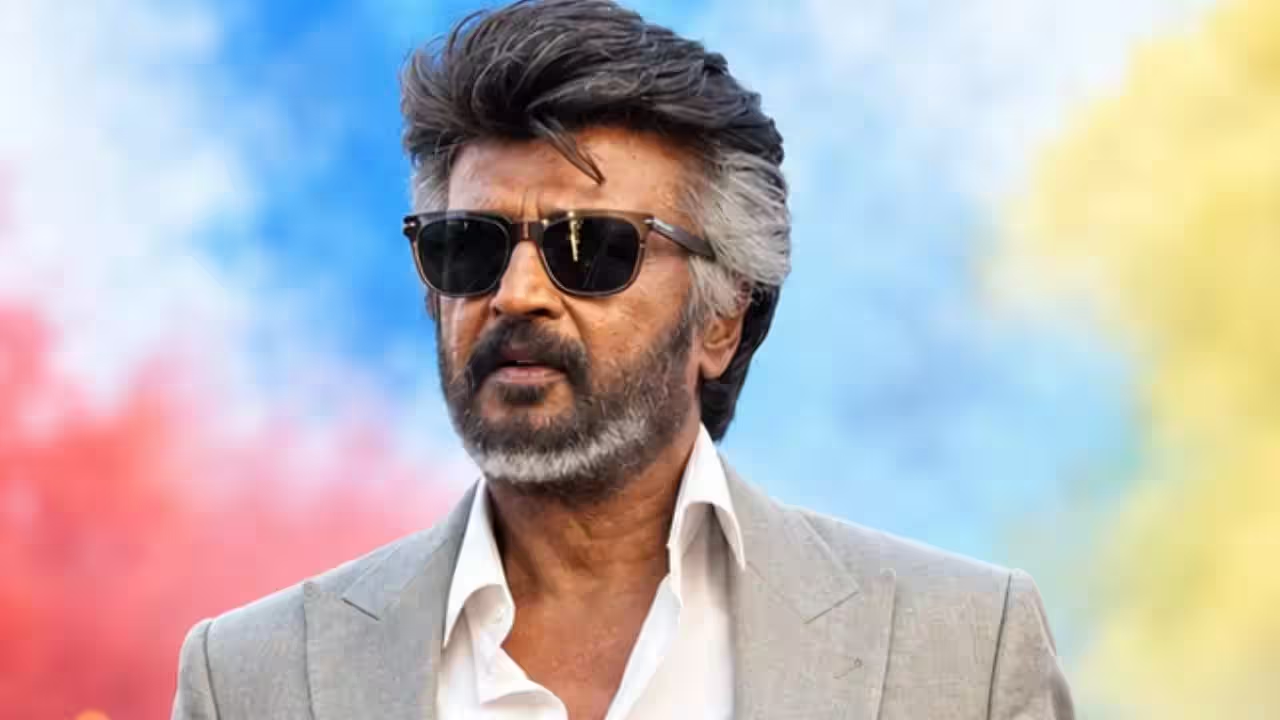
Rajinikanth’s enduring screen presence remains the anchor. Despite the immense weight of the supporting cast, the film belongs to him. His ability to carry the legacy of the Jailer character while graciously sharing the spotlight with his contemporaries is the defining factor of his career at this stage.
Ultimately, Jailer 2 is a testament to the fact that Indian cinema is currently obsessed with scope. By uniting an ensemble cast that spans generations and geographies, the film effectively shields itself against the criticism of a sagging middle act. It provides enough visual and auditory stimulation to satisfy the fans, and in the high-stakes game of global box-office success, that is precisely what matters. It is a neon-lit, bass-heavy, star-studded triumph of style—a reminder that when the screen is big enough and the stars are bright enough, audiences will always show up to witness the spectacle.
Disclaimer: This content is auto-generated for informational purposes only.
Source: Read Original News