








The End of an Era for Sony Optical Media
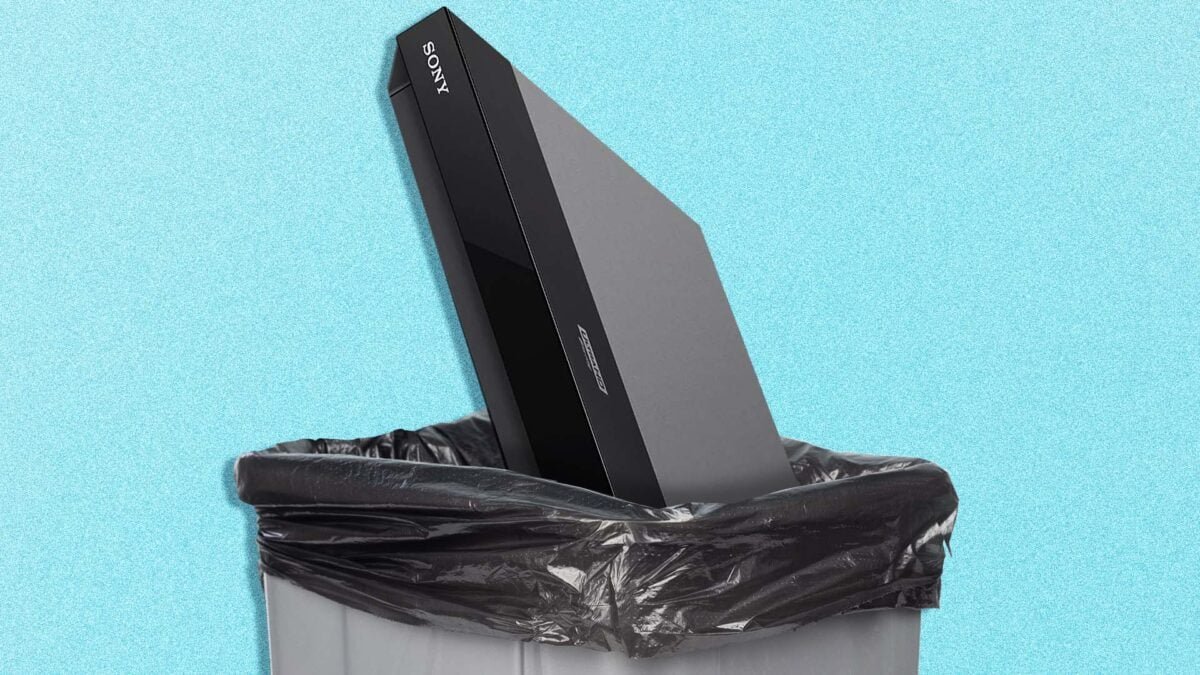
The landscape of home entertainment is undergoing a significant transformation as Sony, a pioneer in the development of optical disc formats, appears to be stepping away from the production of dedicated 4K Ultra HD Blu-ray players. Reports originating from Japan indicate that the company has officially discontinued the UBP-X700/K, the last remaining model in its UHD player lineup. While Sony has maintained a long-standing commitment to physical media since the inception of the compact disc, this latest development signals a broader corporate shift toward digital delivery systems and away from hardware-intensive consumer electronics.
The discontinuation of the UBP-X700/K in the Japanese market serves as a bellwether for the company’s global strategy. Official notices on Sony’s Japanese storefront indicate that the product is permanently out of stock, with no plans for replenishment. Given Sony’s historical tendency to align its global product lifecycle with domestic trends, the move suggests that standalone UHD playback hardware will soon be a relic of the company’s past. For enthusiasts who prioritize the uncompressed audiovisual quality of physical discs, this leaves the market increasingly narrow, with Panasonic remaining the primary manufacturer for high-end optical players.
Shifting Business Models and Market Consolidation
This transition away from specialized hardware is not an isolated incident but rather a component of a larger corporate restructuring. Over the past year, Sony has actively divested from its traditional hardware manufacturing footprint. A pivotal moment in this shift occurred earlier this year when the company entered a joint venture involving its Bravia television division, offloading significant portions of its production facilities and granting a controlling stake to TCL. By outsourcing manufacturing and thinning its proprietary hardware portfolio, Sony is effectively pivoting to prioritize software services and content licensing.
The decision to cease UHD player production coincides with a larger push toward digital-only ecosystems. The infrastructure required to maintain physical supply chains—ranging from disc pressing facilities to logistics and retail shelf space—is increasingly viewed by major entertainment conglomerates as inefficient compared to the low-overhead delivery of cloud-based streaming. For Sony, which owns both a massive hardware division and a vast library of film and music intellectual property, the economics now clearly favor the subscription-based, server-side delivery model over the manufacturing of consumer-grade playback devices.
The PlayStation 5 as the Last Stand
For many consumers, the loss of dedicated players leaves the PlayStation 5 as the primary vehicle for 4K physical media playback within the Sony ecosystem. While the console is fully capable of reading 4K UHD Blu-ray discs, it was designed primarily as a gaming machine rather than a dedicated home theater component. The difference between a high-end, purpose-built Blu-ray player and a gaming console often comes down to internal signal processing, disc drive noise, and user interface customization, which are areas where specialized players historically outperformed consoles.
However, the future of this function is also under scrutiny. Sony has already signaled a long-term goal to phase out physical discs for its gaming division, with publicly announced targets to end physical media production for PlayStation titles by 2028. As the gaming industry moves toward purely digital distribution, the inclusion of optical drives in future hardware generations becomes less defensible from a cost-engineering perspective. Consequently, the reliance on the PlayStation 5 to bridge the gap for movie collectors is likely a temporary convenience rather than a long-term feature of Sony’s hardware roadmap.
Impact on Enthusiasts and Audiophile Standards
The move to discontinue UHD players carries significant weight for home theater enthusiasts. Unlike streaming services, which utilize heavy compression algorithms to minimize bandwidth consumption, 4K UHD Blu-ray discs offer high-bitrate video and lossless audio formats such as Dolby Atmos and DTS:X. When a company as influential as Sony retreats from this segment, the impact on hardware development across the industry is profound. As fewer companies manufacture players, the innovation cycle for new features like improved HDR tone mapping or refined upscaling algorithms naturally slows down.
For those dedicated to maintaining a high-fidelity library, the market is entering a phase of scarcity. Collectors often rely on Sony’s mid-range to high-end players for their reliability and compatibility with legacy formats. With the exit of such a major player, secondary markets for functioning, high-quality hardware are expected to see a rise in demand. This creates a challenging environment for users who wish to preserve their physical collections against the risks of digital rights management, license expiration, and the arbitrary removal of content from streaming platforms.
The Future of Physical Media
The departure of Sony from the 4K player market marks a symbolic transition point in the history of media consumption. While physical discs will likely remain available for a period, the ecosystem that supports them is shrinking rapidly. The integration of media into digital-only formats has undeniable benefits for convenience and accessibility, but it removes the consumer’s role as the permanent custodian of their media library. As corporations streamline their output, the physical disc is slowly transitioning from a mass-market commodity to a niche product for collectors who demand superior technical specifications.
Looking ahead, the industry appears to be moving toward an era where the ownership of content is replaced by the licensing of access. While this shift aligns with current consumer habits of prioritizing streaming convenience, it creates a permanent reliance on internet connectivity and the ongoing existence of digital storefronts. As Sony continues to reorient its business toward this digital-centric future, the era of the physical disc is reaching its twilight, leaving behind a legacy of high-quality home cinema that will increasingly rely on a shrinking pool of aging hardware to exist.
Disclaimer: This content is auto-generated for informational purposes only.
Source: Read Original News