








The Strategic Imperative for Indo-German Economic Integration
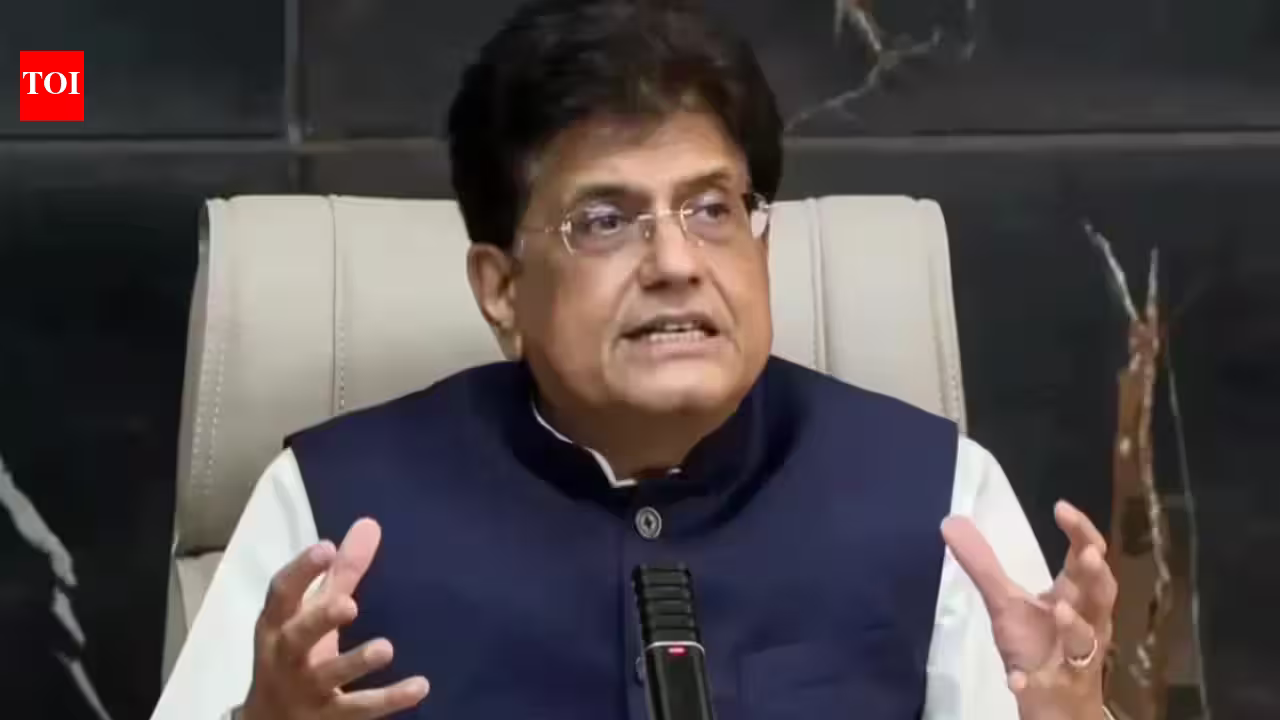
The recent outreach by India’s Union Minister for Commerce and Industry, Piyush Goyal, to the German business community signals a pivotal shift in India’s external economic policy. By setting an ambitious target to increase bilateral trade tenfold—from the current 31.5 billion euros to 310 billion euros—the Indian government is signaling more than just an export-import goal; it is advocating for a profound structural alignment between the industrial backbone of Europe and the emerging digital and manufacturing powerhouse of Asia.
Historically, the Indo-German economic relationship has been defined by steady, albeit modest, engagement. Despite Germany’s status as a global leader in precision engineering and manufacturing, India has yet to crack the top 20 list of Germany’s primary trading partners. Minister Goyal’s visit to Berlin and the Netherlands underscores a shift from passive trade to active integration. With the proposed India-European Union Free Trade Agreement (FTA) nearing completion, the focus has shifted toward building institutional frameworks that allow businesses to hit the ground running the moment the treaty is ratified.
Leveraging Complementarity in Global Supply Chains
A central theme in the current diplomatic discourse is the absence of direct competition between the two nations. Germany’s industrial architecture is characterized by high-end engineering, advanced machinery, and a mature green energy sector. Conversely, India provides the necessary scale, a rapidly expanding digital infrastructure, and a demographic dividend of young, skilled labor. This “complementarity” is the bedrock upon which the target of 310 billion euros is built.
For Indian industries, particularly those in the automotive, renewable energy, and pharmaceutical sectors, Germany represents a gateway to high-quality standards and technical innovation. For Germany, India serves as a vital pillar in the global “China Plus One” strategy, offering a massive market that can help diversify supply chains away from over-concentration. The collaboration is not merely about trading goods; it is about co-creation. By aligning India’s infrastructure expansion with German precision engineering, both nations stand to gain significant resilience in their respective industrial value chains.
The Role of the India-EU Free Trade Agreement
The progress of the India-EU FTA is the most significant variable in this equation. With negotiations concluded, the transition from paper to implementation is expected to occur by early next year. Minister Goyal’s call for businesses to act now—rather than waiting for the formal implementation—is a calculated move to reduce the “bureaucratic lag” that often follows trade deals.
Businesses are being encouraged to map potential partners, understand regulatory compliance, and align their product quality with European market specifications immediately. The Indian government has expressed confidence that the support of all 27 EU member states ensures that the implementation will be swift. For Indian exporters, this represents an opportunity to leverage duty-free access, which will effectively lower costs and increase competitiveness against regional rivals who currently enjoy such trade arrangements. However, the onus lies on the Indian private sector to scale their operations and adopt international quality standards to satisfy the stringent requirements of the German market.
Addressing Structural Challenges and Policy Hurdles
Despite the optimism, the path to a 310 billion euro trade target is fraught with structural hurdles. Germany’s Minister for Economic Affairs and Energy, Katherina Reiche, noted that while the current investment stock of 28 billion euros by German firms in India is substantial, the bilateral trade volume remains underutilized. Addressing this requires a departure from traditional trade mindsets toward deeper industrial partnerships.
One of the most contentious topics currently being discussed is the European Union’s Carbon Border Adjustment Mechanism (CBAM). Minister Goyal has been vocal about the potential negative repercussions of this policy, warning that it could inadvertently harm European industries by increasing input costs for essential raw materials like steel. He argued that the imposition of high import duties on green-transition materials could stifle the very industries that Germany seeks to protect. For Indian businesses, navigating these environmental trade barriers will require significant investment in “green manufacturing” and sustainable production processes to remain eligible for duty-free access under future frameworks.
Focusing on Technology, Skills, and Industrial Synergy
The bilateral partnership is not confined to finished goods; it extends into the critical domains of technology transfer and professional skilling. Germany’s renowned apprenticeship model, which has sustained its manufacturing excellence for decades, is being viewed as a blueprint for India’s workforce development initiatives. Collaborations in digital technology, AI-driven manufacturing, and emerging tech sectors are being prioritized as the next frontier of growth.
The proposed German-Indian CEO Forum is expected to act as a catalyst, bringing together leaders to translate high-level policy objectives into ground-level investments. By facilitating a continuous dialogue between the captains of industry in both countries, the forum will likely help identify bottlenecks in regulation and logistics, enabling a more seamless flow of capital and technology. Furthermore, the German focus on industrial decarbonization aligns perfectly with India’s long-term sustainability goals, creating an immense market for German clean-tech solutions within the Indian infrastructure sector.
The Outlook for the Indian Private Sector
The call for a tenfold increase in trade is an invitation for Indian businesses to move up the value chain. It requires a shift from being mere suppliers of raw materials or low-value components to becoming integrated partners in global production cycles. Success in this endeavor will necessitate that Indian companies invest heavily in research and development, modernize their production facilities to meet German quality benchmarks, and develop an intimate understanding of the European regulatory landscape.
If successfully executed, the Indo-German trade partnership will serve as a bellwether for India’s ability to compete in the highest tiers of global commerce. The goal of 310 billion euros is ambitious, but it is supported by a strong diplomatic mandate and an economic rationale that favors both nations. As the FTA deadline approaches, the businesses that invest in these partnerships today will be the primary beneficiaries of the industrial synergy that is set to define the next decade of Indo-German relations. The coming months will be critical, as the private sector’s response to these policy signals will determine whether this vision of a massive, trade-led partnership becomes a concrete economic reality or remains a distant aspiration.
Disclaimer: This content is auto-generated for informational purposes only.
Source: Read Original News