








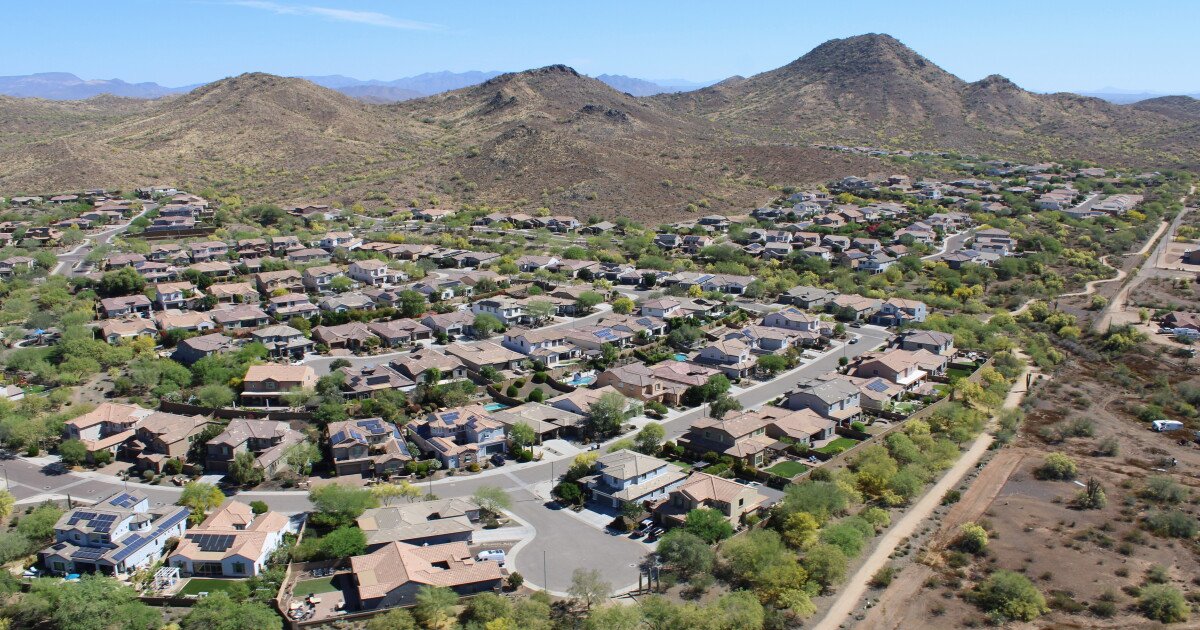
Despite persistent headlines regarding the desert state’s precarious water future, the Phoenix real estate market remains largely unfazed by potential supply shortages. While climate scientists and policymakers sound the alarm over Colorado River cuts and long-term drought, local realtors report that homebuyers are prioritizing affordability and interest rates over hydrologic data.
## Market Sentiment vs. Environmental Reality
For many real estate professionals in the Phoenix metropolitan area, the topic of water rarely enters the closing room. Sammy Glassman, board president of Phoenix Realtors, notes that in her two-decade career, inquiries about water availability are few and far between. According to industry experts, buyers are more concerned with high interest rates and the overall cost of living than the status of the state’s reservoirs.
Even at the high end of the market, where homes often exceed $1 million, water security is an afterthought. Real estate agents like John Carden observe that many luxury buyers are purchasing second homes and migrating from regions where water is abundant. These buyers, Carden suggests, are not accustomed to viewing water as a finite, critical resource, and the potential for supply issues does not factor into their financial calculus.
## The Patchwork of Local Utilities
The complexity of Phoenix’s water infrastructure makes it difficult for average consumers to assess individual risk. The metro area relies on a fragmented collection of public utilities, for-profit providers, and private wells, each with unique supply profiles.
For instance, residents in Tempe remain relatively insulated due to the city’s reliance on the Salt River system. Conversely, towns like Cave Creek are heavily dependent on the Colorado River, while others like Buckeye lean primarily on groundwater. This disparity suggests that while the “Phoenix area” is often discussed as a monolith in the news, the reality of water risk is highly localized. Experts are now urging realtors to help clients understand their specific municipal water portfolios to ensure they are investing in areas with long-term viability.
## Legal Hurdles and Future Policy
The debate over water security has become so pervasive that it is now migrating from technical journals to political campaign ads. However, the regulatory environment remains contentious. While Arizona has historically utilized a “100-year supply” rule to guide responsible development, a recent court ruling—favored by the Home Builders Association—has sparked fears that these guardrails are being dismantled.
Critics, including Kathleen Ferris of the Kyl Center for Water Policy, describe the legal challenges as a dangerous regression. As the state moves through an appeals process, there is growing tension between the need for economic expansion and the realities of a drying climate.
## The Role of Tech and Community Advocacy
As the region faces these challenges, there is a push to modernize how the public interacts with water data. Experts like Warren Tenney of the Arizona Municipal Water Users Association believe that transparency is vital. He argues that rather than avoiding the subject, realtors and community leaders should encourage new residents to become “water smart” and support regional conservation efforts.
The integration of smart-home technology and improved data-sharing programs between cities is helping the Valley prepare for shortages. While the market hasn’t yet slowed, the industry is increasingly aware that if water security is to be maintained, new arrivals will need to become part of the solution. For now, the “wait and see” approach continues, but the intersection of climate risk and the housing market is poised to become one of the most critical issues in the American Southwest over the coming decade.
Disclaimer: This content is auto-generated for informational purposes only.
Source: Read Original News