








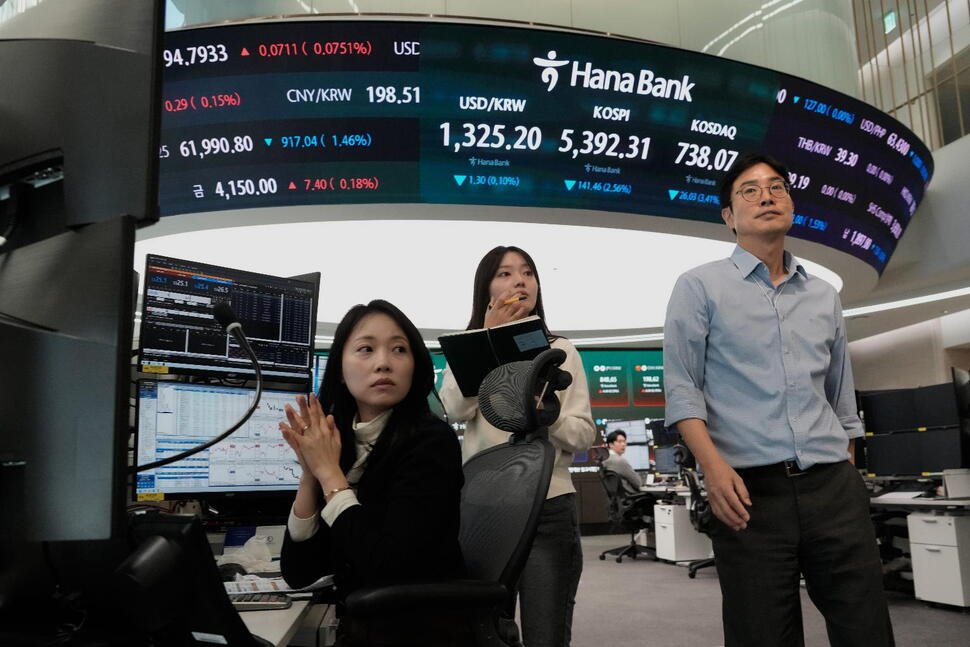
Asian markets struggled to find footing on Friday, reeling from a global tech sell-off that cast a shadow over artificial intelligence-focused stocks and sent the S&P 500 to its worst daily performance since July. The ripple effect, spurred by investor jitters surrounding the high-stakes AI sector, served as a stark reminder of the market’s current sensitivity to the tech giants that have driven growth for much of the year.
The AI Bubble Strains Under Tech Volatility
The turbulence in the tech sector, which has dominated headlines throughout 2026, intensified this week as investors began to question the massive capital expenditures required to fuel the AI revolution. Nvidia, long the industry’s bellwether and largest company by market value, saw its stock dip 4.4% following a broad sector decline.
The pressure was particularly acute for Meta Platforms. Despite reporting revenue figures that outperformed analyst expectations, the company’s shares tumbled 7% after profit margins failed to impress. Adding to the concern, Meta announced plans to introduce a new class of stock specifically designed to bankroll its aggressive pivot toward AI infrastructure and the expansion of its Muse AI agent. The news highlights a growing narrative: Wall Street is increasingly wary of the cost of innovation, particularly as firms like CoreWeave—which relies on debt to acquire Nvidia chips—face heightened scrutiny over their financial health. Shares of CoreWeave dropped 10.1% as those concerns intensified.
Oil Prices and Geopolitical Tensions
Beyond the tech-specific sell-off, global markets are grappling with rising energy costs linked to ongoing geopolitical instability. Crude oil prices, already trending upward since the beginning of the month, remained near their highest levels since May. Brent crude hovered at $113.73 per barrel, while U.S. benchmark crude climbed to $100.08.
The market remains on edge due to the conflict involving Iran, as traders fear potential disruptions to global energy supplies. The sharp 4% jump in oil prices witnessed on Thursday underscored a growing uncertainty regarding when energy markets might stabilize. For global investors, the combination of high oil prices and fears regarding government debt loads—specifically in France and the United States—has created a complex environment where traditional safety nets are being re-evaluated.
Flight to Safety in the Bond Market
While equities took a hit, the bond market told a different story. In a clear signal of investor anxiety, there was a massive shift toward U.S. government debt. The yield on the 10-year Treasury saw a significant drop, falling to 4.97% from 5.13% just a day prior. This move away from riskier tech assets and toward the relative stability of government bonds highlights how nervous participants are becoming about the broader economic landscape.
Interestingly, this flight to safety occurred despite positive domestic data. A recent report indicated that applications for unemployment benefits in the U.S. remained low, suggesting that the labor market retains a level of resilience that continues to defy economist predictions.
In the broader Asian market context, the damage was widespread. Tokyo’s Nikkei 225 fell 1.7%, while South Korea’s Kospi dropped 2.4%. Australia’s S&P/ASX 200 shed 0.2%, and the Shanghai Composite slipped 1.3%. Only Hong Kong’s Hang Seng managed a slight gain, climbing 0.2% to 22,983.80. As the week draws to a close, the disparity between the economic data—showing a strong U.S. economy—and the reality of market sentiment remains the central tension for global traders, suggesting that the volatility surrounding AI and energy prices is likely to persist well into the coming weeks.
Disclaimer: This content is auto-generated for informational purposes only.
Source: Read Original News