







Beyond the Ramp: The Unfinished Agenda for Inclusive School Infrastructure
India’s decade-long commitment to school sanitation, driven by the Swachh Vidyalaya programme and Samagra Shiksha, is a remarkable policy success. Recent UDISE+ 2025–26 data reveals that 98.5% of schools now provide toilets for girls, with 95.8% of these being functional. However, a glaring disparity remains for Children With Special Needs (CWSN). While policymakers have successfully built physical structures like ramps, the more complex task of creating accessible, functional sanitation remains largely unaddressed, threatening the inclusivity of the Indian education system.
The Reality of Inaccessibility
According to the latest Ministry of Education figures, of India’s 14.67 lakh schools, only 40.1% have a toilet designated for children with disabilities, and only 38.1% of those are functional. In practice, this means over 9 lakh schools lack a working, accessible toilet for students with disabilities.
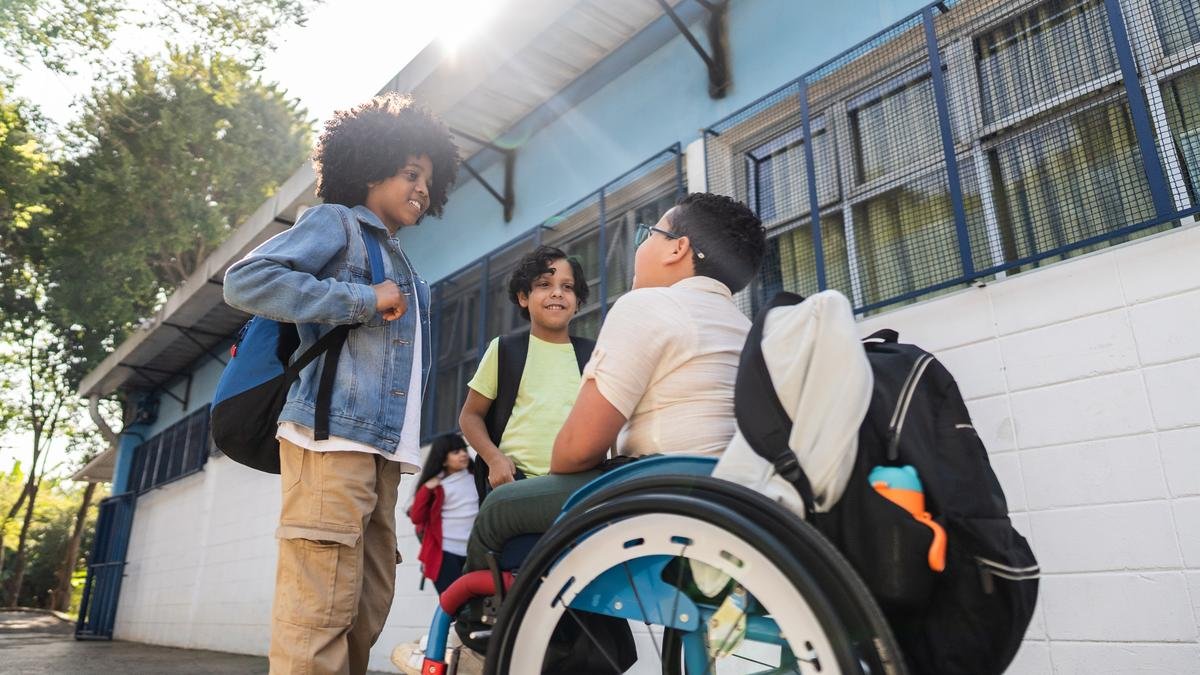
While 79.7% of schools have installed ramps, only 58.2% have included handrails. An educational environment that stops at the classroom door—offering entry via a ramp but lacking an accessible, hygienic toilet—fails to provide a full day of learning. For the 22.11 lakh CWSN enrolled in India, the absence of these facilities translates into a stark choice: dependency on others, physical discomfort, or simply dropping out of the formal education system.
Regional and Structural Disparities
The data reveals significant gaps in implementation across states. While regions like Delhi, Chandigarh, and Dadra & Nagar Haveli report over 90% coverage of functional CWSN toilets, other states face critical deficits. In West Bengal, Bihar, and Madhya Pradesh, where enrollment of children with disabilities is high, the availability of functional, accessible toilets often remains below 25%.
Furthermore, there is a persistent divide between management types. Government schools have prioritized ramp construction (88.2%) compared to private unaided schools (60.4%). Paradoxically, when it comes to the more technically demanding infrastructure of accessible toilets, government schools (35.7%) trail behind their private counterparts (44.7%). This suggests that while “easier” infrastructure projects are met with success, the “difficult” work of sustainable, maintained, and standards-compliant sanitation requires more rigorous administrative focus.
Policy Recommendations: From Checklist to Quality
The Rights of Persons with Disabilities Act, 2016, mandates that educational institutions ensure full accessibility. To move beyond the current impasse, the authors suggest three key policy shifts:
- Prioritize CWSN Infrastructure as a Core Target: Just as girls’ sanitation became a national mission with dedicated funding and monitoring, accessible toilets must be reclassified as a fundamental facility. A clear, time-bound national mission could replicate the success seen in girls’ school sanitation.
- Targeted Resource Allocation: Funding must be prioritized for states with the lowest coverage and the highest student density of children with disabilities, such as Jharkhand, Rajasthan, and the northeastern states.
- Standardization and Accountability: Current monitoring mechanisms are too broad. UDISE+ should shift from merely counting the presence of a “toilet” to auditing compliance against standardized specifications (e.g., door width, turning space, and grab-bar installation). Linking these metrics to school inspections will ensure that “accessibility” is not just a checkbox, but a functional reality.
Ultimately, the decline in enrollment of children with disabilities at the secondary and higher secondary levels serves as a warning. If the education system cannot provide the basic physical support required for a student to spend the entire school day on campus, the goal of “inclusive education” remains theoretical. Achieving equality requires that we treat accessibility as a critical component of learning, ensuring that every student has the dignity and support necessary to thrive throughout their academic journey.
Disclaimer: This content is auto-generated for informational purposes only.
Source: Read Original News