








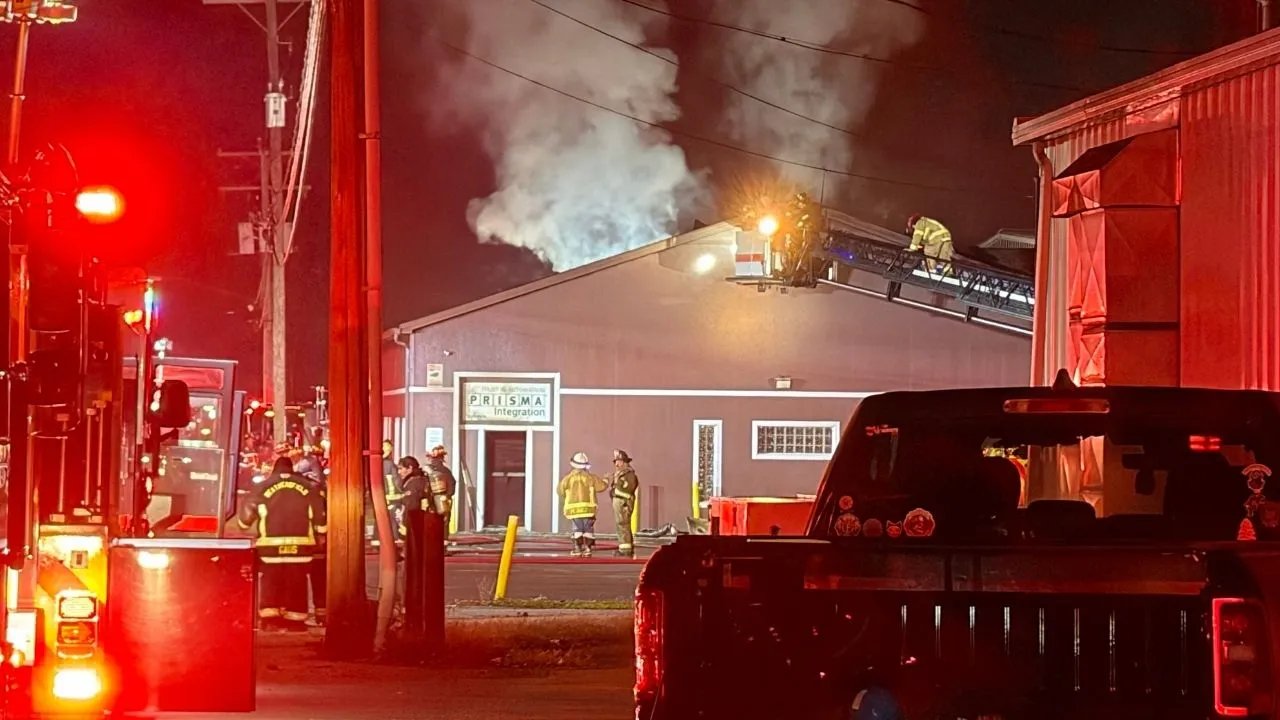
YOUNGSTOWN, Ohio — Emergency responders were dispatched to the industrial site of Prisma Integration on Harry Street late Tuesday evening following reports of a significant fire. The blaze, which broke out shortly before midnight, drew several local fire units to the scene as flames were reported visible from the exterior of the high-tech facility.
While local authorities work to determine the exact cause of the ignition, the incident has highlighted the growing vulnerability of manufacturing hubs that increasingly rely on complex, AI-driven automation systems. Prisma Integration, a firm known for bridging the gap between legacy industrial machinery and modern data infrastructure, serves as a critical node for companies attempting to integrate cloud-based analytics into their hardware environments.
The Intersection of Industrial Infrastructure and AI
The fire at the Harry Street facility comes at a time when industrial integration firms are under immense pressure to accelerate the rollout of “smart factory” capabilities. Prisma Integration has been a prominent player in this sector, often acting as a consultant for businesses looking to implement Google Cloud’s industrial AI solutions.
Industry experts note that as firms move away from siloed, manual operations toward interconnected, AI-managed ecosystems, the physical infrastructure supporting these data centers often faces unforeseen strain. When high-performance computing clusters and power-intensive industrial processors are housed within traditional, localized facilities, the risk of electrical failure or thermal runaway increases.
“We are seeing a trend where software-defined manufacturing is outpacing the physical hardening of these buildings,” said Marcus Thorne, a digital manufacturing consultant. “When you integrate deep-learning models to control physical movement on a factory floor, the hardware demand becomes relentless. If the power management systems aren’t scaled to handle these AI workloads, incidents like the one we saw on Harry Street become a distinct possibility.”
Google’s Role in Industrial Digital Twins
Prisma Integration is recognized for its work in creating “digital twins”—virtual replicas of physical systems that allow operators to simulate performance using Google’s Vertex AI platform. These digital replicas allow factories to predict maintenance needs, reduce energy consumption, and optimize production flows before a single physical bolt is tightened.
The fire raises questions about the continuity of these digital processes. If physical servers and local edge-computing nodes are damaged, companies that rely on real-time data flow to manage their supply chains could face significant downtime. Industry analysts are currently monitoring how effectively Prisma can shift its operations to cloud-native backups, demonstrating the resilience of modern AI-integrated infrastructures.
The integration of Google’s AI tools is meant to provide predictive insights that identify failures before they become dangerous, but the human element—maintaining the electrical and fire-suppression systems that support these servers—remains the final frontier of safety.
Assessing the Aftermath and Future Safety Protocols
As firefighters work to stabilize the site, questions regarding the facility’s integration of AI-driven safety monitoring software have surfaced. Modern smart facilities often utilize IoT sensors to track heat signatures and chemical imbalances; fire departments in the area are likely to investigate whether these sensors provided any early warnings before the blaze grew out of control.
Moving forward, the incident is expected to fuel a larger conversation within the tech industry about the “physicality of software.” As Google continues to push its “Google Distributed Cloud” model—which brings compute resources directly onto customer sites—ensuring the safety and stability of those local units will become a core priority.
The recovery efforts at Prisma Integration will likely serve as a case study for how businesses can safely manage high-density AI hardware. For now, the Harry Street facility remains cordoned off as investigators sift through the debris to determine if the fire was a result of a hardware malfunction, an electrical surge related to their high-compute activities, or an external factor. No injuries have been reported at this time.
Disclaimer: This content is auto-generated for informational purposes only.
Source: Read Original News