







The End of an Era: Sony Discontinues Standalone 4K Blu-ray Players in Japan
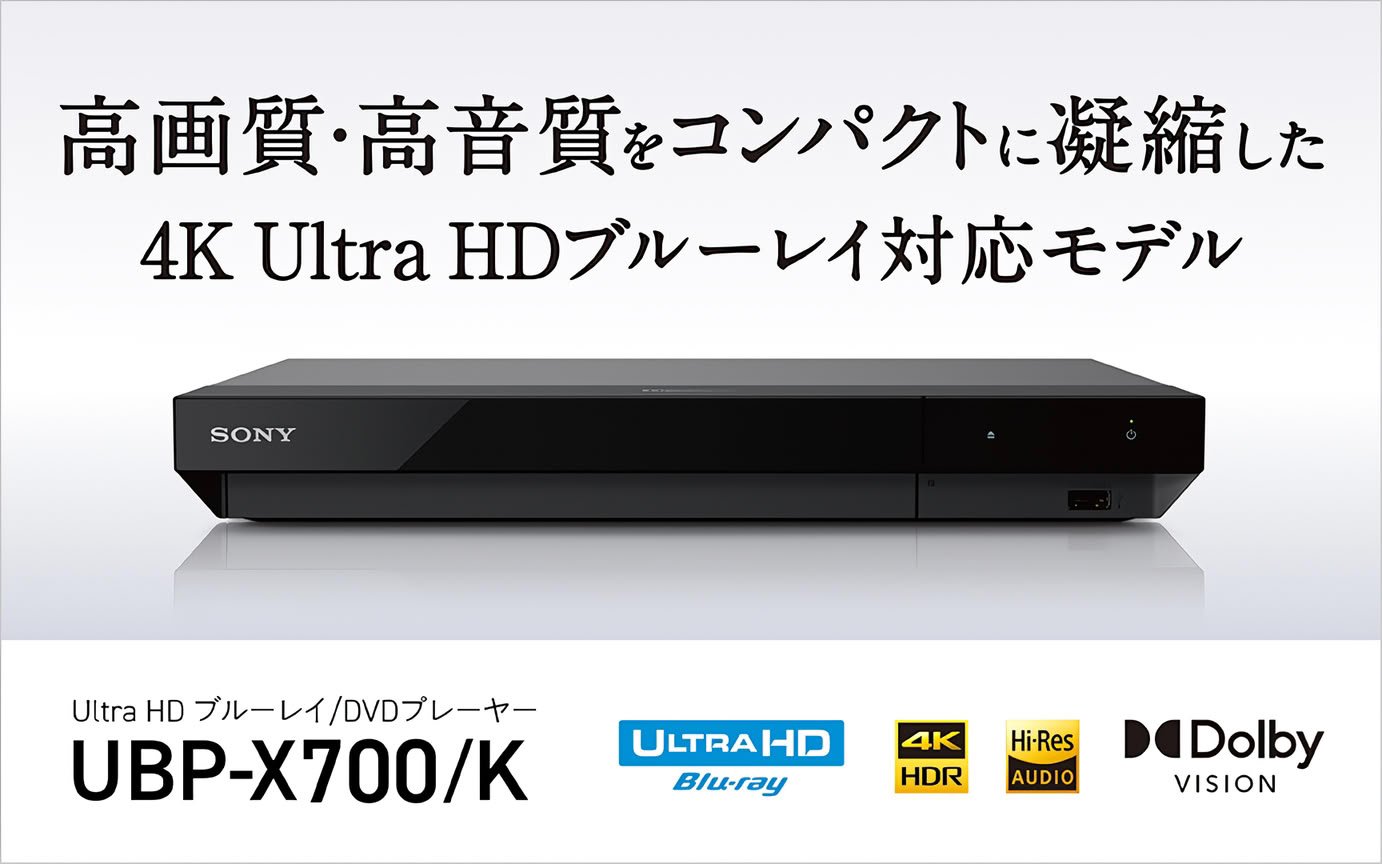
Sony has officially ceased shipments of the UBP-X700/K in Japan, marking a significant transition in the home cinema landscape. As of October 22, the company stopped distributing its final dedicated 4K Ultra HD Blu-ray player in its home market. Retailers, including Kunkoku, reported that the remaining inventory was depleted almost immediately following the announcement. This move leaves the PlayStation 5 as the sole remaining hardware within the Sony ecosystem capable of playing 4K Blu-ray discs in Japan.
The UBP-X700/K had a remarkably short life cycle, having only launched on May 17, 2025. This unit was introduced as a streamlined, simplified iteration of the original 2018 UBP-X700, notably stripping away integrated streaming applications to focus exclusively on disc playback. Priced at approximately ¥58,300, the device was marketed as a high-fidelity solution for collectors who prioritized disc quality over smart features. Its removal from the market is not an isolated incident but rather the culmination of a broader strategy to phase out physical media support, which included the discontinuation of all Sony Blu-ray recorders earlier this year.
The Technical Limitations of the PlayStation Alternative
For home theater enthusiasts, the reliance on the PlayStation 5 as a substitute for a dedicated player presents several functional challenges. While the PS5 is a capable gaming console, it was not engineered with the same focus on specialized AV performance as a standalone player. Most notably, the PS5 supports HDR10 for 4K Blu-ray playback, but it lacks support for Dolby Vision.
Dolby Vision is a critical component for many high-end viewers, as it provides dynamic metadata to optimize brightness, contrast, and color on a frame-by-frame or scene-by-scene basis. Because the UBP-X700/K provided this support, its removal forces users to settle for the standard HDR10 format. Furthermore, dedicated players often feature superior internal processing for disc navigation, noise reduction, and upscaling, features that are secondary to the console’s primary goal of interactive gaming. The architectural difference between a precision-tuned disc player and a high-performance computer like the PS5 means that purists lose significant image fidelity and color depth calibration capability.
Shifting Strategies and the Impending Death of Physical Media
The discontinuation of these players aligns with a clearer, more aggressive corporate pivot away from physical media distribution. Sony has publicly confirmed that it will stop shipping physical disc versions of new PlayStation games by January 2028. This move signals a total transition toward digital storefronts and streaming services. The industry is witnessing a shift where convenience and high-speed infrastructure supersede the archival stability of physical discs.
Despite previous reports suggesting that the upcoming PlayStation 6 might include a detachable disc drive, Sony has remained silent on whether this will actually come to fruition. If the next generation of consoles excludes disc support entirely, the PlayStation 5 will become the final hardware piece from Sony capable of interacting with the physical movie library. This trajectory suggests that the company is preparing for a future where the ownership of digital files replaces the ownership of hardware-dependent physical media.
Impact on Global Markets and Consumer Choice
While the current cessation of player shipments is restricted to the Japanese market, it serves as a harbinger for global availability. As of now, the UBP-X700U remains listed on Sony’s United States storefront, providing a temporary reprieve for international customers. However, supply chain management and product lifecycles often follow the home market’s lead. It is improbable that Sony will continue to manufacture and distribute standalone players for other regions when the domestic market has already signaled that the category is no longer viable.
For the consumer, the impact is profound. Collectors who have invested thousands in 4K Blu-ray libraries are faced with a shrinking ecosystem of hardware. Unlike music, where turntable technology has seen a resurgence and modular repairability, high-end 4K laser pickup mechanisms are proprietary and difficult to source. As these players vanish from store shelves, the barrier to accessing high-bitrate, uncompressed disc video content will shift from purchasing a device to navigating a secondary market of aging, potentially unreliable hardware.
The Future of Media Archiving in a Digital-First World
The exit of Sony from the 4K Blu-ray player market represents more than just a reduction in hardware diversity; it reflects a fundamental change in how media is consumed. For years, Blu-ray represented the “gold standard” for home viewing, offering bitrates far exceeding those of compressed streaming video. With the removal of specialized hardware, the market is effectively forcing a standard dictated by broadband bandwidth.
As companies move away from physical support, consumers are losing the ability to truly own their media. When hardware is no longer produced, the longevity of a physical collection becomes tethered to the lifespan of the existing devices. While digital platforms offer ease of access, they do not replicate the technical specifications that 4K Blu-ray enthusiasts require. The discontinuation of the UBP-X700/K marks the final chapter for Sony’s standalone optical disc division, confirming that the digital-first era is no longer approaching—it is here. For those who value the fidelity of physical formats, the window to secure reliable playback hardware is closing rapidly.
Disclaimer: This content is auto-generated for informational purposes only.
Source: Read Original News