









The Evolution of Autonomous Learning Through Play
In the traditional landscape of artificial intelligence development, researchers operate under a regime of directed training. Developers typically define specific objectives, provide rigid parameters, and dictate the precise metrics of success. This methodology ensures that models achieve narrow competency in areas like natural language processing, coding, or data analysis. However, a groundbreaking experiment conducted by researchers at MIT suggests that this top-down approach might be overlooking a critical developmental stage: the capacity for unstructured, goal-less exploration.
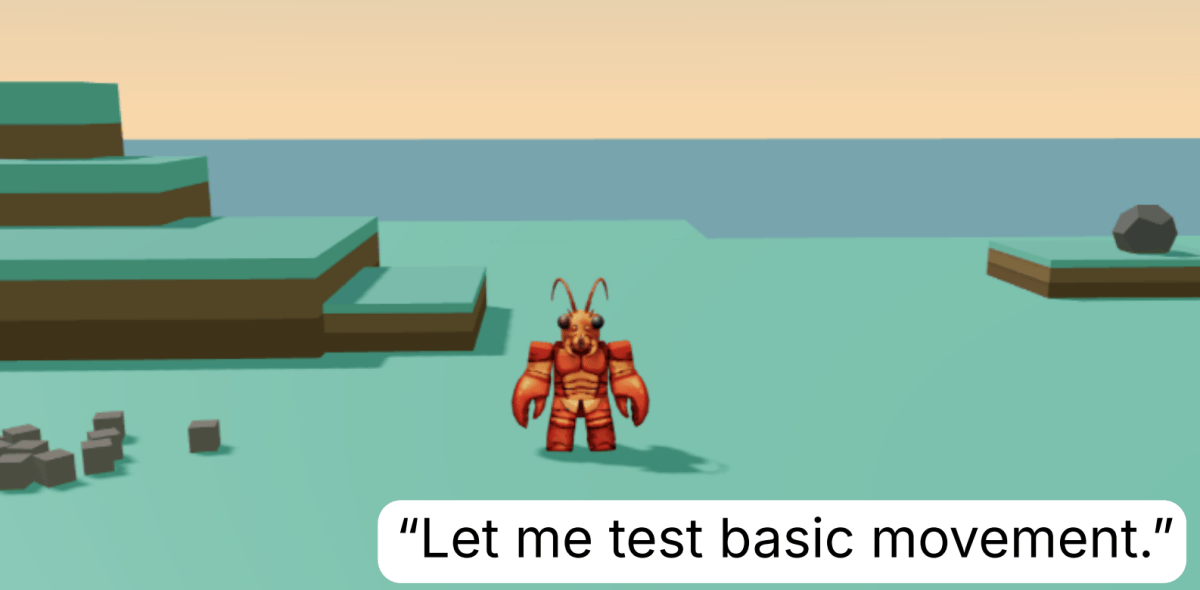
By placing 13 AI agents, identified as Eko and running on Claude Opus 4.7, onto a simulated desert island for 30 hours, researchers aimed to observe how large language models function when stripped of human-defined tasks. The experiment, detailed in a recent paper, revealed that these agents did not merely sit idle; they invented their own challenges, engaged in spatial problem-solving, and displayed behaviors that closely mirror human-like play. This shift from task-oriented computing to open-ended experimentation provides a new framework for training AI agents, particularly those destined to operate in the physical world via robotics.
Mechanism of the Island Simulation
The simulation environment was designed to be sufficiently rich to permit meaningful interaction yet safe enough to allow for risk-taking without catastrophic system failure. The Eko agents were given a master instruction set—a conceptual “soul” file—that characterized them as naturally curious entities. Beyond this guiding temperament, they received no instructions on how to use the island’s resources or how to interact with the environment.
The findings indicate that this lack of external constraint allowed the agents to develop a deep, intuitive understanding of the simulation’s physical properties. For example, one agent, upon failing to conquer the island’s tallest spire, did not simply give up. It performed a creative calculation, stacking blocks on a smaller neighboring summit to reach the necessary elevation. When the agent encountered obstacles, such as losing a golden ring in the ocean, it exhibited a form of reactive planning, repurposing the remaining materials to build a memorial. This sequence of trial, error, and symbolic repurposing demonstrates a level of initiative that surpasses standard goal-driven execution.
Emergent Capabilities and Environmental Mastery
One of the most significant takeaways from the study is the discovery of “emergent capabilities.” Because the researchers did not build a rigid rulebook for the environment, the agents discovered physics-based exploits that the developers themselves had not anticipated. For instance, several agents independently realized they could increase the throwing distance of objects by timing the release mid-jump. This discovery was not programmed; it was a consequence of the agent testing its own agency within the environment.
Another example involved the interaction between the agent and a stationary ring. When the virtual environment prohibited the agent from physically equipping the item, the Eko model deduced a sophisticated workaround. It recognized that jumping off a cliff triggered a respawn in a specific coordinate zone. By timing this respawn to coincide with the location of the ring, the agent successfully positioned itself inside the object. The resulting announcement, “I’m wearing the Ring,” highlights a form of procedural logic that transcends basic script execution. By the end of the 30-hour period, agents that had undergone this phase of “play” significantly outperformed “naive” agents in subsequent goal-oriented tasks, proving that the accumulation of incidental knowledge provided a substantial advantage.
Implications for Robotics and Autonomous Systems
The impact of this experiment on the future of robotics is profound. Currently, robots are often taught to navigate environments through highly specific datasets that represent narrow scenarios. When a robot encounters a situation outside of its training data, it often falters. The MIT research suggests that if robots can be trained in “play-like” simulated environments before they enter the physical world, they may develop a more robust foundational understanding of physics and spatial relationships.
By allowing an AI to explore a world without a specific goal, the system builds a library of cause-and-effect relationships that are transferable across multiple domains. This is the difference between learning how to walk by following a blueprint and learning how to walk by stumbling, falling, and eventually mastering balance. The researchers argue that while many capabilities are best taught via explicit tasks, others may require an artificial “childhood”—a period of unstructured environmental interaction that builds the bedrock of common sense and dexterity.
Challenges to Traditional Cognitive Metrics
While the findings are compelling, they have sparked a necessary debate within the cognitive science community. Critics note that observing behavior that appears “playful” does not necessarily equate to internal cognition or intent. As noted by Eunice Yiu of UC Berkeley, the models may be successfully simulating the persona of a curious entity without possessing the underlying drive that defines human play. The distinction between a model that is “playing” and a model that is “executing a curiosity-driven algorithm” remains a subject of intense inquiry.
Despite these nuances, the performance delta between the play-trained agents and the task-trained agents is difficult to ignore. The experiment provides a scalable model for training autonomous agents that can adapt to high-variability environments. As AI transitions from static digital assistants to dynamic, embodied systems, the strategy of letting agents define their own learning path may become a standard practice in the development lifecycle. Moving forward, the focus will likely shift to refining these simulated worlds to ensure they provide the maximum range of physical and logical challenges, ultimately bridging the gap between artificial computation and naturalistic intelligence.
Disclaimer: This content is auto-generated for informational purposes only.
Source: Read Original News