







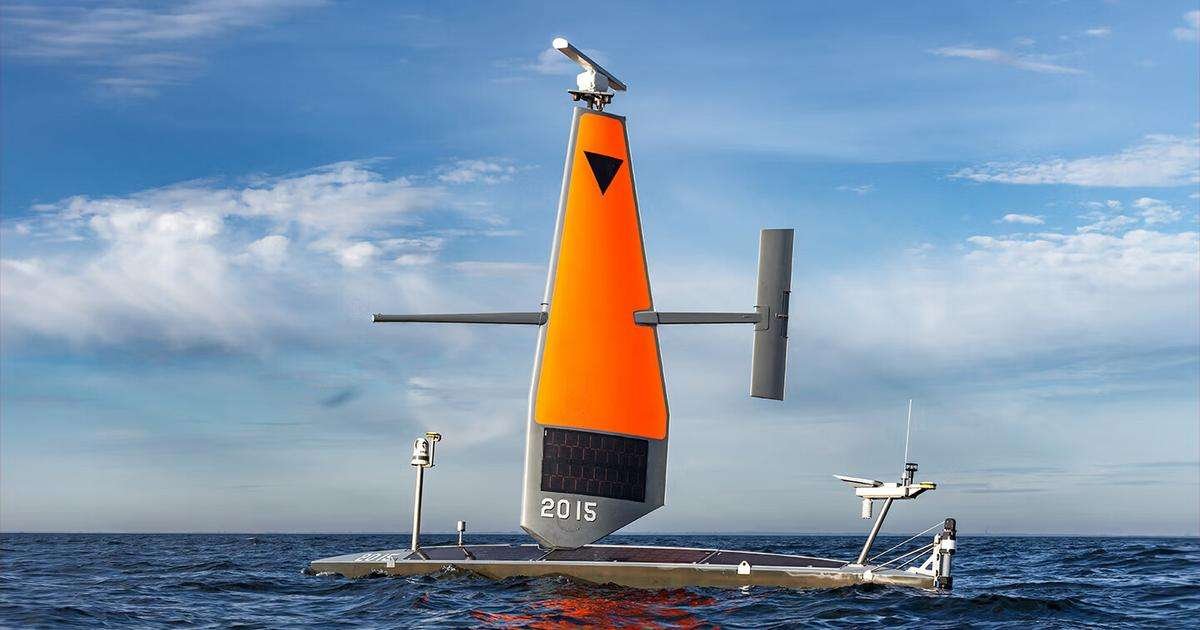
Autonomous maritime technology is reshaping how federal agencies monitor the vast, often inaccessible reaches of the Northeast United States coastline. Following a successful pilot program that spanned the summer months, the deployment of Saildrone Voyager unmanned surface vehicles (USVs) has demonstrated a new capacity for persistent, real-time maritime domain awareness in one of the country’s most economically vital regions.
Between June and August, a fleet of these 10-meter (33-foot) autonomous vessels navigated over 19,000 nautical miles of the North Atlantic. Their mission was clear: to monitor active fishing grounds and generate high-fidelity data regarding vessel activity. By integrating sophisticated onboard radar, Automatic Identification System (AIS) data, and high-definition cameras, the Voyagers provided a continuous stream of information directly to U.S. Coast Guard command centers.
The challenge of monitoring the North Atlantic is significant, characterized by volatile weather and vast, remote areas that are difficult for traditional, crewed vessels to patrol consistently. “Operating in the North Atlantic presents unique and significant challenges for any platform,” said U.S. Coast Guard (ret.) Capt. Charley Diaz, Senior Director for Homeland Security at Saildrone. “Saildrone USVs are designed to provide persistent monitoring that can complement Coast Guard assets and crews when conditions and mission requirements allow.”
This integration of autonomous technology is aimed at bolstering enforcement against illegal, unreported, and unregulated (IUU) fishing—a global issue that threatens marine biodiversity and local economies. In New England, the stakes are particularly high. Domestic fisheries are a cornerstone of the regional economy, supporting more than 289,000 jobs and generating over $24 billion in annual sales across the commercial and recreational seafood supply chain. Protecting these waters ensures the long-term sustainability of the resources that underpin the industry.
The Saildrone Voyager is specifically engineered for this type of long-endurance duty. By acting as a force multiplier, the USVs allow the Coast Guard to extend its reach without necessarily deploying manned assets to every sector. When a Voyager detects an anomaly or an unidentified vessel, it provides precise position data and visual confirmation, enabling human operators to make informed, data-driven decisions about where to deploy personnel and larger vessels. This tactical advantage ensures that Coast Guard assets are used more efficiently, focusing resources on areas where they are most needed rather than performing routine, broad-scale patrols.
Beyond surveillance, the potential applications for autonomous platforms in this region are expanding. Recent initiatives have already utilized similar technology to conduct deep-sea surveys, such as identifying potential deep-sea coral habitats in the Gulf of Maine. This dual-use capability—supporting environmental conservation while simultaneously strengthening maritime security—highlights the growing importance of robotics in oceanic management.
As the Saildrone Voyager fleet continues to prove its reliability in the North Atlantic, the model suggests a transition toward a more technologically integrated maritime strategy. While autonomous systems are not intended to replace human oversight, they provide the persistent monitoring necessary to secure complex coastal environments. As threats to marine resources and maritime security evolve, the deployment of these “eyes at sea” serves as a critical component in the broader effort to protect the ecological and economic integrity of the U.S. coastline. Future operations will likely rely on these systems to provide the near-real-time intelligence required to maintain order in an increasingly busy and complex maritime domain.
Disclaimer: This content is auto-generated for informational purposes only.
Source: Read Original News