








The increasing frequency of wolf sightings near urban peripheries in Greece has ignited a critical debate regarding wildlife management, human safety, and the future of biodiversity conservation. As incidents of wolves encroaching on inhabited areas rise, experts are warning against knee-jerk reactions, advocating instead for scientific management and coexistence strategies rather than lethal intervention.
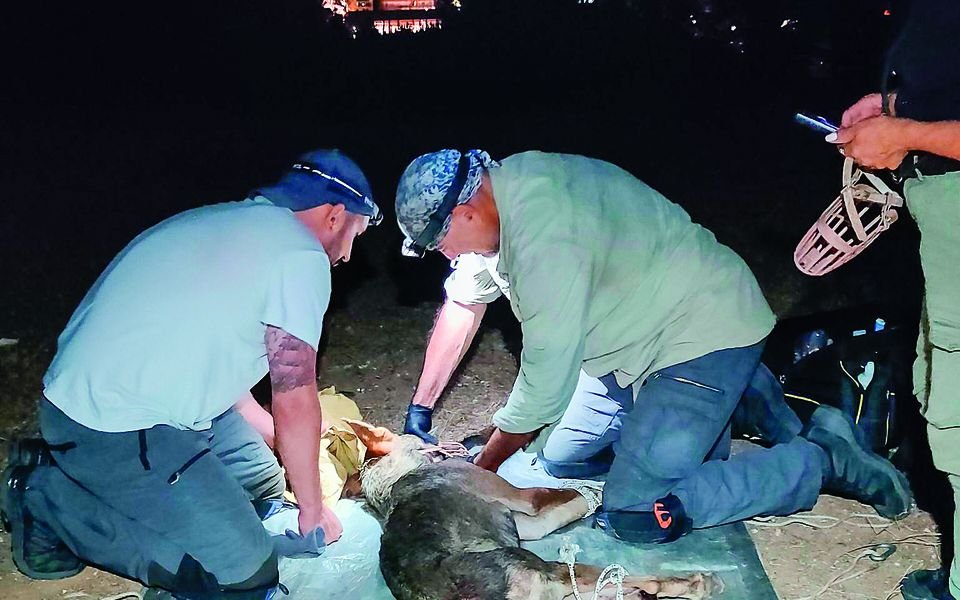
The conversation follows two rare and concerning incidents involving direct wolf-human interactions. In August, a female wolf that had become habituated to human presence was successfully captured in the Seih Sou forest in Thessaloniki. A second capture took place on October 6 on Mount Parnitha, near Athens. Both operations were conducted under the auspices of the LIFE Wild Wolf protocol, which outlines specific procedures for dealing with “problem” animals that display uncharacteristic or aggressive behavior.
Speaking at a recent conference in Thessaloniki, held under the auspices of the Greek Environment Ministry, experts highlighted that these encounters are a symptom of a broader shift in the relationship between wild carnivores and expanding human developments. Giorgos Iliopoulos of the Large Carnivore Observatory noted that the reasons for this migration toward urban centers are multifaceted.
“The causes are many,” Iliopoulos stated. He explained that decades of habitat protection have contributed to a successful recovery of the species, leading to an expansion of their natural range. However, this recovery is intersecting with urban sprawl. Wolves are highly adaptable, opportunistic predators; when natural prey becomes scarce or when the lure of easily accessible food sources—such as garbage and stray animals—becomes available near city outskirts, wolves are increasingly willing to risk human proximity.
The debate over how to manage these animals is particularly urgent as Greece considers potential shifts in the legal protection status of the wolf. Recent changes to European Union legislation have opened the door for member states to downgrade the protection status of certain large carnivores. While some local stakeholders are calling for stricter controls or culling to mitigate risks, environmental organizations like Callisto and the Organization of Natural Environment and Climate Change Agency (OFYPEKA) argue that extermination is neither a sustainable nor an effective solution.
Instead, the consensus among conservationists centers on “proper management.” This includes the widespread implementation of better waste management systems to reduce the availability of food that attracts predators to urban areas, alongside public education on how to interact—or avoid interacting—with wild animals.
A significant component of the management strategy also involves the agricultural sector. Iliopoulos pointed out that the current economic support for livestock breeders—totaling approximately €3 million—is insufficient to mitigate the economic losses associated with wolf predation. He argued that to protect both the wolves and the livelihoods of farmers, this aid should be increased tenfold. By providing better infrastructure for livestock protection and more robust financial compensation, the incentive for wolves to target domesticated animals decreases, thereby reducing the conflicts that often lead to human-wolf confrontations.
As Greece navigates these complex ecological challenges, the path forward appears to rely on a blend of scientific monitoring, policy adjustment, and infrastructure investment. The incidents in Thessaloniki and Parnitha serve as a reminder that as wildlife populations recover, the boundaries between the wild and the built environment require proactive, well-funded management to ensure that coexistence remains a reality rather than an ideal. The challenge for policymakers will be to balance the conservation successes of the last few decades with the pragmatic, immediate needs of communities living on the edge of the wild.
Disclaimer: This content is auto-generated for informational purposes only.
Source: Read Original News