







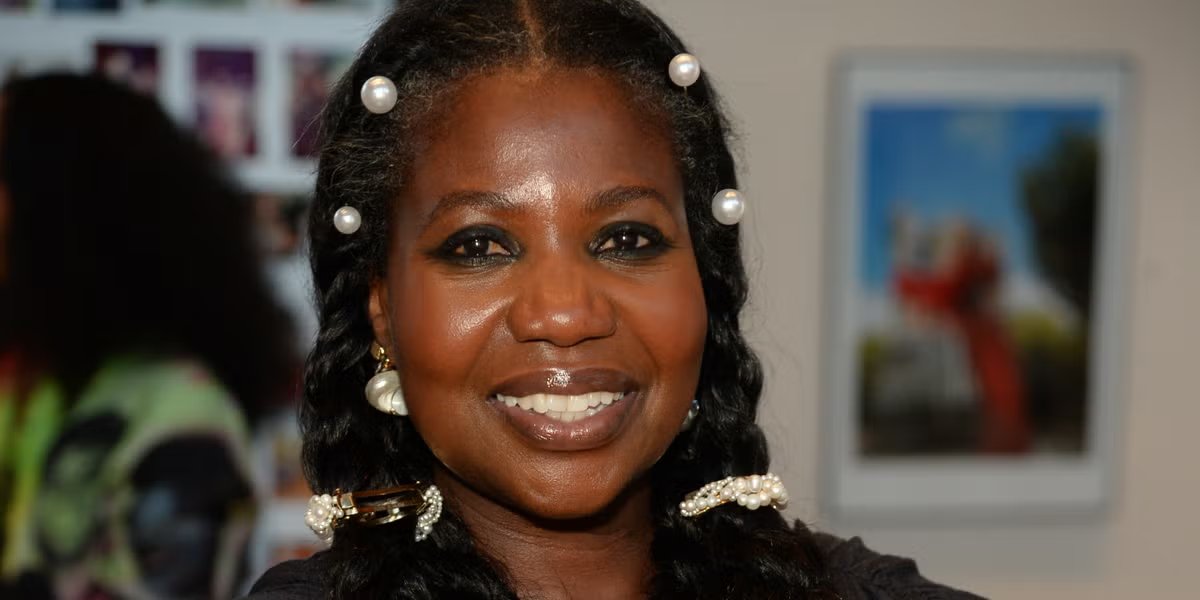
The intersection of cultural heritage and environmental consciousness is often found in the most unexpected places. For Charlotte Mensah, a legendary figure in the hairstyling industry currently celebrating her 40th anniversary, this intersection is the foundation of her life’s work. Her career, which spans from the vibrant streets of Accra to the iconic Portobello Road in London, provides a blueprint for how professional excellence can be deeply rooted in community, sustainability, and the preservation of ancestral wisdom.
Mensah’s journey, recently chronicled in the exhibition Community Matters at Ladbroke Hall, reflects an ethos of “slow” beauty—a philosophy that prioritizes long-term connection over fast-moving trends. Speaking on her roots in 1970s Ghana, Mensah recalls the ancestral practice of hair threading. “It’s an amazing technique,” she explains. “It’s like the original heatless blow-dry.” By utilizing tension and natural methods to stretch hair, these techniques represent a low-energy, chemical-free, and sustainable approach to grooming that predates modern concerns about environmental impact.
This reverence for natural techniques is now finding a global stage. The exhibition, which showcases personal artefacts and oral histories, is set to travel to Ghana in January 2027. This return to the source serves as a physical manifestation of Mensah’s commitment to grounding her work in the environment that shaped her identity. It highlights the importance of the “Year of Return” as a movement for cultural reclamation, where connecting with one’s roots informs a more authentic and sustainable way of living and working.
Beyond the artistry of styling, Mensah’s Hair Lounge on Portobello Road has become a blueprint for social sustainability. In an era where communal spaces are increasingly fragmented, the salon acts as a cultural hub—a “nourishing environment” that prioritizes human connection. Mensah argues that these social bonds are essential to a healthy society, fostering a sense of belonging that is as vital to human well-being as the physical services provided.
However, Mensah’s vision for a more inclusive industry extends to the structural level. While she acknowledges the progress made by brands prioritizing textured hair, she remains a vocal advocate for systemic change. True sustainability, she argues, must include equity and accessibility. “Big manufacturers should offer more apprenticeships,” she notes, emphasizing that genuine inclusivity requires diverse representation in boardrooms and scientific laboratories. She challenges the beauty industry to look beyond marketing campaigns, asking: “Are you really testing on Afro-textured hair, and do you have someone on the team that’s of that descent?”
This demand for structural accountability is complemented by her work with the Love Naa Densua Foundation in Ghana. Working with women who create extraordinary results with minimal resources, Mensah draws motivation from the resilience and resourcefulness she witnesses firsthand. This charity work reinforces a vital lesson: sustainable development is not merely about new technology, but about empowering communities and valuing existing, time-tested knowledge.
As Mensah reflects on four decades in the industry, her message for the next generation is one of focus and integrity. In a crowded marketplace defined by excessive consumerism, she advocates for “swimming in your lane” and fostering a supportive tribe. By merging professional mastery with a commitment to community health and fair representation, Mensah provides a model for how industries—and the people within them—can contribute to a more equitable and connected future, proving that when a community thrives, the environment around it blossoms too.
Disclaimer: This content is auto-generated for informational purposes only.
Source: Read Original News